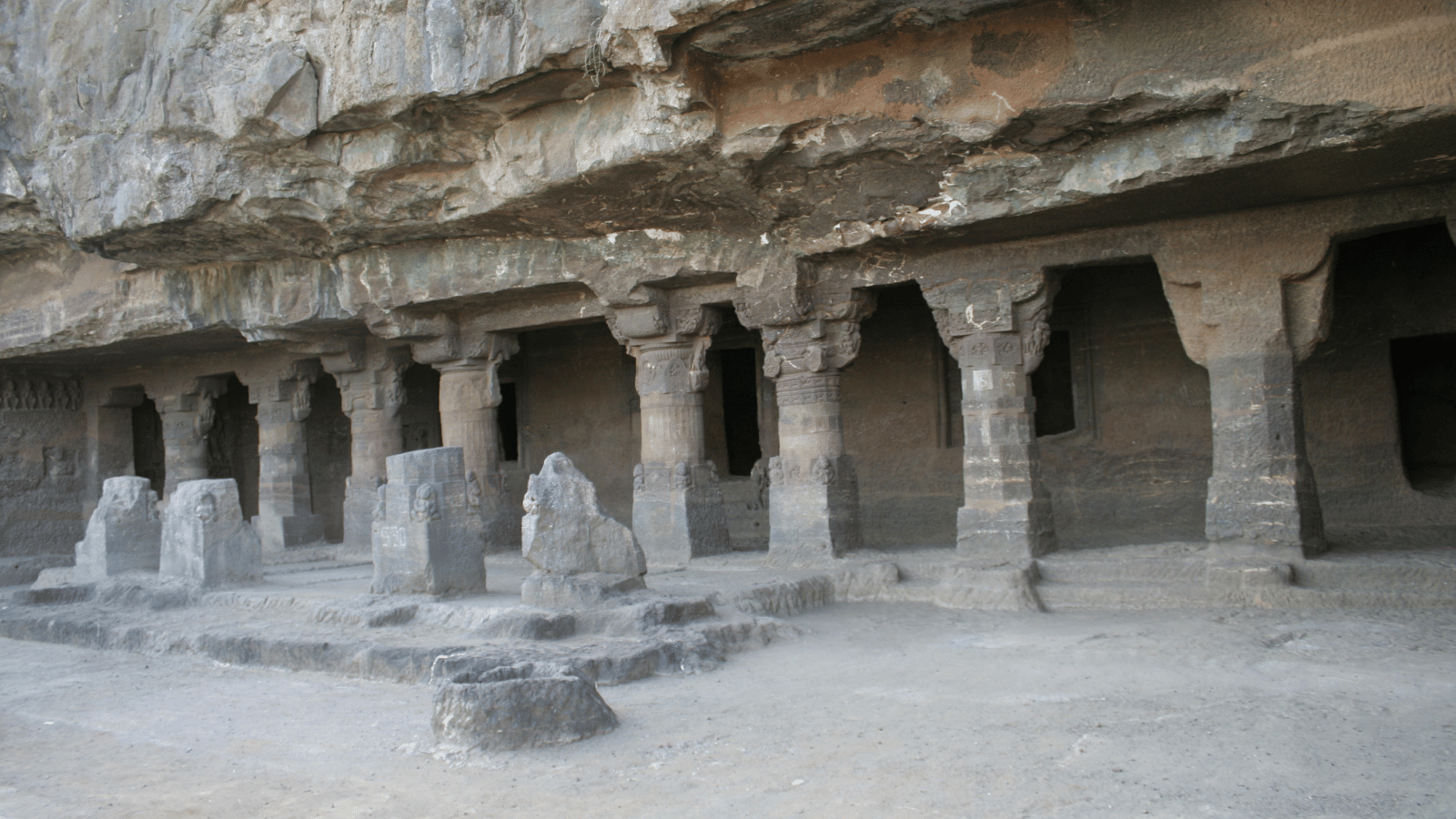
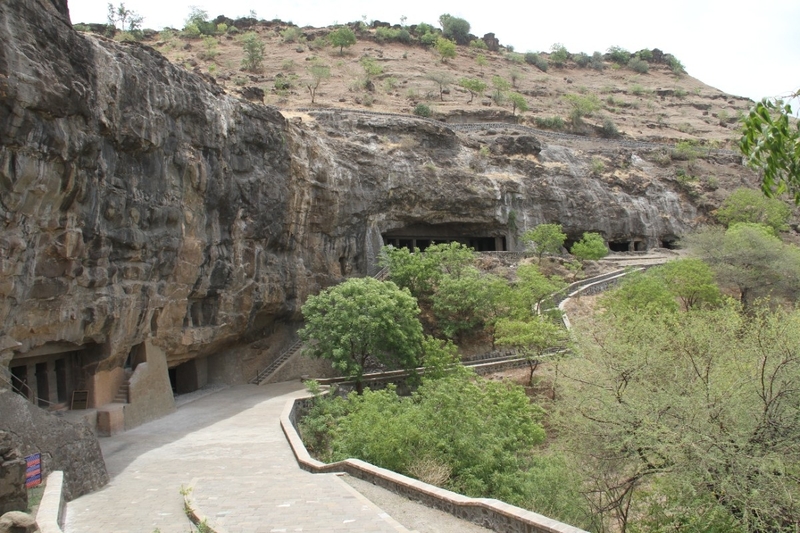
The Aurangabad Caves form an important ensemble of ancient rock-cut monuments carved into the rugged hills of the Aurangabad district in Maharashtra. These twelve caves embody the artistic, spiritual and architectural depth of early Indian craftsmanship, offering a remarkable window into Buddhist and Brahmanical traditions.
Historical Background
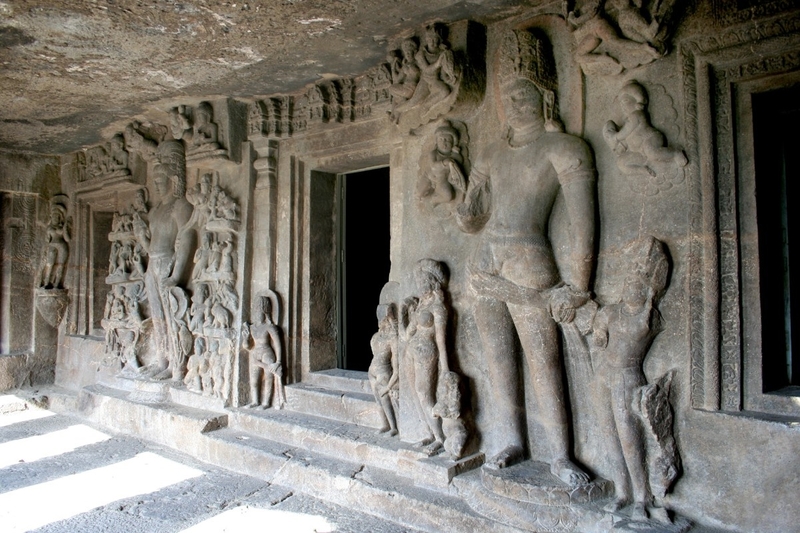
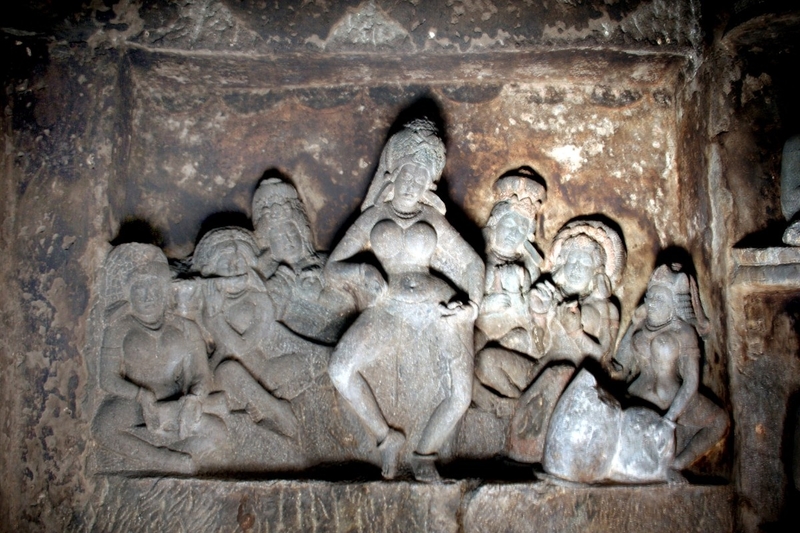
Dating to the 2nd–3rd century C.E., the caves reflect evolving phases of Buddhist monastic life and religious expression. The first group, comprising Caves 1 to 5, presents Mahayana Buddhist monasteries and prayer halls enriched with refined carvings and sculptural details. The second group, Caves 6 to 9, combines Buddhist themes with Brahmanical imagery, with Cave 7 noted for its exceptional sculptural richness. The final group, Caves 10 to 12, remains incomplete and displays features that resemble natural caves.
Location and Significance
Situated in the Aurangabad district of Maharashtra, the caves hold substantial archaeological value. They illuminate shifts in artistic style, religious practice and regional craftsmanship, making the site an important point of cultural continuity.
Architectural Materials and Design
Cut directly into basaltic rock, the caves exhibit a disciplined approach to monolithic construction. The interiors contain viharas, chaitya halls and sculptural panels illustrating deities, guardians and celestial figures. Though the last group is unfinished and inaccessible, the overall complex demonstrates precision in planning, mastery of stonework and a deep commitment to devotional architecture.

 4.4•
4.4•
 Ticket needed for all ages
 Entry allowed for all ages
 Kid friendly
 Pets not allowed
 Free water stations
 Washrooms available
 SilentOcean
 abhinov pankaj
 Prashobh Ailyam
 Jayasree Majumder
 Chaitanya Nilkanthanawar