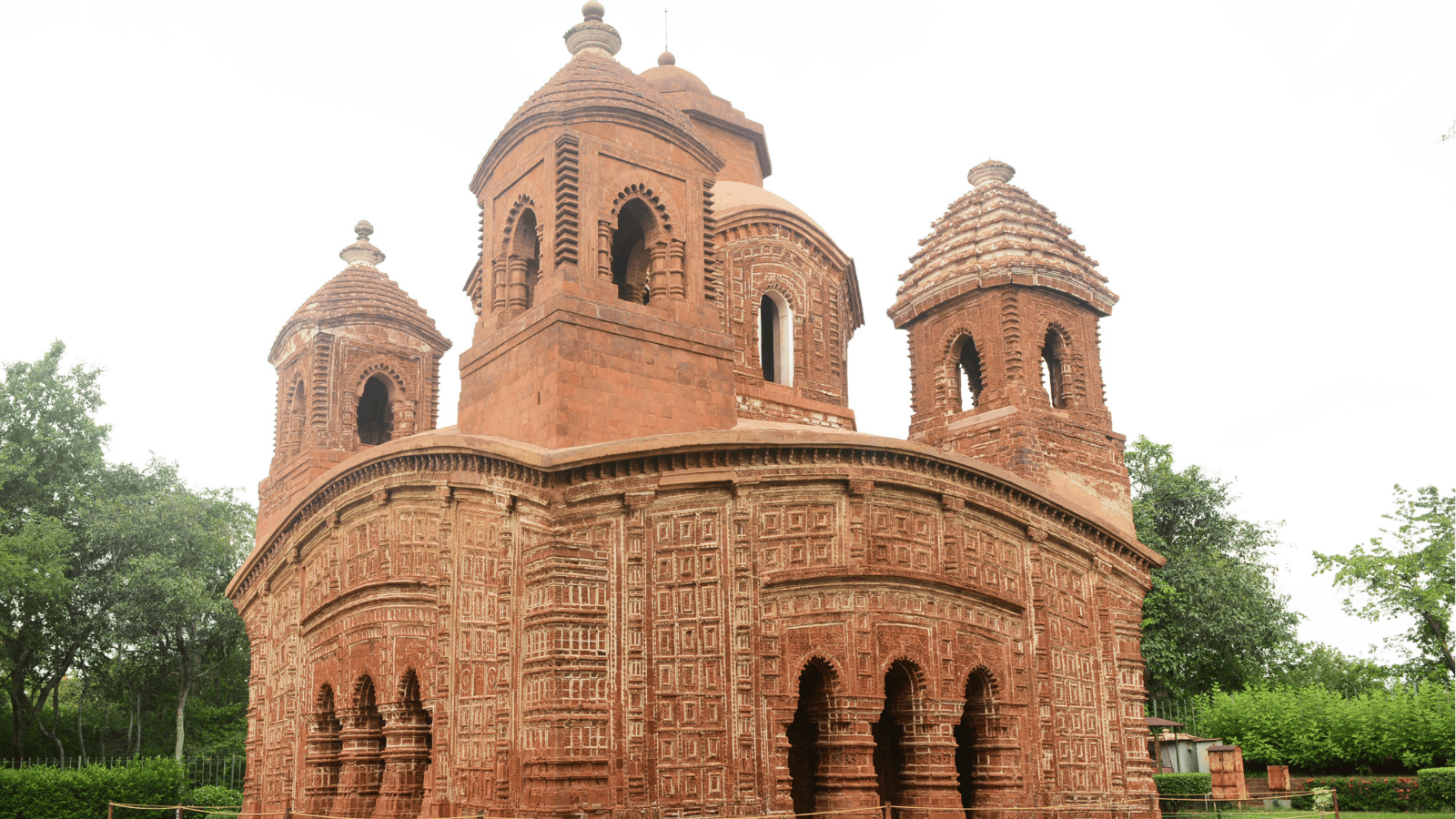
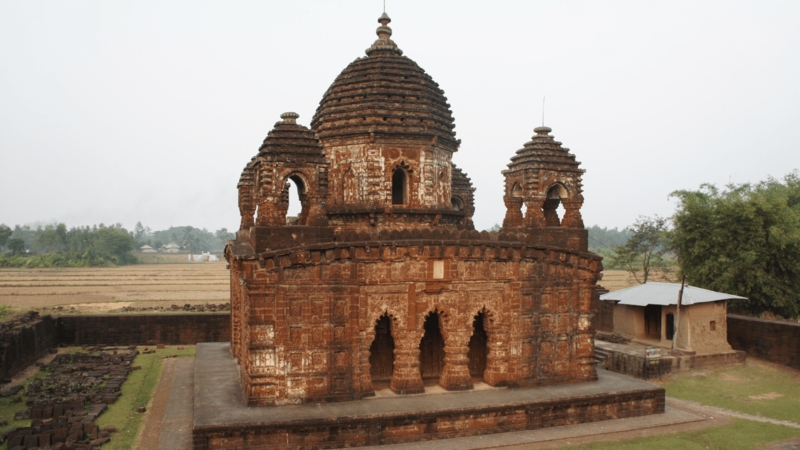
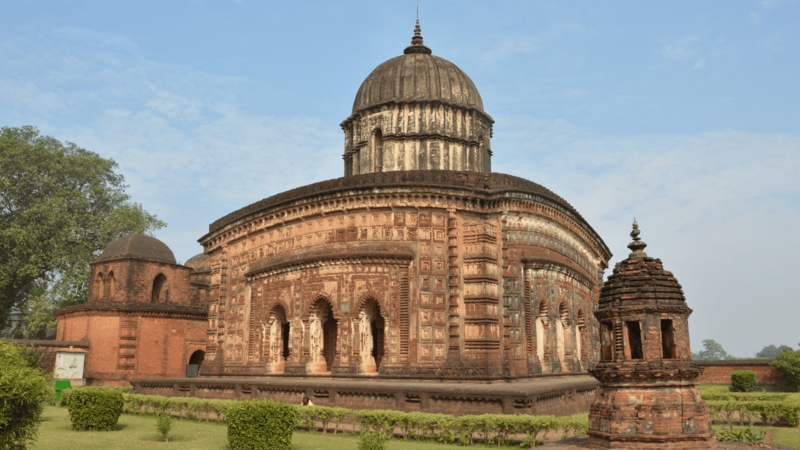
Bishnupur in the Bankura district of West Bengal is celebrated as the Land of Terracotta Architecture. Flourishing under the Malla rulers between the 17th and 18th centuries C.E., it developed a distinctive temple style that blends regional building traditions with wider cultural influences. Its temples are noted for elaborate brickwork and terracotta ornamentation expressed through forms such as ekaratna, pancharatna and atchala.
Historical Background
Among the earliest monuments is the Rashmancha, built around 1600 C.E. with a central shrine and surrounding corridors. The Shyam Rai Temple of 1643 C.E., a pancharatna structure, displays narrative panels depicting Krishnalila, epic scenes, and social themes. Jora Mandir and the Jor Bangla Temple further reveal the refined artistry of the period through richly carved reliefs.
Location and Significance
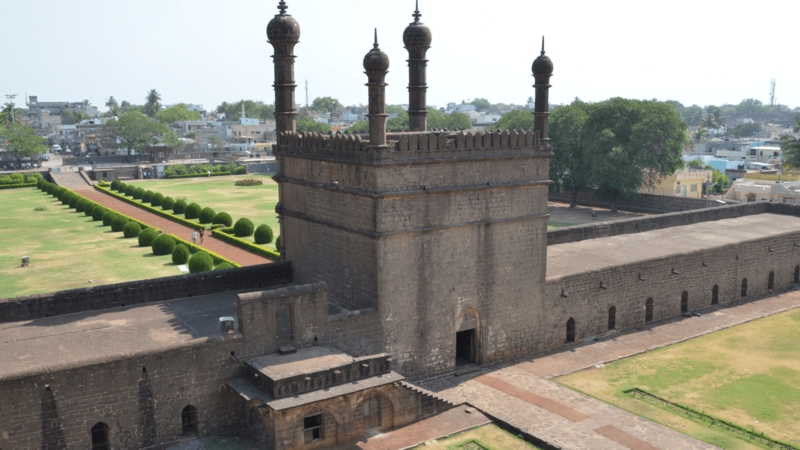
Situated in the cultural landscape of Bengal, Bishnupur reflects the artistic vitality of the Malla court. Its laterite fort gateway, the Pathardarwaja, and the Stone Chariot with its two storied composition highlight the region’s architectural diversity.
Architectural Materials and Design
Ekaratna temples such as Kalachand, Lalji, Madanmohan, and Radhashyam illustrate variation in ornamentation and structural planning. Curved roofs, brick façades, and terracotta panels portraying divine figures, epic narratives, floral motifs, and social scenes demonstrate the exceptional skill of Bishnupur’s craftsmen.

 4.6•
4.6•
 Ticket needed for all ages
 Entry allowed for all ages
 Kid friendly
 Pets not allowed
 Free water stations
 Washrooms available
 Wheelchair accessible
 Chandan Karmakar
 Purbati Paul
 Harsh Jaiswal
 Abhijit Basak
 Susovan Khatua