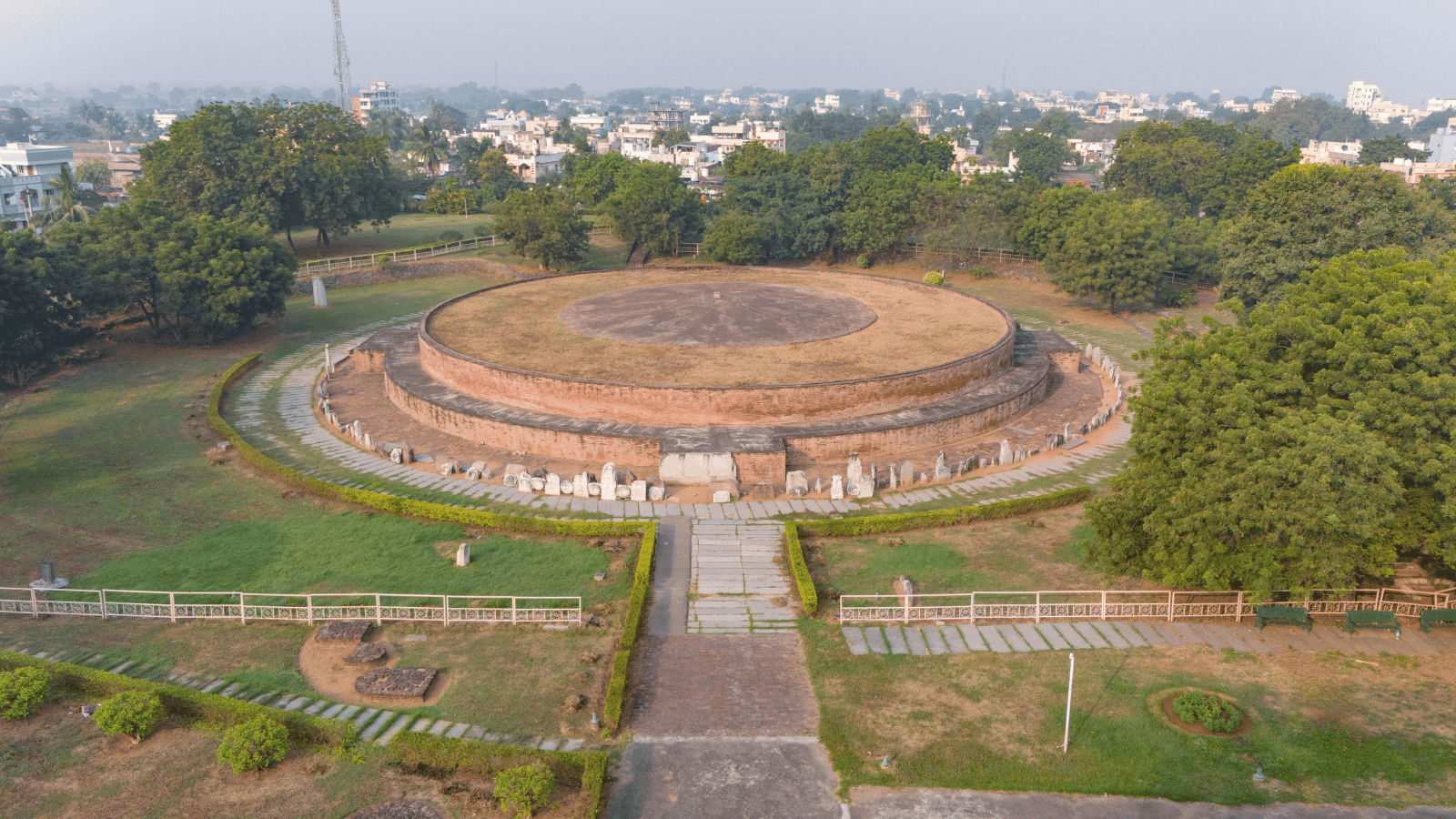
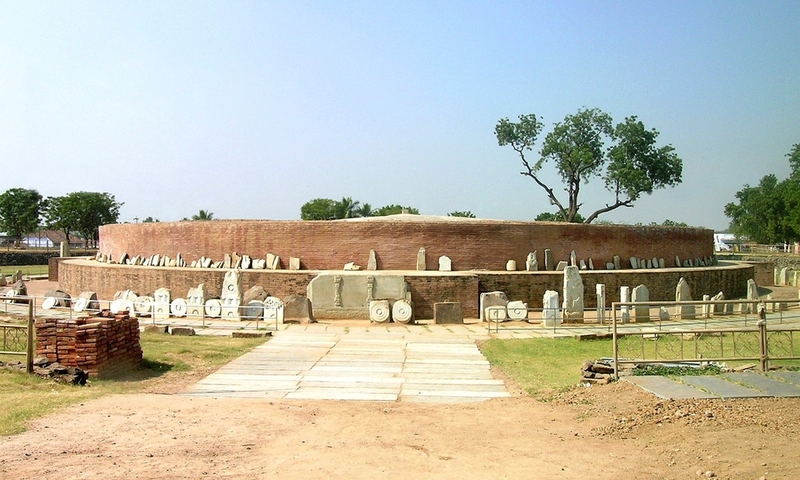
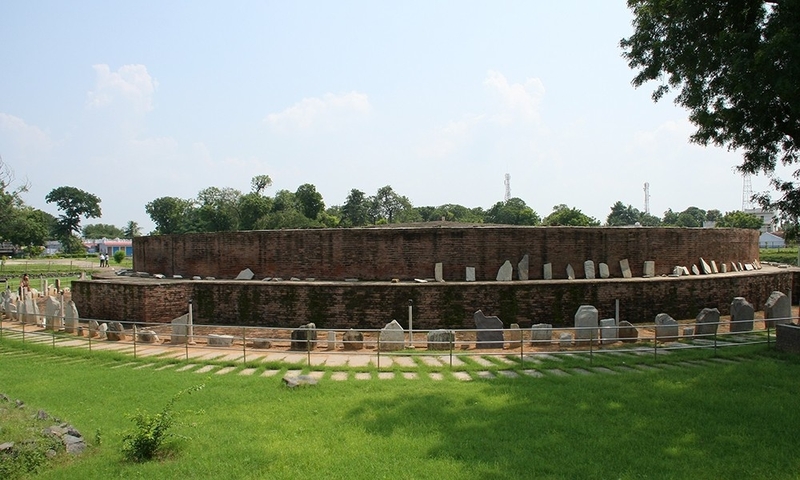
The Great Stupa or Mahachaitya at Amaravati is regarded as one of the oldest, largest and most significant Buddhist monuments of ancient India. Datable to the 3rd century C.E., it represents the sariraka type of Buddhist architectural tradition and preserves an enduring legacy of ritual, symbolism and artistic achievement.
Historical Background
In ancient times, devotees paid homage to the sacred relic enshrined within the stupa by circumambulating it in a clockwise direction. During this ritual movement they viewed sculpted scenes from the life of the Buddha that adorned the surrounding railing. The monument also featured symbolic platforms and pillars that represented the major events of the Buddha’s life, namely his birth, renunciation, enlightenment, first sermon and final extinction.
Location and Significance
The stupa stands in present-day Andhra Pradesh, where it remains a major testament to early Buddhist patronage. Its artistic and ritual features reveal extensive cultural activity and deep regional devotion.
Architectural Materials and Design
The structure includes a brick-built circular vedika or drum and projecting rectangular ayaka platforms set at the four cardinal directions. Excavations revealed several antiquities such as seven crystal and one ivory relic casket containing bone pieces, pearls, precious stones and gold flowers.

 4.4•
4.4•
 Ticket needed for all ages
 Entry allowed for all ages
 Kid friendly
 Pets not allowed
 Free water stations
 Washrooms available
 Oommen Nainan
 Veludharan
 Tarang Bauddh
 Manish Khare
 The Dreamer