The Chaukhandi Stupa is an ancient Buddhist monument that commemorates a significant episode in the life of Gautama Buddha. It marks the location where Buddha was reunited with the panchavargiya bhikshus, his five companions who had earlier abandoned him at Rajgir. A seated image of Buddha in Dharmachakrapravartan mudra has been found at this site, emphasizing its religious importance.
Historical Background
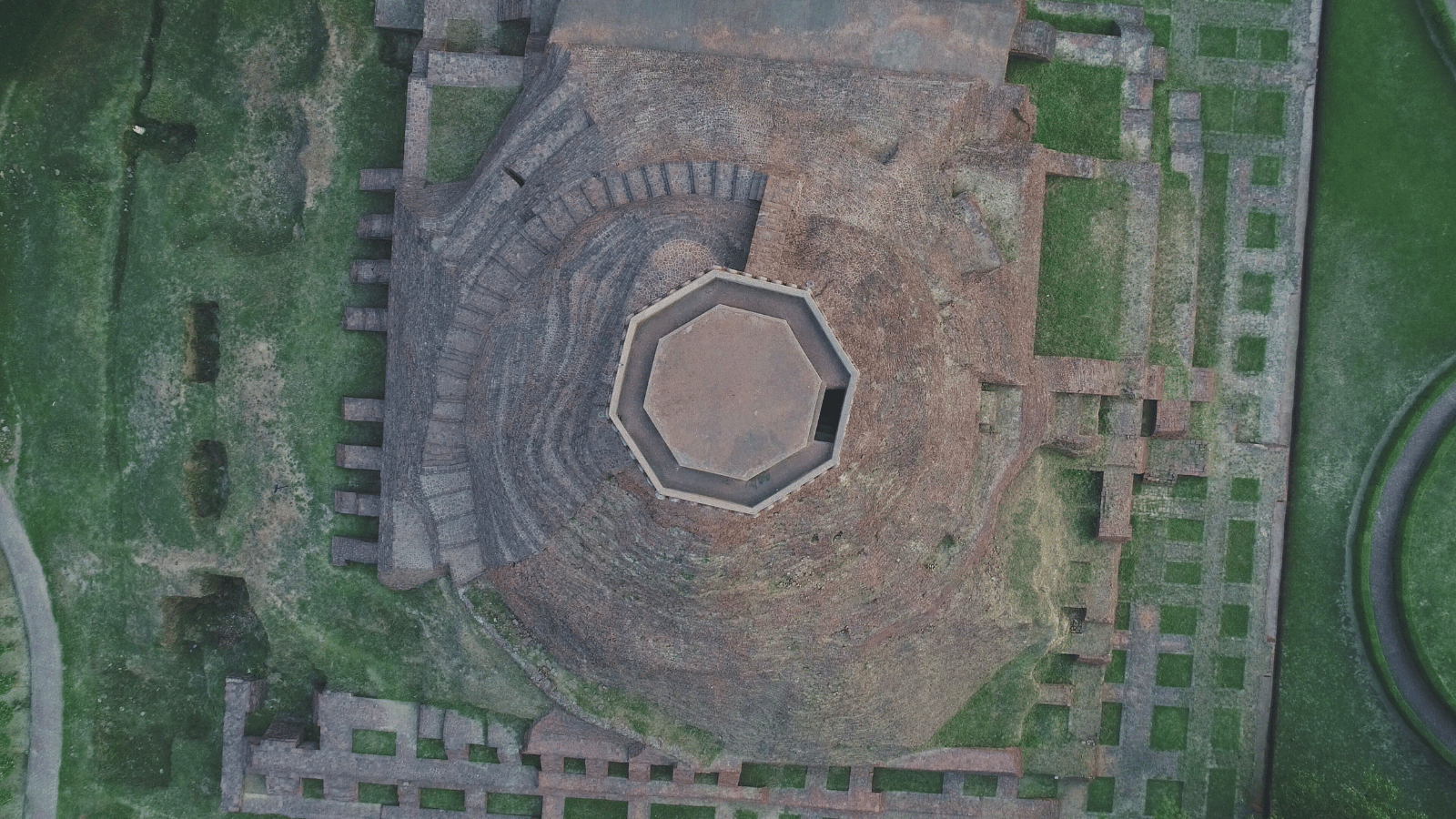
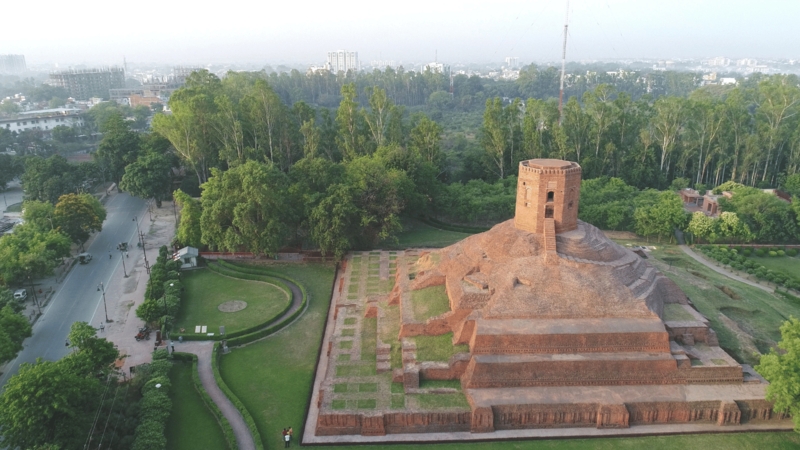
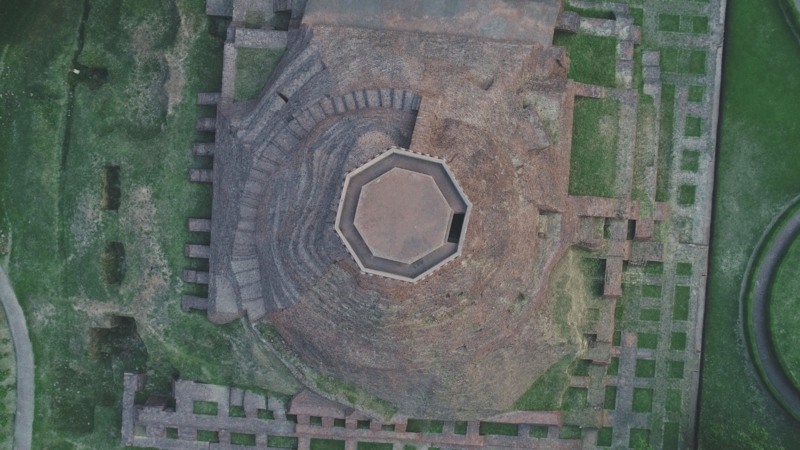
The original stupa predates the Mughal period and served as an important Buddhist pilgrimage site. In 1588 CE, Govardhan, son of Raja Todarmal and governor under Mughal Emperor Akbar, added an octagonal Mughal tower atop the stupa to commemorate Emperor Humayun’s overnight stay. Excavations have yielded rare artefacts, including images of Buddha and other statues, highlighting the site’s historical and archaeological significance. It was declared a centrally protected monument in 1907.
Location and Significance
The Chaukhandi Stupa is located in Varanasi district, Uttar Pradesh, India. The site attracts both Buddhist pilgrims and history enthusiasts, reflecting its spiritual and cultural relevance. Its layered history demonstrates the confluence of Buddhist tradition and Mughal-era architectural intervention.
Architectural Materials and Design
The stupa combines early Buddhist construction techniques with Mughal architectural features. The base comprises traditional brick and stone, while the octagonal tower incorporates Mughal decorative elements. The site also contains sculptural artefacts and a prominent image of Buddha in Dharmachakrapravartan mudra, signifying its religious and artistic value.

 4.4•
4.4•
 Ticket needed for all ages
 Entry allowed for all ages
 Kid friendly
 Pets not allowed
 Free water stations
 Washrooms available
 naveen
 Thanamas Pongmala
 Debargha Bhowal
 PRADEEP PATEL
 Shahbaz Patel