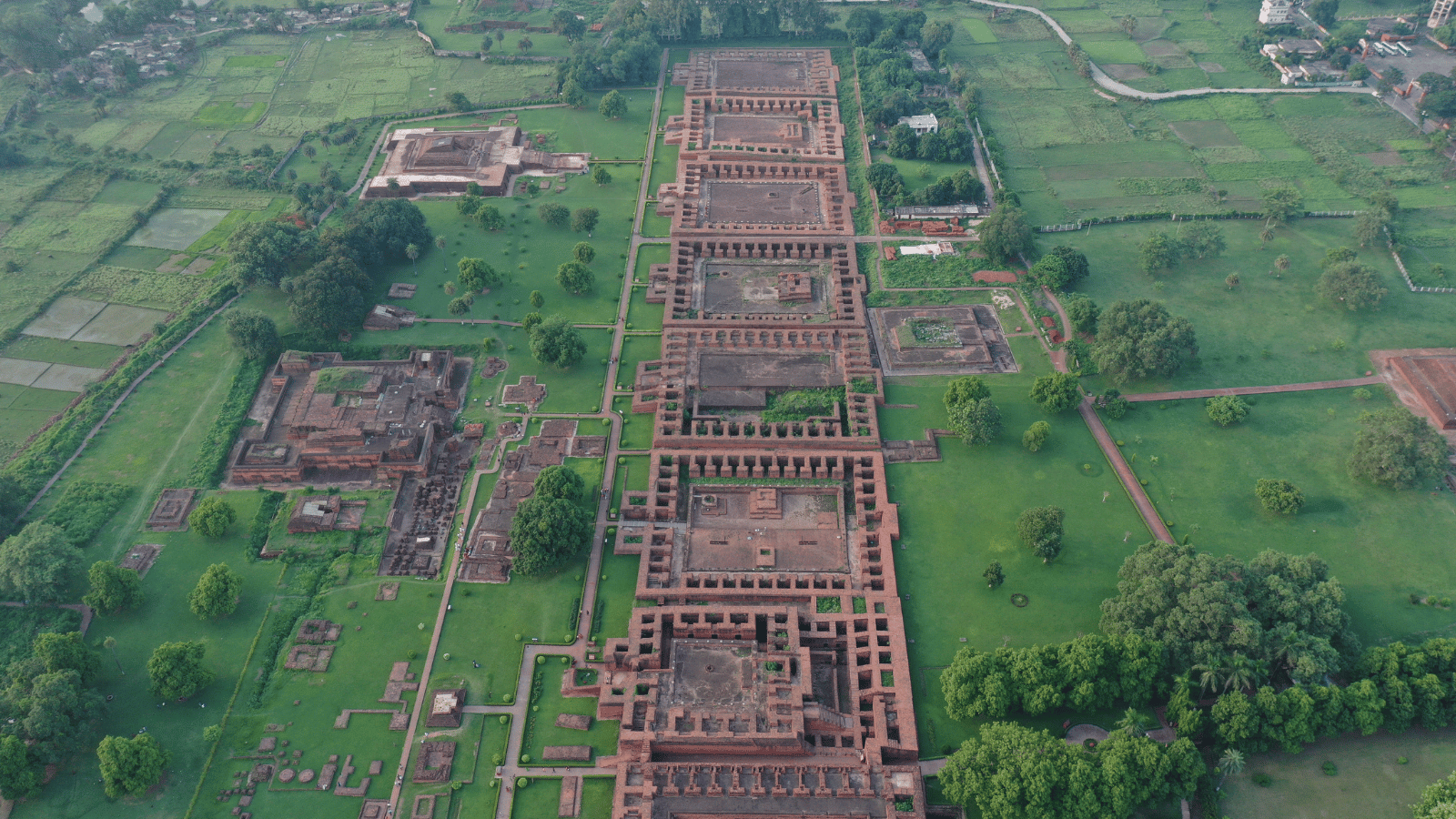
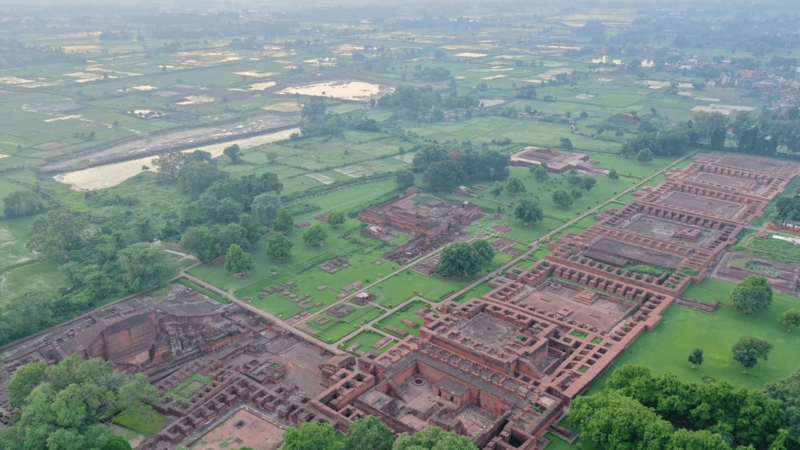
Nalanda Mahavihara is one of the most ancient universities in the world. Founded by Kumaragupta I between 413 and 455 C.E., it received continued patronage from King Harshavardhana between 606 and 647 C.E. and from the Pala rulers between the 8th and 12th centuries C.E. The site preserves the remains of a major monastic and scholastic centre active from the 3rd century B.C.E. to the 13th century C.E.
Historical Background
Nalanda flourished as a centre of organized learning for nearly eight hundred years, attracting students from across Asia, including the Chinese scholars Hiuen Tsang and I Tsing. Theology, grammar, logic, astronomy, metaphysics and philosophy were taught here. Its decline began in the later Pala period, and in about 1200 C.E. the invasion of Bakhtiyar Khalji caused widespread destruction by fire.
Location and Significance
Located in Bihar, Nalanda marks the evolution of Buddhism as a religion and the growth of monastic traditions. Excavations by the Archaeological Survey of India uncovered temples, monasteries, inscriptions, sculptures and antiquities across more than a square kilometre.
Architectural Materials and Design
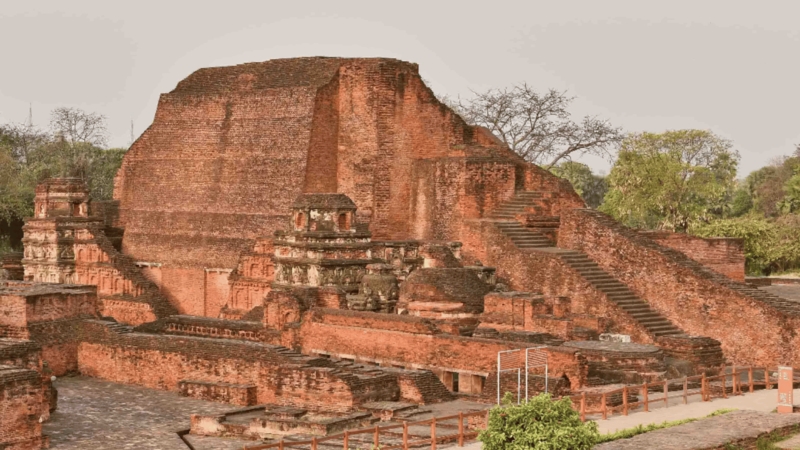
The principal temple, Site 3, follows the panchayatan style with a main shrine on a rectangular plinth and four corner shrines. Its towers once held niches with stucco images of Buddha and Bodhisattvas. Other remains include sculptures of Buddhist and Brahmanical deities, murals, copper plates, sealings, coins and terracottas. A site museum displays these antiquities.

 4.6•
4.6•
 Ticket needed for all ages
 Entry allowed for all ages
 Kid friendly
 Pets not allowed
 Free parking
 Washrooms available
 Free water stations
 ratna routh
 Saurabh Sinha
 Loves travel
 Ajeet
Ajeet Shrutidhar Nirala