Group Of Monuments Mamallapuram

Daily, 12:00 AM to 11:59 PM
Group of Monuments at Mahabalipuram, Mahabalipuram · 8944.3 km away
star4.6platform
7948 ratings

About the venue

+2

Mamallapuram, or Mahabalipuram, is a UNESCO World Heritage Site on the Coromandel Coast of Tamil Nadu. Known for its Pallava era rock cut and structural monuments, it flourished under Narasimhavarman I and his successors during the 7th to 8th centuries C.E.


Historical Background


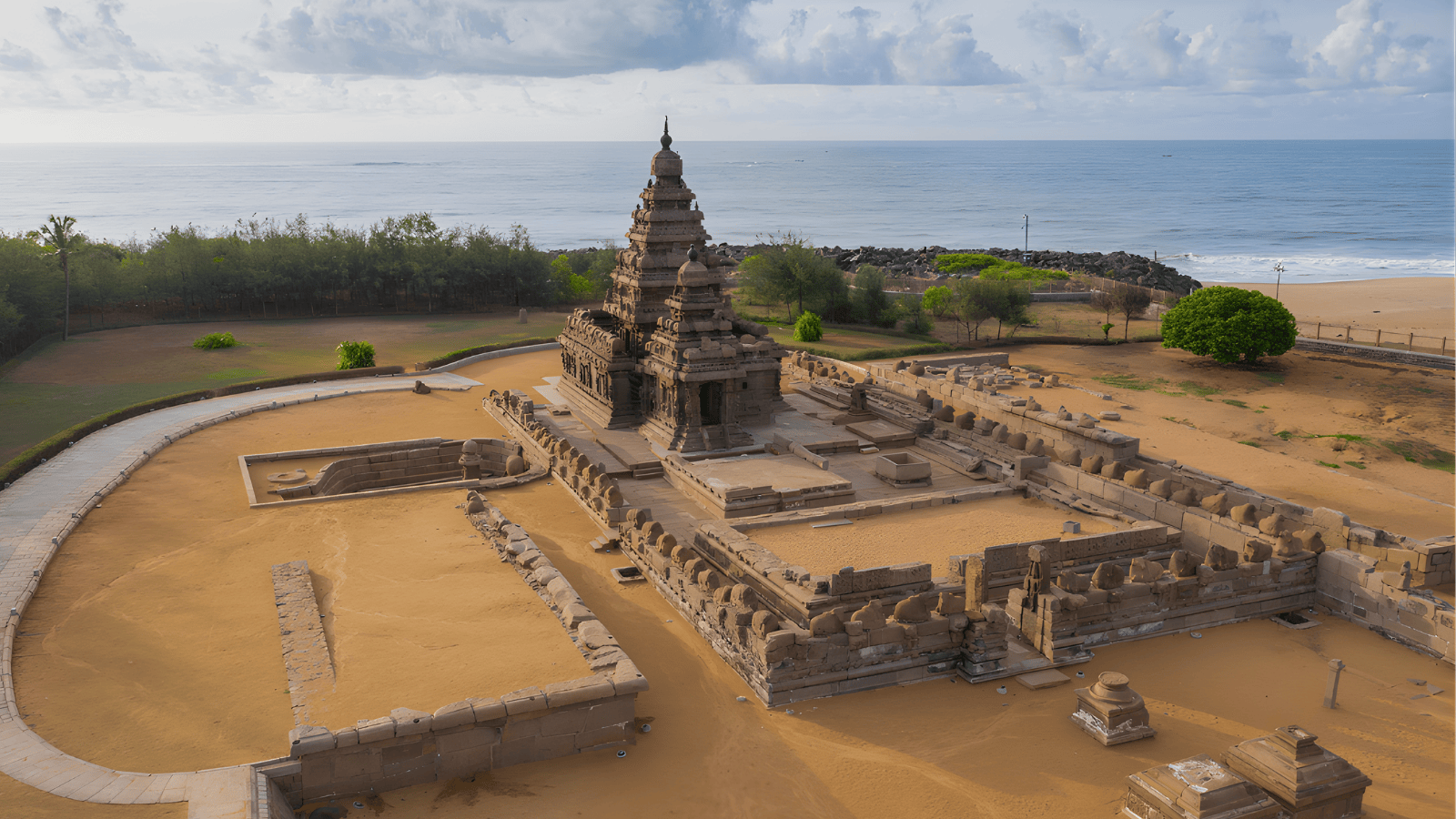
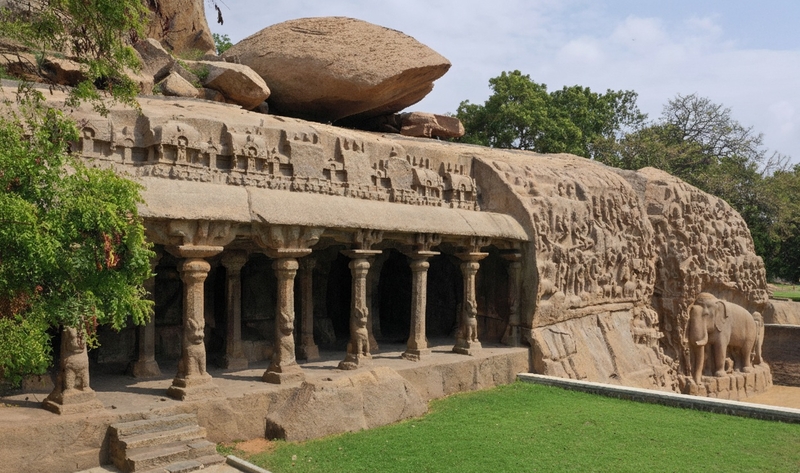
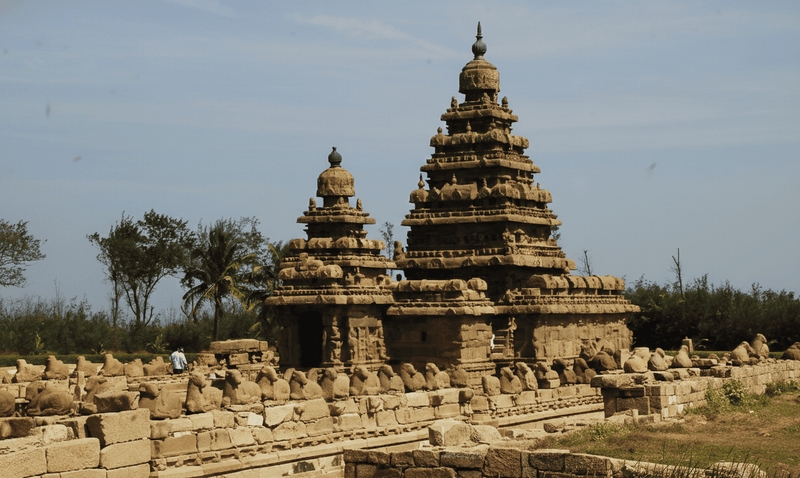
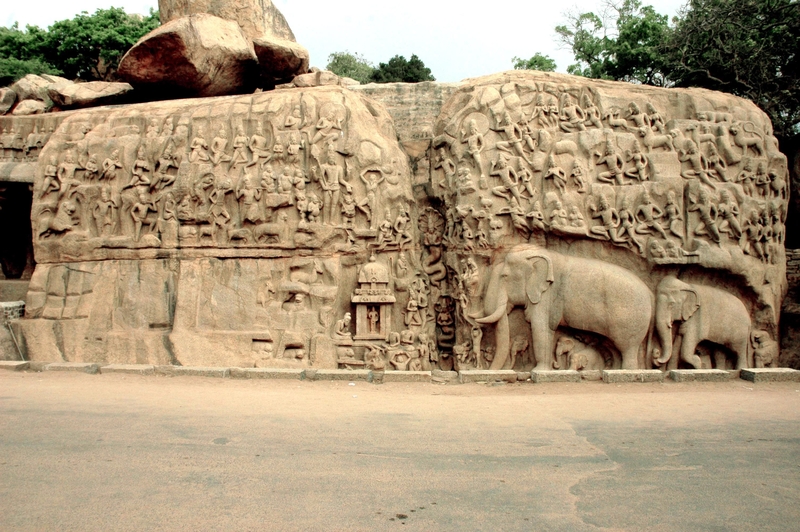
The Shore Temple is among the earliest structural stone temples in South India and is dedicated to Shiva and Vishnu. The Five Rathas, carved from single granite boulders, represent early experiments in Dravidian temple forms and are named after figures from the Mahabharata. Arjuna’s Penance is a monumental open air relief depicting the austerities of Arjuna and the descent of the Ganga. Krishna’s Butter Ball, a large granite boulder balanced on a slope, is linked to legends of Krishna’s childhood.


Location and Significance


Located on the Coromandel Coast south of Chennai, Mamallapuram combines natural settings with artistic and religious expression and reflects the Pallavas’ cultural and maritime importance.


Architectural Materials and Design


The monuments include monolithic rathas, structural temples and relief panels carved from granite. Their forms demonstrate the Pallavas’ transition from rock cut traditions to freestanding architecture and highlight their craftsmanship and narrative skill.

Things to know
icon
Ticket needed for all ages
icon
Entry allowed for all ages
icon
Kid friendly
icon
Pets not allowed
icon
Free water stations
icon
Washrooms available

What visitors say

star4.6|platform
From 7,948 Google reviews
Author AvatarAnanth Radhakrishnan
2 months ago
If you are visiting Chennai, it is worth the effort to make it to Mahmallapuram. Make sure you carry enough water and an umbrella. The south indian heat is unforgiving. The facilities around the monuments needs to be improved. The government should pay more attention to minor details like toilets and cooling off areas. Considering that this is world heritage site, more needs to be improved. But overall, the monuments themselves are beautiful and its a good day trip from Chennai.Read More
Author AvatarDinesh Jatiya
5 months ago
I visited the Group of Monuments at Mahabalipuram, and it was an incredible experience exploring this UNESCO World Heritage site. The monuments are spread across three distinct clusters located about 1–2 km from each other, so be prepared for a fair amount of walking. The three main areas include the iconic Shore Temple, the fascinating Five Rathas, and the largest complex that houses attractions like Krishna’s Butter Ball, Mahishasuramardini Cave, Ganesha Ratha, the Mahabalipuram Lighthouse, and Arjuna’s Penance, among other structures. The monuments are centrally located within the town, making them fairly accessible. The Shore Temple stands beautifully along the shores of the Bay of Bengal, offering scenic views and a unique atmosphere. The Five Rathas are situated a bit farther away from the main complex and the Shore Temple, but definitely worth the visit. It usually takes around 3–4 hours to walk around and explore all the sites at a comfortable pace. Overall, it’s a well-organized and fascinating destination for anyone interested in history, architecture, and culture. ne important tip: be cautious of local guides who may initially quote very high prices (around ₹1800) and then negotiate down to ₹800. If you’re comfortable exploring on your own, you can easily read about the history and significance of each monument online and enjoy the experience at your own pace. One of the worst aspects of the experience was the complete lack of proper signage or directional displays. There were no clear indicators to guide visitors on which way to go, where to start, or how to navigate through the street. This became especially challenging while walking in a group, as it was easy to get confused or separated in the heavy crowd. Better guidance systems or signboards would greatly improve the overall experience and make navigation much smoother for visitors. Overall, it’s a fascinating destination for anyone interested in history, architecture, and culture.Read More
Author AvatarAmrit pal
7 months ago
I’ve never been one for hurried sightseeing. In Mahabalipuram, with its cluster of low, rounded granite hills rising like ancient guardians from the coast, that slow pace feels almost necessary. These aren’t towering mountains—just smooth, sun-baked rock outcrops, 30–50 meters high at most, scattered with 1,300-year-old carvings, caves, and that famous precariously balanced boulder everyone calls Krishna’s Butter Ball. But the magic is in moving deliberately: one careful step at a time over warm granite, pausing often to trace a chisel mark or watch a lizard dart across a relief. I arrived early one February morning in 2026, the air still cool and salty from the Bay of Bengal. Instead of dashing from monument to monument, I let Google Maps be my gentle guide. I searched “Krishna’s Butter Ball” and chose the walking route—no car, no tuk-tuk, just footpaths. The little blue dot moved with me at my own unhurried rhythm, never rushing, never losing me among the boulders. That massive 250-ton granite sphere still sits exactly where it has for centuries, defying every logic of gravity on its gentle slope. I spent nearly an hour there alone—sitting on the rock nearby, watching other visitors try (and fail) to “push” it for photos, feeling the quiet wonder of something so improbably steady. Maps showed me the short incline clearly in satellite view; I could see how the paths looped around it without crowds blocking the best angles in the early light. From there I wandered slowly upward, following the terrain layer that highlighted every subtle rise and dip. No steep climbs, just steady inclines smoothed by a thousand years of feet. I paused at the Mahishasuramardini Cave to sit in the cool shade and study the goddess Durga’s battle frozen in stone, then continued to the Trimurti Cave where three serene faces of Shiva gaze out eternally. Google Maps’ offline mode (downloaded the night before) kept working flawlessly even when my signal dipped among the rocks—no frantic searching, just calm arrows guiding me forward.Read More
Author AvatarShalini Saha
5 months ago
Visiting the Pancha Rathas feels like stepping into a sculptor’s dream frozen in stone. Each of the five monolithic structures, carved from a single rock, stands like a chapter from an ancient architectural storybook. What makes this place fascinating is how each ratha has its own personality—from the towering elegance of Dharmaraja Ratha to the simpler, more grounded forms beside it. The craftsmanship is incredibly detailed, especially considering these were carved centuries ago without modern tools. The layout is open and easy to walk through, making it feel more like an outdoor museum of stone experiments than a traditional temple complex. The iconic stone elephant nearby adds a playful, almost lifelike presence to the space. That said, there’s not much shade, so visiting early morning or late afternoon is ideal. Also, while the site is visually stunning, there’s limited guided information on-site, so a bit of prior reading or a guide can really enhance the experience. Overall, Pancha Rathas is a must-visit for history lovers, architecture enthusiasts, and anyone who appreciates intricate craftsmanship. It’s less about rituals and more about quietly admiring the genius of ancient artistry carved into time itself.Read More
Author AvatarRahik Dutta
5 months ago
The group of monuments in Mahabalipuram is truly a spectacular and fascinating destination for history and architecture enthusiasts. The rock-cut temples, intricate carvings, and sculpted mountains are absolutely breathtaking and offer a glimpse into the incredible craftsmanship of ancient India. Walking through the site, you can’t help but marvel at the skill and detail that went into creating these structures centuries ago. While the site comes under the care of the Archaeological Survey of India, one downside is that it isn’t very well marked or explained, which can make it a little difficult for visitors to fully understand the significance of each monument. Signage and information boards could certainly be improved to enhance the overall experience. That said, the maintenance of the site is decent, keeping the area clean and accessible for tourists, although there is room for improvement. The entry ticket is very reasonable—₹35 online and ₹40 at the counter—and the ticket gives access to all the major attractions in Mahabalipuram, which makes it excellent value for money. Despite the minor shortcomings, the historical importance, beauty, and sheer artistry of these monuments make it well worth visiting.Read More
Organized by
brand-img
Archaeological Survey of India
90%liked
154events
8 monthshosting
More
Frequently asked questions
Terms and Conditions
₹35
onwards