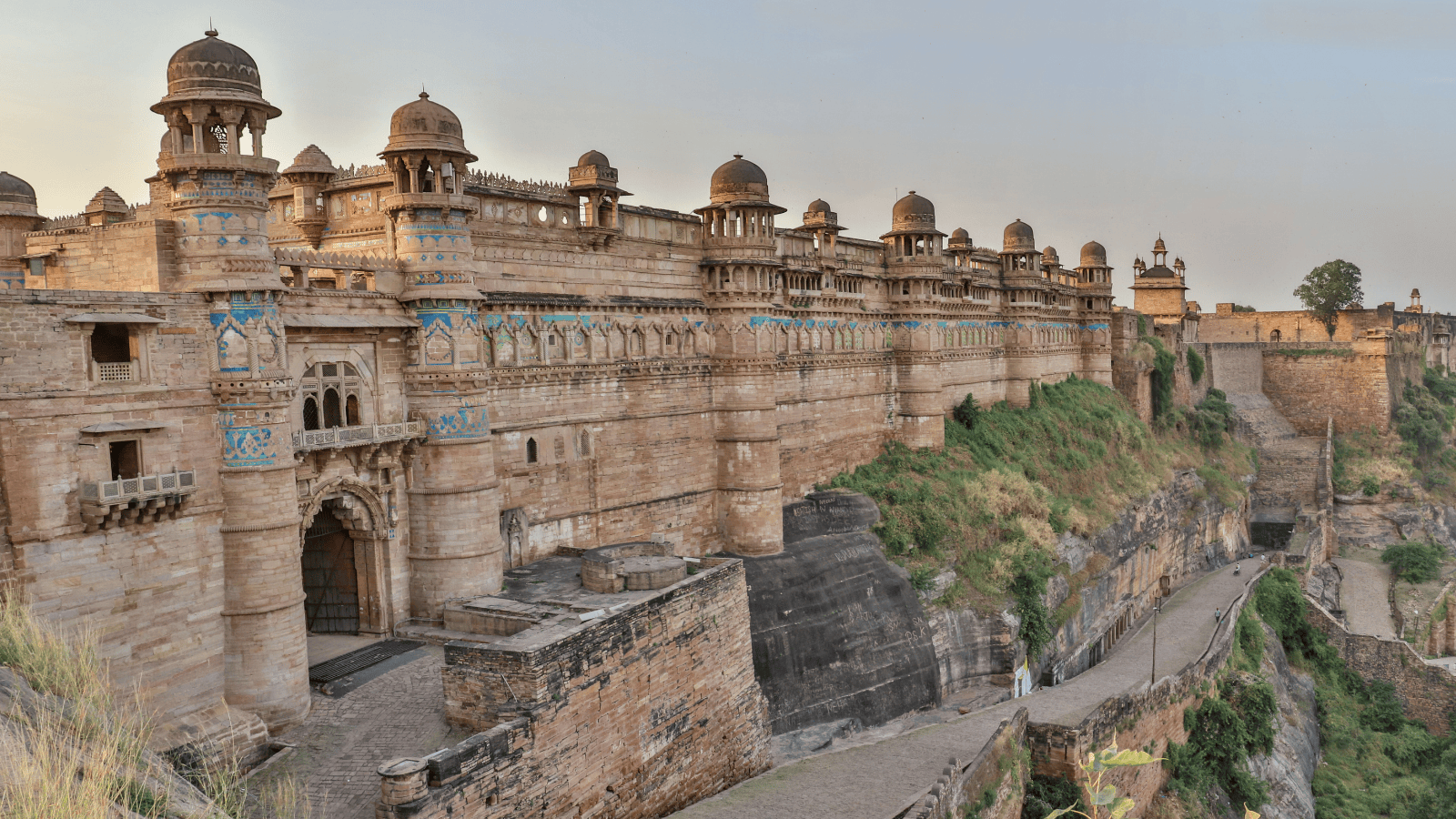
Gwalior Fort rises above the city of Gwalior in Madhya Pradesh and has long been celebrated as the pearl among Indian fortresses. Set on a rocky hill, it presents a commanding profile whose walls, gateways, and sculptural embellishments reflect centuries of artistic and political development.
Historical Background
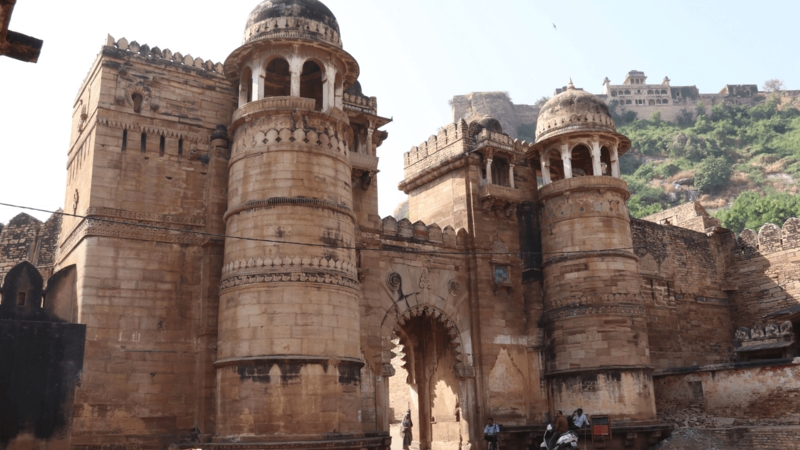
The origins of the fort reach back to the 6th century C.E., although successive dynasties, including the Tomars, Mughals, Marathas, and Scindias, reshaped its form. Within its broad enclosure stand palaces, temples, tanks, and gateways. Man Singh Palace, Gurjari Mahal, Sas Bahu Temples, Teli ka Mandir, and the Jain rock cut sculptures reveal the intersection of Hindu, Jain, and Islamic traditions.
Location and Significance
Situated in the heart of central India, the fort functioned as both a defensive stronghold and an emblem of regional authority. Its monuments testify to the cultural exchanges and shifting political powers that shaped Gwalior.
Architectural Materials and Design
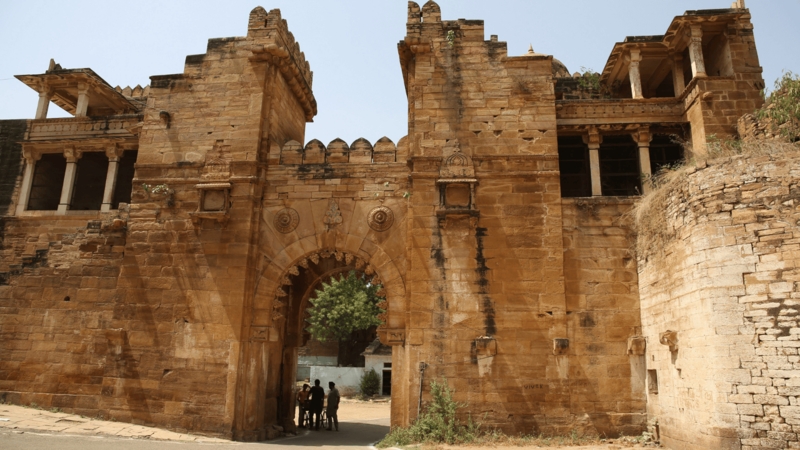
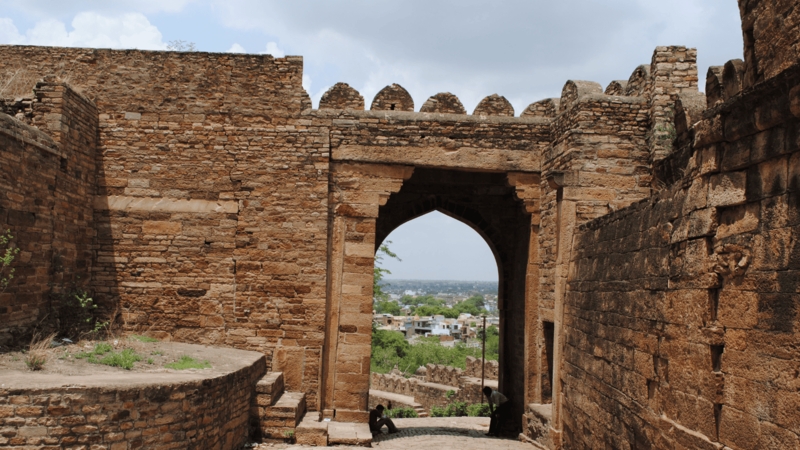
A notable feature is the eastern Alamgir Gate, constructed in 1680 C.E. under Motamid Khan and dedicated to Aurangzeb. Its carved arch showcases Mughal style. Across the complex, monumental walls, palatial chambers, and sacred shrines demonstrate varied building techniques unified by robust hilltop planning.

 4.5•
4.5•
 Ticket needed for all ages
 Entry allowed for all ages
 Kid friendly
 Pets not allowed
 Free water stations
 Washrooms available
 Aman Kumar
 Dr. Ashish Dahiya
 Sabbir Hossain
 Ragini Bhattacharyya
 Anil M