The Jantar Mantar of Delhi, constructed in 1724 by Maharaja Jai Singh II of Jaipur who lived from 1699 to 1743 C.E., represents a pioneering step in the scientific tradition of early modern India. Built to refine astronomical charts and measure time by observing celestial movements, it became the first in a series of observatories established by the ruler across India.
Historical Background
The observatory served as a center for calculating planetary motions and preparing accurate astronomical tables. Jai Singh II commissioned similar installations at Jaipur, Varanasi, Mathura, and Ujjain, furthering his efforts to standardize astronomical observations and integrate empirical methods into royal scholarship.
Location and Significance
Situated in the capital city of Delhi, the Jantar Mantar stands within an urban landscape shaped by centuries of scientific and cultural patronage. Its yantras symbolize a period when astronomy, mathematics, and architecture were deliberately intertwined.
Architectural Materials and Design
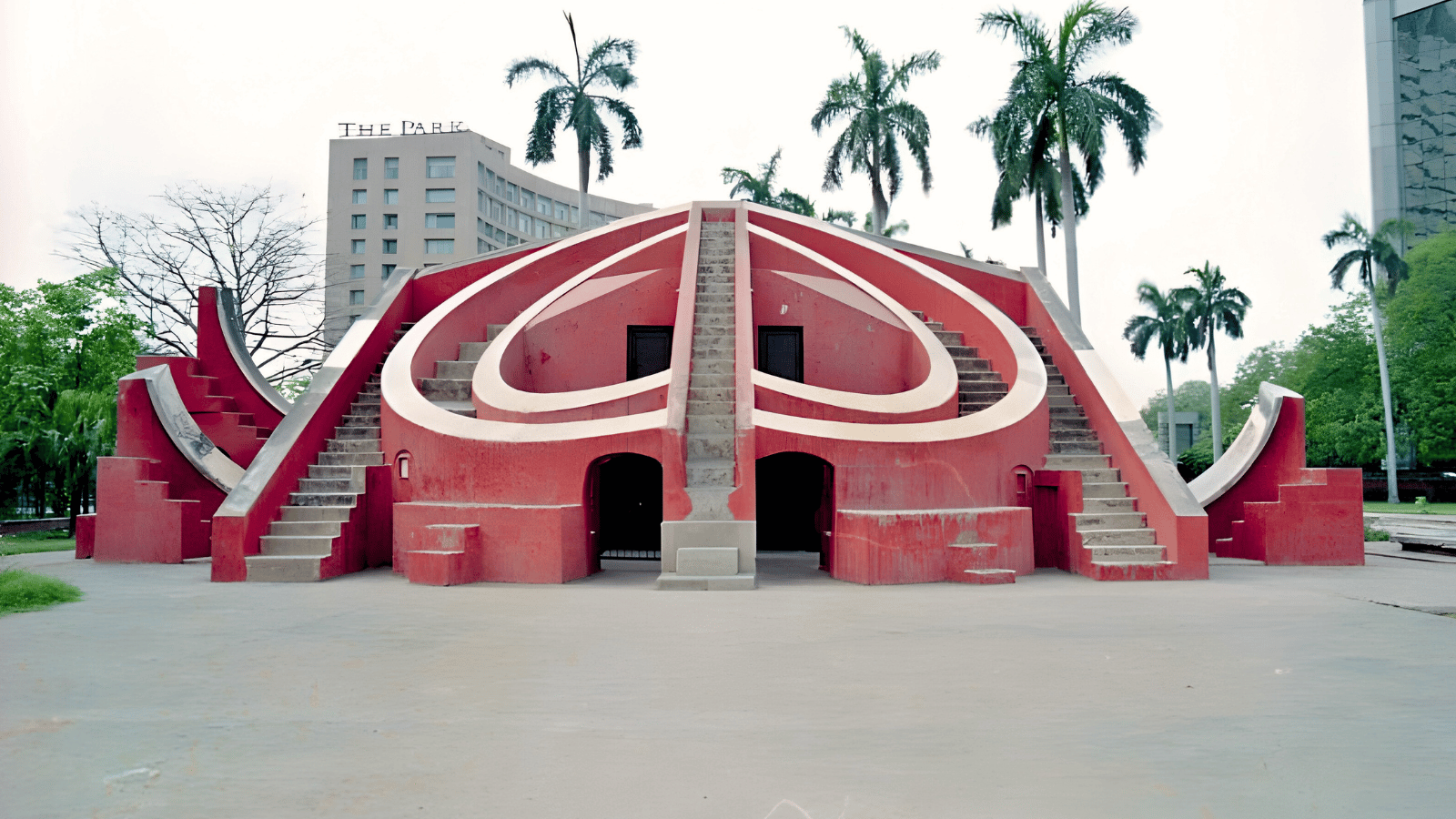
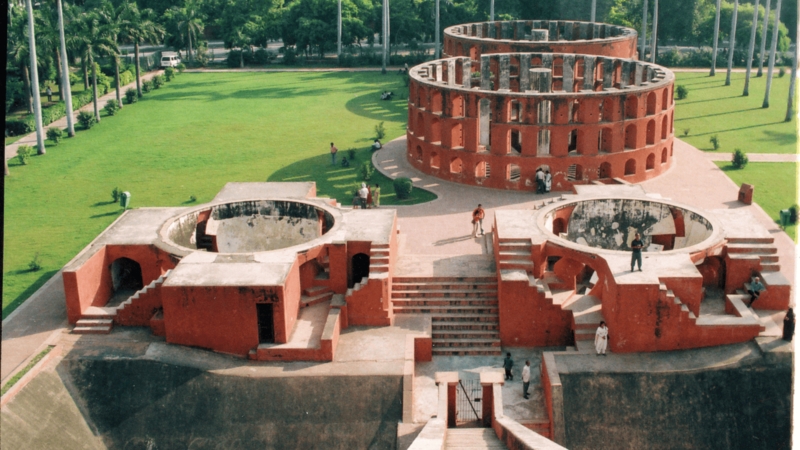
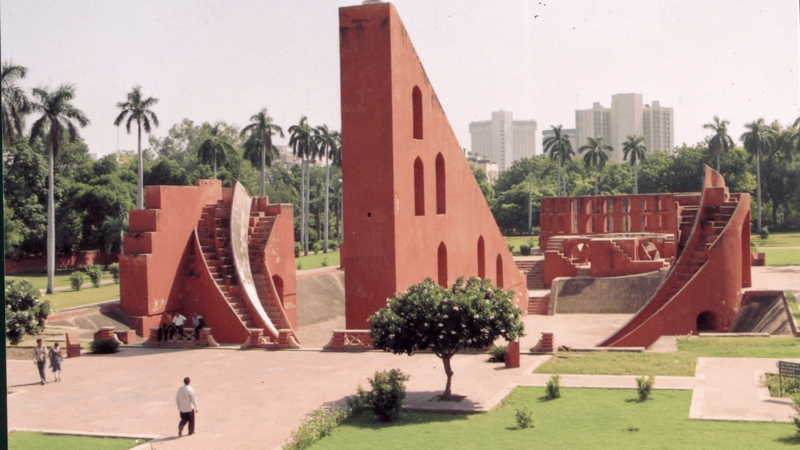
The complex includes thirteen instruments, the most important being the Misra Yantra, Jaiprakash Yantra, Samrat Yantra, and Ram Yantra. Their bold geometric forms, large scale, and precisely aligned surfaces allowed observers to measure time, altitude, and celestial positions. These designs continue to attract architects and historians for their blend of functional ingenuity and sculptural presence.

 4.2•
4.2•
 Ticket needed for all ages
 Entry allowed for all ages
 Kid friendly
 Pets not allowed
 Washrooms available
 Free water stations
 JAYSHREE
 ICEY
ICEY Shijinjith L R
 DigitalSant
 Jhuma Mondal