The Keshava Temple at Somanathapura is regarded as the most refined example of Hoysala architecture. Its carefully sculpted form, set within a well protected courtyard, presents a harmonious combination of artistry and engineering that reflects the maturity of the Hoysala tradition.
Historical Background
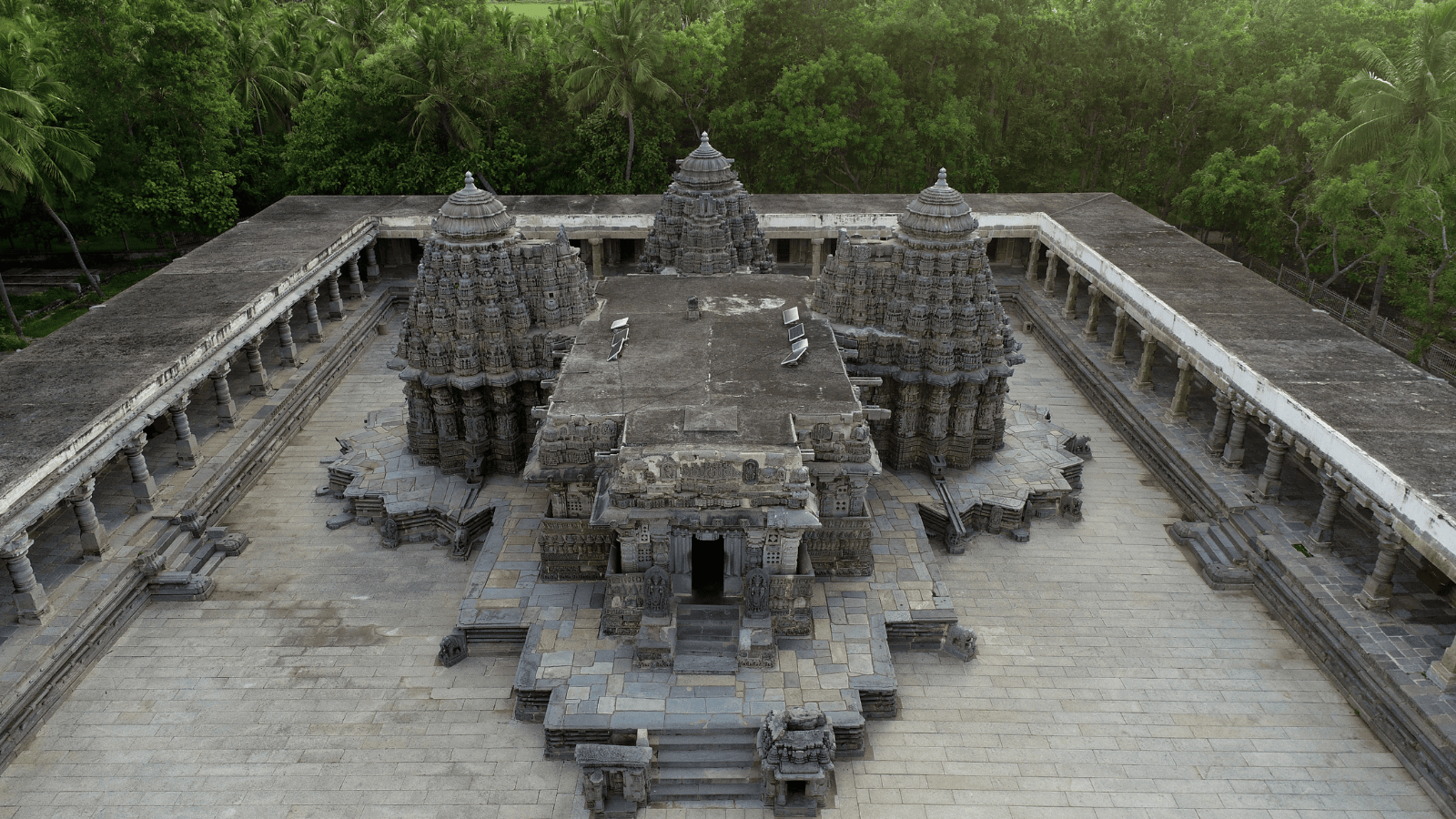
Dedicated to Vishnu, the monument was created during a period of heightened temple construction in the 13th century C.E. The temple has three sanctums situated on the west, north, and south, each linked to a common pillared hall. Iconographically, the sanctums enshrine Keshava, Venugopala, and Janardana, illustrating the rich devotional character of the site and its association with regional Vaishnava traditions.
Location and Significance
Situated in the historic landscape of Karnataka, the temple stands as a cultural landmark demonstrating the exceptional craftsmanship of Hoysala sculptors. The presence of named artisans, including the distinguished Mallitamma, reinforces its importance within the architectural heritage of southern India.
Architectural Materials and Design
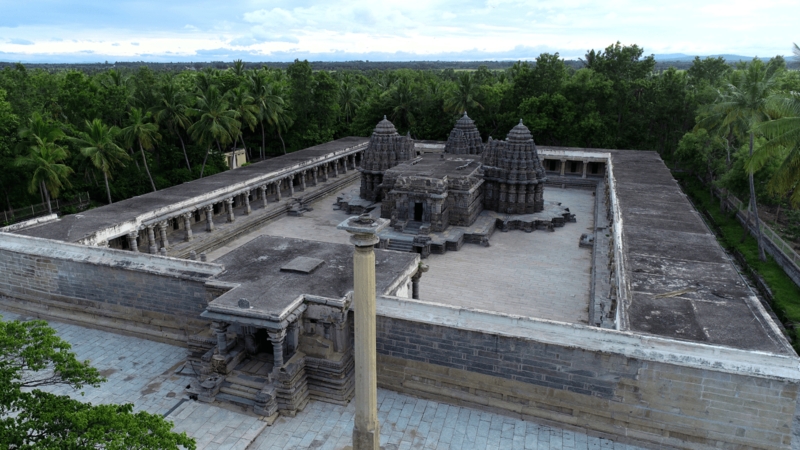
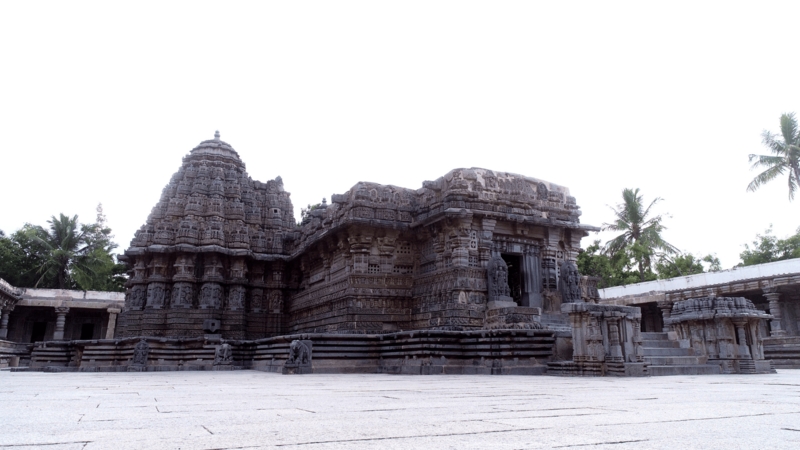
The temple rests on a stellate platform and is enclosed by pillared corridors with subsidiary shrines. Elaborately carved ceilings, refined doorframes, and exquisitely detailed exterior walls display images of deities and decorative motifs rendered with precision. The careful placement of sculptures and the rhythmic articulation of surfaces exemplify the hallmark qualities of Hoysala design.

 4.8•
4.8•
 Ticket needed for all ages
 Entry allowed for all ages
 Kid friendly
 Pets not allowed
 Washrooms available
 Free water stations
 Sonam Baranwal
 Manohara Mukunda
 Nidhi Chadha
 JohnsonDavid
 Ash
Ash