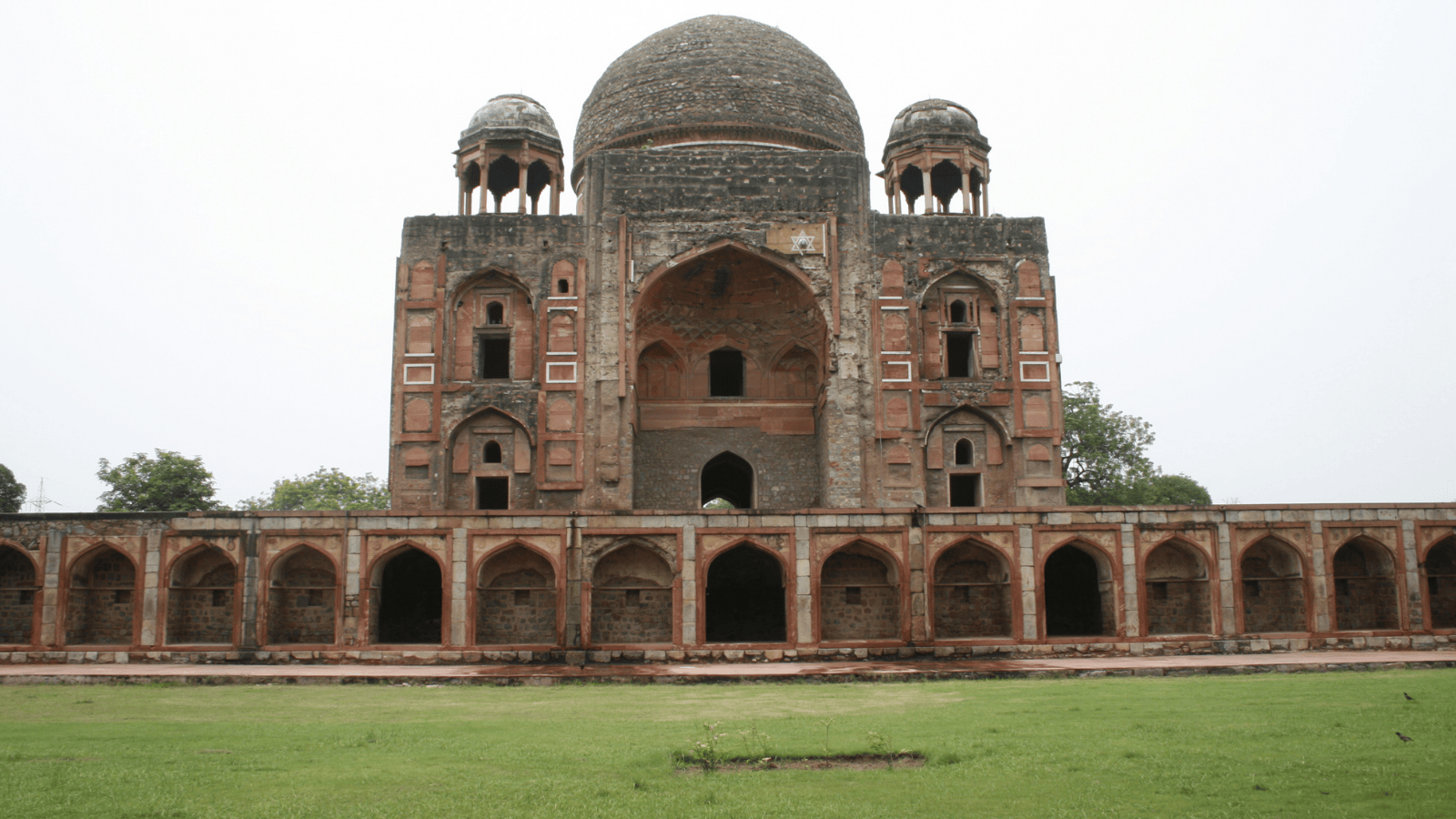
Khan-I-Khana

Mon, 23 Nov – Tue, 1 Dec, Multiple slots
Abdur Rahim Khan-i-Khanan's Tomb, New Delhi
star4.3•platform
986 ratings

About the venue

Abdur Rahim Khan, honored as Khan i Khanan, was the son of Bairam Khan, the regent of Emperor Akbar. He served both Akbar and Jahangir and was celebrated as one of the distinguished Navaratnas of Akbar’s court. Skilled in several languages, he became widely admired for Hindi couplets composed under the name Rahim.


Historical Background


Rahim built his tomb in memory of his wife Mah Banu, and his own remains were later placed within the same structure. The monument reflects the architectural pattern of Humayun’s Tomb, featuring chhatris at the corners of the central dome and dalans along the sides. Original marble and stone facing were removed in later periods and reused in Safdarjung’s Tomb.


Location and Significance


The tomb is situated in Delhi near the Dargah of Nizamuddin Auliya and close to Humayun’s Tomb, forming part of an important historic enclave. Its association with a prominent statesman and poet enhances its cultural value.


Architectural Materials and Design


The structure originally displayed fine marble and stone facing, later lost due to reuse elsewhere. A major restoration began in 2014 through a collaboration between the Aga Khan Trust for Culture and the Archaeological Survey of India. After completion, the monument reopened for public viewing.

Things to know
icon
Ticket needed for all ages
icon
Entry allowed for all ages
icon
Kid friendly
icon
Pets not allowed
icon
Free water stations
icon
Washrooms available

What visitors say

star4.3|platform
From 986 Google reviews
Author AvatarExplorewithHarsh
5 months ago
Abdul Rahim Khan-i-Khanan's Tomb is a peaceful and underrated place in Delhi. The entry fee is just ₹10, and the old Mughal ruins give off a really good vibe. The architecture is beautiful, the weather feels pleasant, and there are food options nearby too. A great spot to relax, click photos, and enjoy some history. Definitely worth a visit!Read More
Author AvatarExplore Tales & Review
2 months ago
It's nice, very much quite place. Place is very neat and cleaned. Nothing much to see here except the small tomb. I visited here first time.Read More
Author AvatarMuhammed Wajeeh
2 months ago
Abdul Rahim Khan-i-Khanan, also known simply as Rahim, was a prominent 16th-century Mughal polymath who was a poet, composer, statesman, soldier, and an important minister (dewan) in the court of Emperor Akbar. He was one of the nine "Navaratnas" (Nine Jewels) of Akbar's court. Key Details Life: Born in 1556, Rahim was the son of Bairam Khan, Akbar's trusted guardian and mentor. After his father's assassination, Akbar took Rahim under his care and provided him with a comprehensive education. He later served both Emperor Akbar and his successor, Jahangir. Literary Contributions: Rahim is widely known for his "Hindi dohe" (couplets) and his books on astrology, which are still taught in Indian schools. He had an excellent command of several languages, including Sanskrit, Braj, Arabic, and Persian, and he translated the Baburnama (Babar's memoirs) from the Chagatai language into Persian. Legacy: Known for his secular outlook and humility, Rahim made a substantial impact on Mughal administration and policies. His work reflects a synthesis of different cultures and a deep devotion to Lord Krishna despite being Muslim. His Tomb His tomb is a significant architectural structure located in Nizamuddin East, New Delhi, near Humayun's Tomb. Rahim built the tomb in 1598 for his wife, and was later buried there himself after his death in 1627. In the mid-18th century, much of the marble and sandstone from his tomb was stripped and used in the construction of the nearby Safdarjung's Tomb. The tomb has undergone extensive restoration work by the Aga Khan Trust for Culture in partnership with the InterGlobe Foundation, and was opened to the public after six years of conservation work in 2020.Read More
Author AvatarSushil kumar kushwaha
8 months ago
Abdul Rahim Khan-i-Khanan tomb is located in the Nizamuddin area of New Delhi. Just a km away from Humayun's tomb. This is the first Mughal era tomb in Delhi which was built in 1598 by Khane- I- khanan for his loving wife Mah Banu Begum and later his body was also placed there in 1627. The architecture design is stunning and thoughtfully crafted, blending traditional elements with modern touches. The mausoleum interior is beautifully decorated in Persian style. The lush green garden with water channels makes the place unique. Rahim Khane- I- khanan was one of the coutiers, soldier of Emperor Akbar's court and great poet of the era. Abdur Rahim's interest in literature, his patronage of poets and translation activities was influenced by the Mughal court. Must visit an art gallery within the compound. The site is open daily from 9 am to 5 pm. Entry ₹20 via scanning QR code. Highly recommended for history lovers !!!Read More
Author AvatarSatnam Singh
9 months ago
Abdul Rahim Khan-i-Khanan (1556–1627) was a towering figure in the Mughal court—a celebrated general, a brilliant diplomat, and one of the "Navaratnas" (Nine Gems) of Emperor Akbar. Beyond his military prowess, he is immortalized for his Hindi couplets (dohe) and his Persian translations, including the Baburnama. ​Built in 1598, the tomb was originally commissioned by Rahim for his wife, Mah Banu, making it the first Mughal grand mausoleum dedicated to a woman. Upon his death in 1627, Rahim was also interred there. ​Architecturally, the structure served as a vital precursor to the Taj Mahal. Its majestic double dome and red sandstone facade influenced later Mughal masterpieces. Sadly, in the 18th and 19th centuries, much of its interior marble and sandstone were stripped to construct the Tomb of Safdar Jung. Following a massive restoration project completed in 2020, the monument’s intricate masonry and grandeur have been beautifully revived.Read More
Organized by
brand-img
Archaeological Survey of India
91%liked
164events
11 monthshosting
More
Frequently asked questions
Terms and Conditions
₹20
onwards