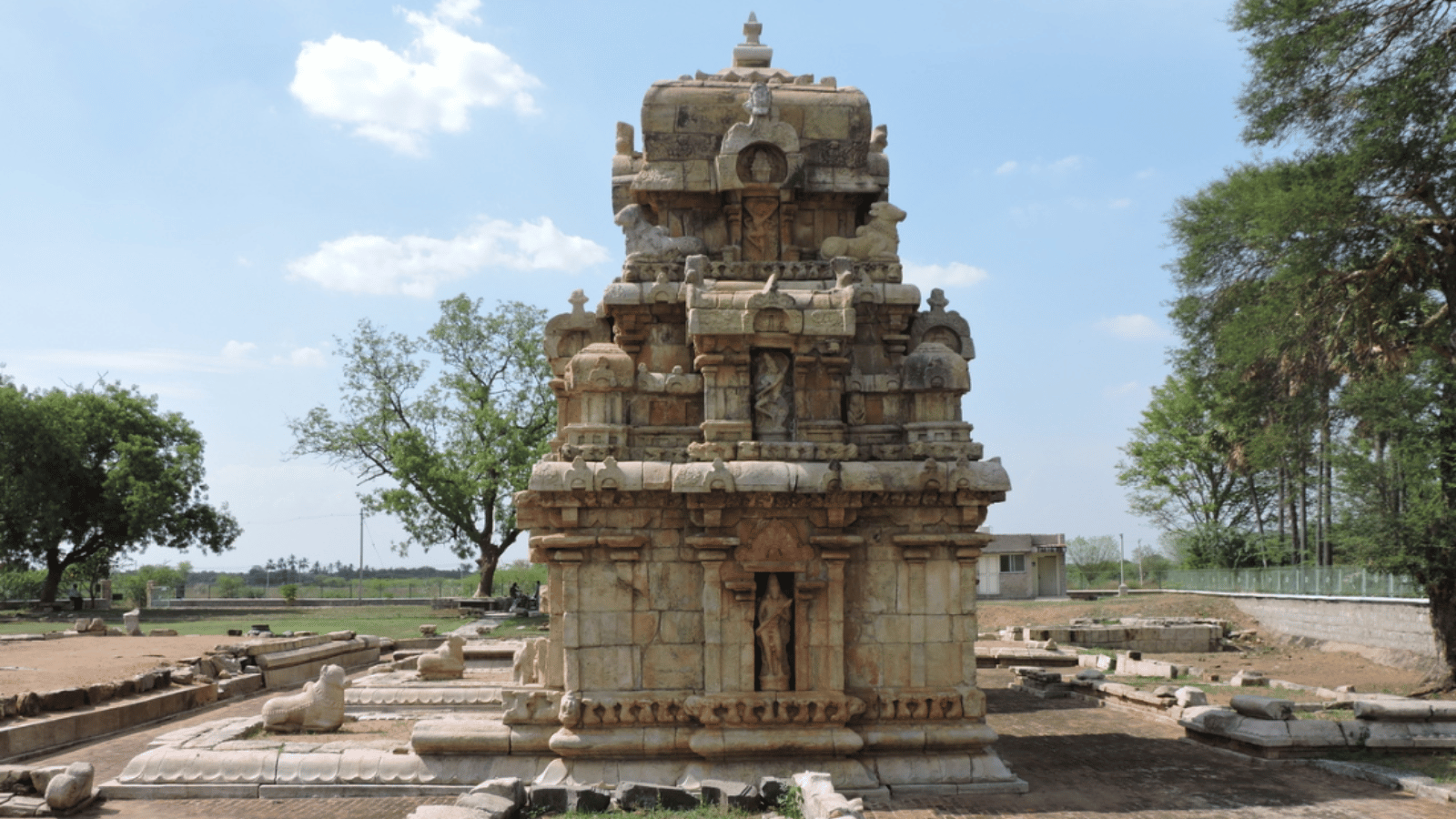
Moovar Koil, also known as the 'Three Temples', is an ancient South Indian heritage complex celebrated for its refined pre Chola architectural character. The site offers an atmosphere that highlights the artistic ambitions of its builders and preserves a remarkable sense of serenity.
Historical Background
Established in the late ninth century C.E., the complex was commissioned by Bhuti Vikramakesari, an Irukkuvel chief. A Sanskrit inscription on the central Vimana confirms his patronage and records that he named the principal shrine after himself, while dedicating the two flanking Vimanas to his queens, namely Karrali and Varaguna. The temples together reflect an early stage in South Indian sacred architecture and reveal the technical mastery of the artisans involved.
Location and Significance
Situated in Kodumbalur in the state of Tamil Nadu, the monument stands as an important testimony to early temple building traditions. It retains high cultural value for its historical associations and its evocative atmosphere that links visitors to an earlier era.
Architectural Materials and Design
The complex comprises three structurally unique temples, each distinguished by delicately carved walls and finely modelled sculptures. Their expressive figures and elaborate ornamental work display the exceptional craftsmanship of the period and define the aesthetic identity of the site.

 4.6•
4.6•
 Ticket needed for all ages
 Entry allowed for all ages
 Kid friendly
 Pets not allowed
 Washrooms available
 Free water stations
 Subramani Iyer
 G R SARAVANAN
 Dr Rithik Bose
 Ravi Balasubramanian
 sarada mysore