Ranghar Ruins Sibsagar
About
The Ranghar Pavilion in Sivasagar, Assam, is a distinguished monument of the Ahom period and reflects the artistic and ceremonial traditions of the 18th century. Built by King Pramatta Singha between 1744 and 1751 C.E., it stands as a prominent emblem of the grandeur associated with Ahom royal culture.
Historical Background
The structure served as a venue where Ahom rulers and nobles gathered to witness sporting events including wrestling, buffalo fights, elephant contests, and displays of falconry. Its function as a royal viewing platform contributed to its unique architectural character and ceremonial significance within the broader historic landscape of Rangpur.
Location and Significance
Situated in the cultural heart of Sivasagar, the pavilion forms part of a larger corpus of Ahom monuments that embody the dynasty’s architectural innovation. It continues to attract scholars and visitors who seek to understand the social and artistic milieu of Assam’s pre modern polity.
Architectural Materials and Design
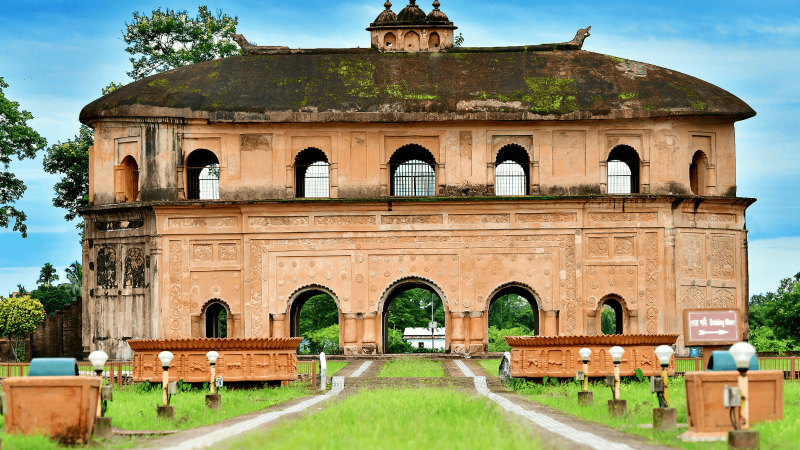
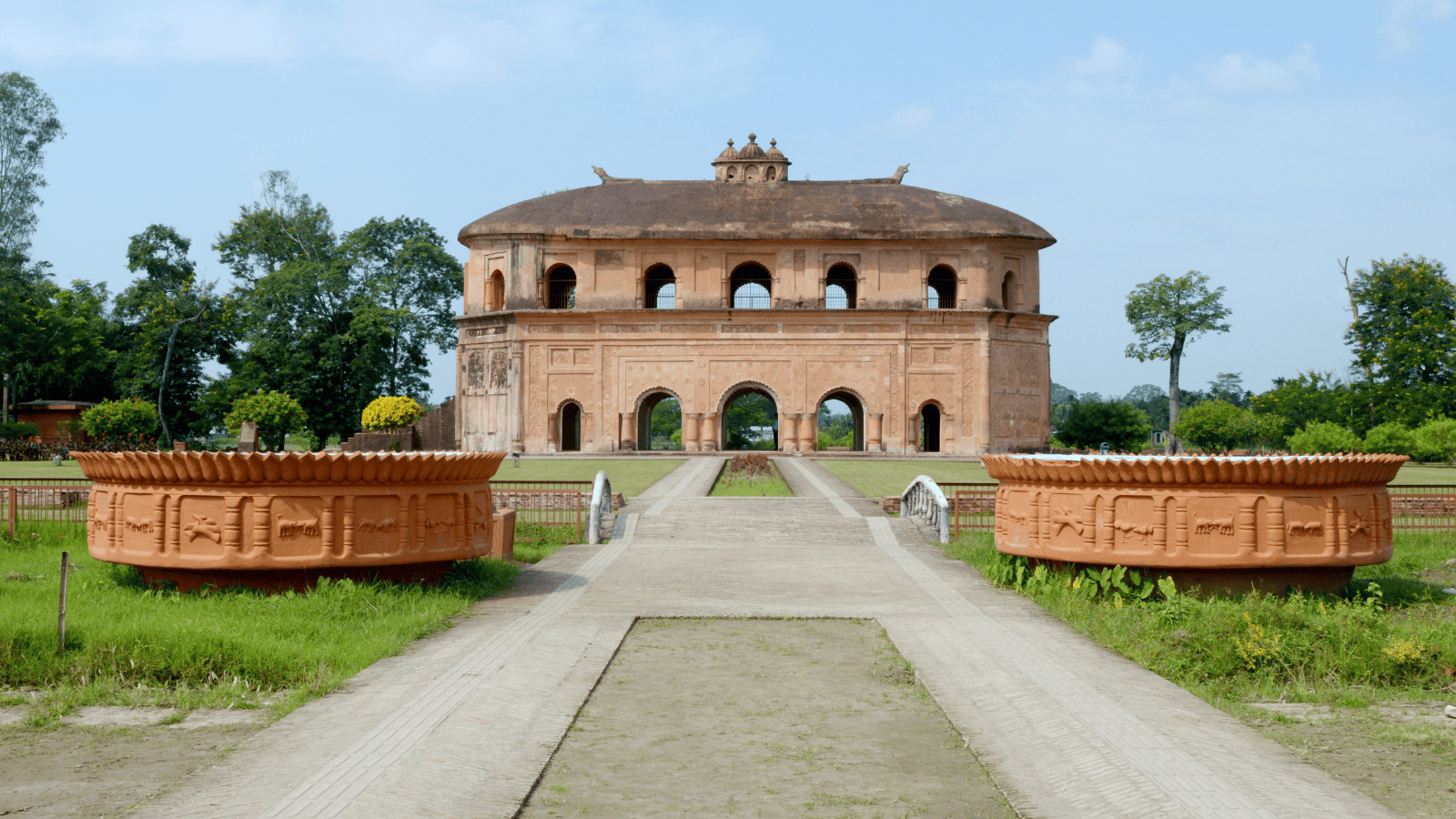
The pavilion is raised on a high platform and presents an oval shaped double storied form with a rectangular core surrounded by arched openings. Its inverted boat like roof rests on massive columns and pilasters with semicircular arches. Faded panels depict animal combat scenes, while the crowning element, a long boat form with makara ends and a trefoil canopy, provides a distinctive silhouette.


Why this event stands out
Royal vantage points shaped for grand public spectacles.
What you’ll experience
The unique boat-shaped roof crowned with decorative stone makara motifs.
Special attractions
History enthusiasts fascinated by the Ahom dynasty’s royal monuments.


Gallery