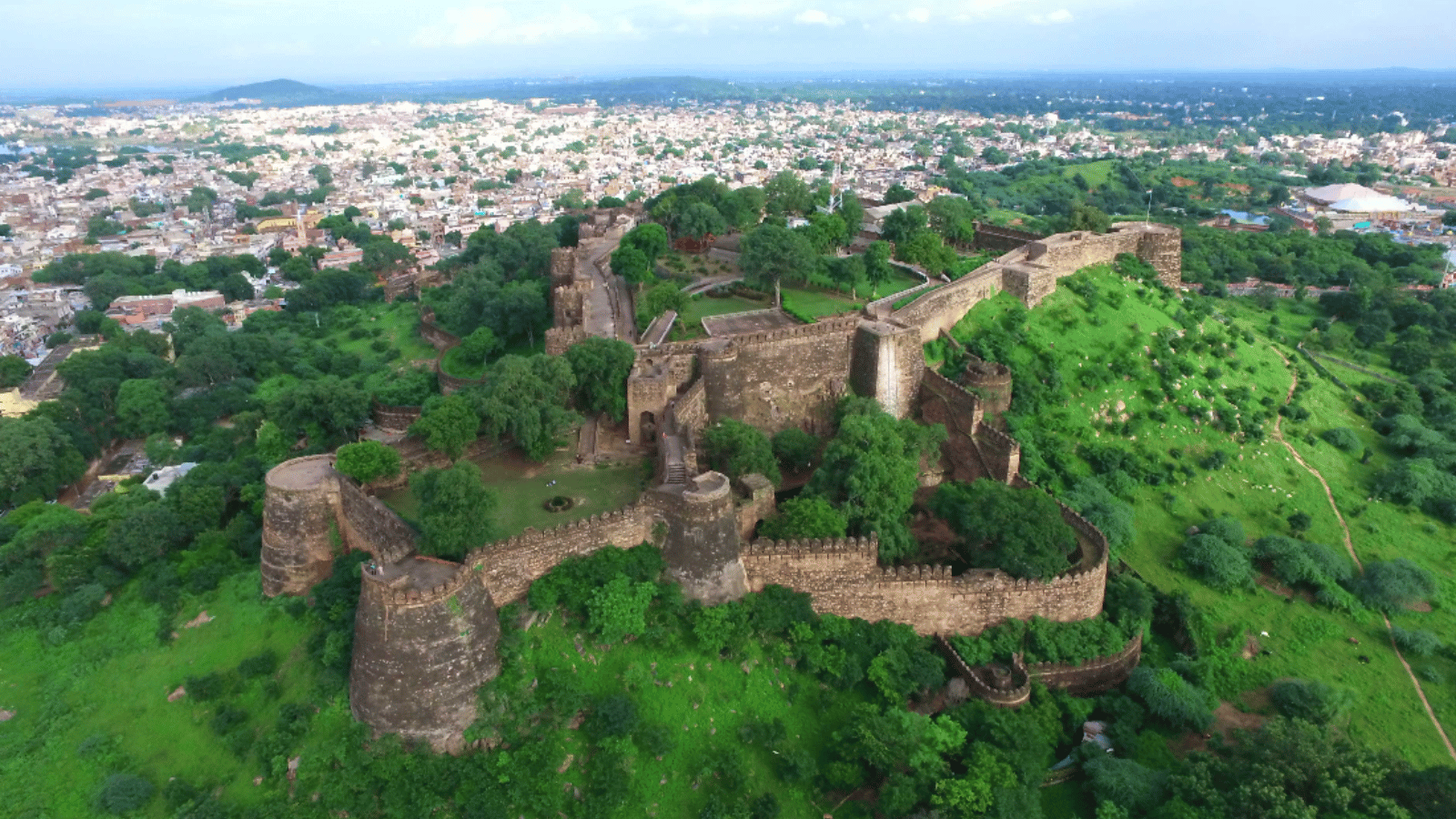
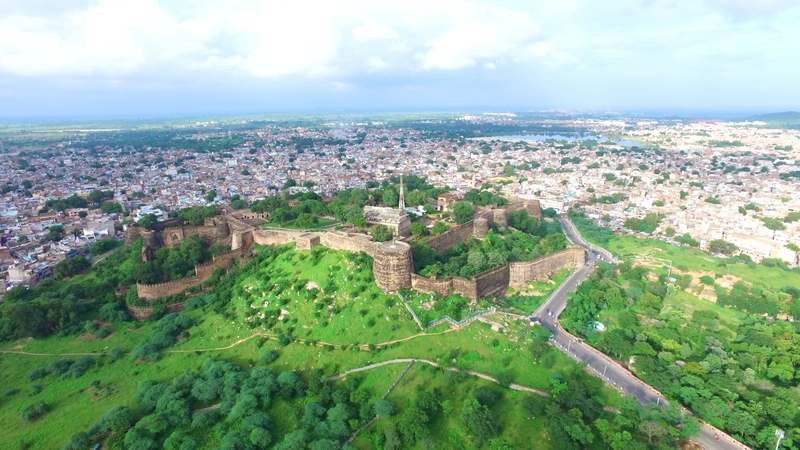
Jhansi Fort, standing prominently in the heart of Jhansi city, is a commanding stronghold constructed by Raja Bir Singh Judeo of Orchha between 1606 and 1627 C.E. Rising from the rugged hill of Bangira, the fort exemplifies the region’s long tradition of fortified architecture and endures as a celebrated emblem of bravery.
Historical Background
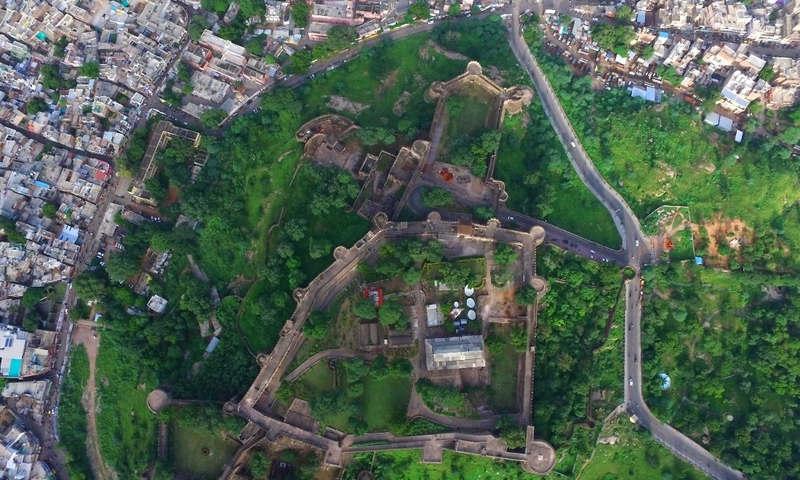
The fort served as an important military centre for the Chandela rulers from the 11th to the 17th century, during the period when the area was known as Balwant Nagar. Originally its defensive walls enclosed the entire settlement and were pierced by ten gates, among them Khandero Gate, Datia Darwaza, Unnao Gate, Jharna Gate, Laxmi Gate, Sagar Gate, Orchha Gate, Sainyar Gate and Chand Gate. Within the enclosure lie notable structures such as the Ganesh Mandir, the Panch Mahal, the Karak Bijli Cannon and a historic Shiva Temple.
Location and Significance
Located in Jhansi, Uttar Pradesh, the fort is most renowned for its association with the Revolt of 1857, when it emerged as a crucial centre of resistance to British colonial rule. The memorial at the Jumping Spot commemorates the daring escape of Rani Lakshmibai, whose leap on horseback became a symbol of heroic defiance.
Architectural Materials and Design
The fort features robust stone ramparts, bastions and gateways, all integrated with the contours of the hill. Its internal structures reflect functional planning and ritual space, preserving the legacy of regional craftsmanship.

 4.4•
4.4•
 Ticket needed for all ages
 Entry allowed for all ages
 Kid friendly
 Pets not allowed
 Free water stations
 Free parking
 Washrooms available
 Avadh Kishor Dwivedi
 Yatra sphere
 X-SAFI PH
 Abhishek Choudhary
 RUTVIK DEORE