Red Fort

Sun, 22 Nov onwards, Multiple Dates
Red Fort, New Delhi
star4.5•platform
185312 ratings

About the venue

+2

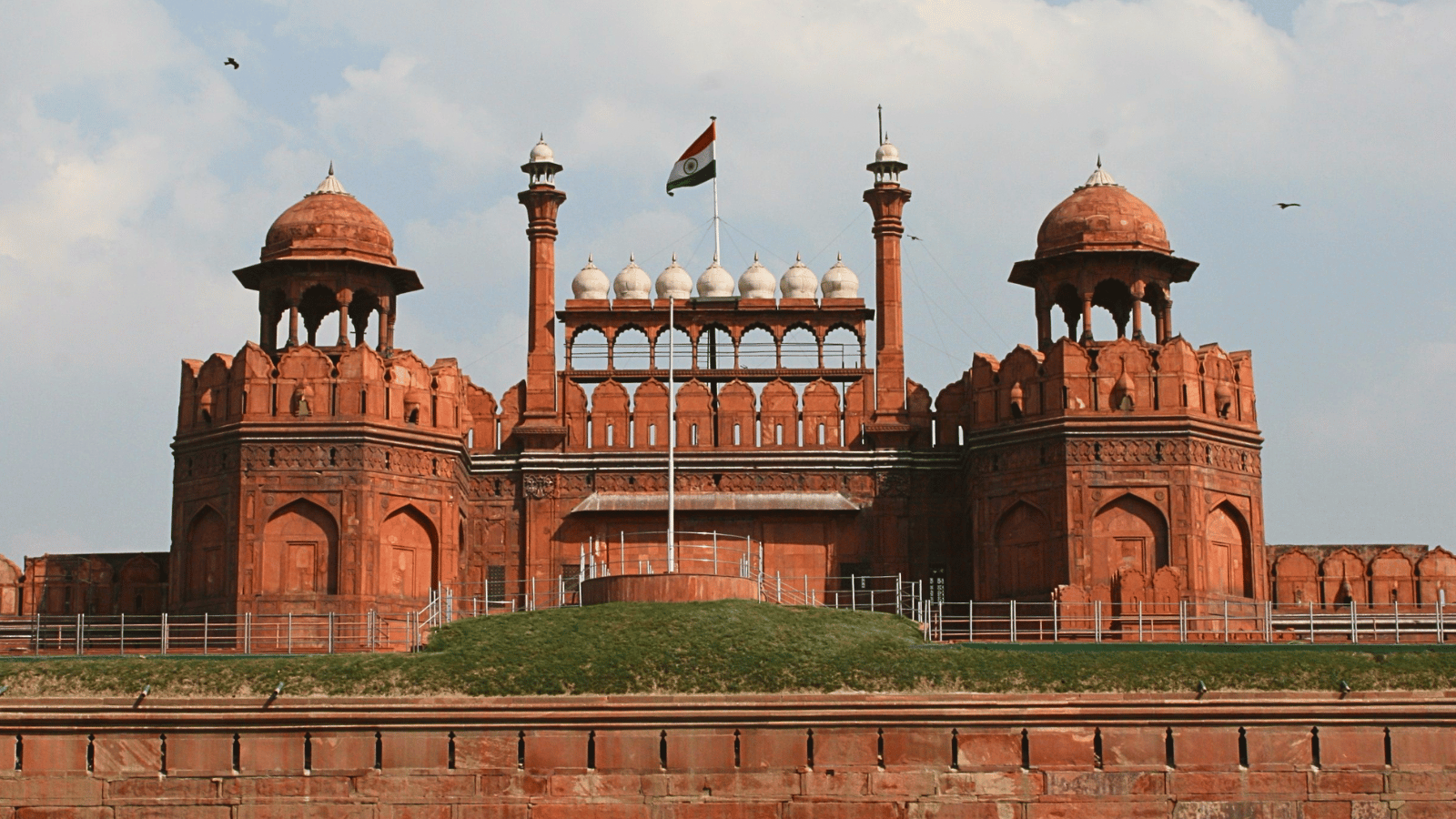
The Red Fort was built by Mughal emperor Shah Jahan in 1638 C.E. when he shifted his capital from Agra to Delhi. Originally called Qila e Mubarak, it is now known as the Red Fort or Lal Qila and remains one of India’s most significant historic sites.


Historical Background


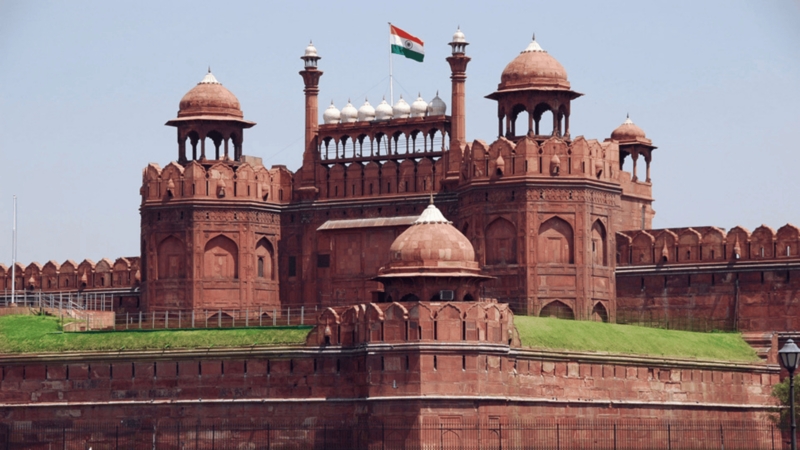
The fort became the ceremonial and political center of Shahjahanabad (present day Old Delhi). Even today, it plays a national role as the Prime Minister hoists the flag and addresses the nation from its ramparts every year on 15 August, India’s Independence Day.


Location and Significance


Located in Old Delhi, the Red Fort was designated a UNESCO World Heritage Site in 2007. It symbolizes Mughal imperial authority, architectural refinement and the evolving political identity of India.


Museums


The Fort houses three distinct museums. The Indian War Memorial Museum, located in the Naubat Khana, displays a diorama of the Battle of Panipat and the regalia of Maharaja Pratap Singh to illustrate military history. The Archaeological Museum in the Mumtaz Mahal preserves the Mughal zenith through calligraphy, textiles and personal relics of Bahadur Shah Zafar. Finally, the Swatantrata Sangram Sangrahalaya occupies a colonial barrack, uniquely showcasing the Indian National Army (INA) and weaponry from the First War of Independence in 1857.


Architectural Materials and Design


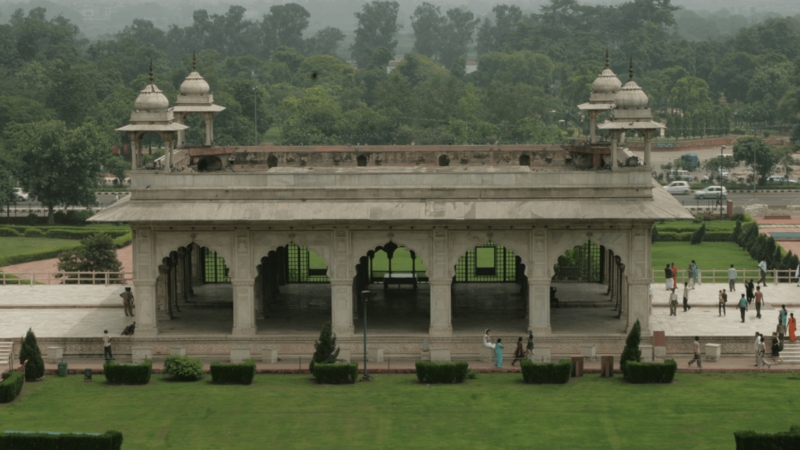
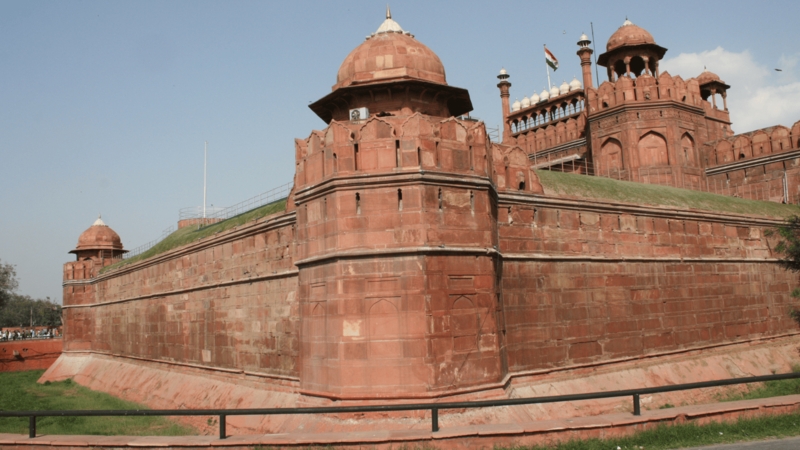
The fort’s octagonal form and massive red sandstone walls contain palaces, audience halls and gardens. Its turrets, kiosks, balconies and perforated screens create a rich exterior. Inside are baths, canals and a series of pavilions linked by the Nahr i Behisht. The Diwan i Am with sixty carved pillars and the white marble Diwan i Khas are major features.

Things to know
icon
Ticket needed for all ages
icon
Entry allowed for all ages
icon
Kid friendly
icon
Pets not allowed
icon
Free water stations
icon
Washrooms available

What visitors say

star4.5|platform
From 185,312 Google reviews
Author AvatarImran Alam
1 month ago
I recently visited the magnificent Red Fort (Lal Qila) in Old Delhi, and it remains an absolute masterpiece of Mughal architecture. As a Google Local Guide, I highly recommend dedicating at least 3 to 4 hours to fully explore this massive UNESCO World Heritage Site. The grandeur of the towering red sandstone walls hits you the moment you arrive. Walking through the iconic Lahori Gate feels like stepping back in time. I loved exploring the Chatta Chowk, a bustling covered bazaar inside the fort where you can pick up traditional handicrafts and souvenirs. The intricate artistry of the Diwan-i-Aam (Hall of Public Audience) and the elegant Diwan-i-Khas (Hall of Private Audience) showcase the breathtaking peak of Mughal design, blending Persian and Indian styles beautifully. Pro-Tips for Visitors: • Getting There: Skip the Delhi traffic and take the metro. The Lal Qila Metro Station (Violet Line) drops you right outside. • Tickets: Book your tickets online in advance via the ASI website to skip the notoriously long ticket counter lines. • Comfort: Wear comfortable walking shoes, carry a water bottle, and bring a hat or sunglasses as there is plenty of open walking. • Guides: Hire an authorized tour guide or use the audio guide app to truly appreciate the deep historical significance of the structures. The premises are well-maintained, clean, and offer great photography spots. It does get crowded on weekends, so try visiting early in the morning. A must-visit destination for history buffs, families, and architecture lovers visiting New Delhi!Read More
Author Avatarbiswajit gourav swain
2 weeks ago
Red Fort, also known as Lal Qila, is one of the most magnificent historical monuments in India and an iconic symbol of the country's rich cultural heritage. Located in Old Delhi, this UNESCO World Heritage Site was constructed during the reign of Mughal Emperor Shah Jahan in the 17th century. Its massive red sandstone walls, impressive gateways and beautiful Mughal architecture make it one of the most remarkable landmarks in the national capital. One of the most fascinating aspects of Red Fort is its extraordinary architectural design and historical significance. The complex includes notable structures such as the Lahori Gate, Diwan-i-Aam, Diwan-i-Khas and Rang Mahal, each reflecting the artistic excellence and craftsmanship of the Mughal period. The detailed carvings, elegant arches, spacious courtyards and historic buildings offer visitors an opportunity to explore an important chapter of Indian history. Red Fort also holds immense national importance because India's Prime Minister traditionally hoists the national flag and addresses the nation from its ramparts on Independence Day, 15 August. This tradition makes the monument a powerful symbol of India's independence, unity and national pride. Overall, Red Fort is much more than a historical monument. It represents centuries of architecture, culture and India's journey through history. A must-visit destination for history enthusiasts, architecture lovers, photographers and anyone exploring the historical treasures of Delhi.Read More
Author AvatarRONIT RAMAN SATPATHY
1 month ago
🏰 Lal Qila, Old Delhi 🇮🇳 The first thing that strikes you about Lal Qila is the sheer scale of its red sandstone walls. Built by Mughal emperor Shah Jahan between 1639 and 1648, it served as the heart of his capital, Shahjahanabad. Inside, the grand gateways, spacious courtyards, marble pavilions and intricate decorative work give you an idea of the kind of craftsmanship and attention to detail that went into Mughal architecture. The fort was not merely a military stronghold; it was a royal residence and the centre of an empire. 🏛️ What makes Lal Qila particularly interesting is how its significance has changed over the centuries. It witnessed the decline of Mughal power and the expansion of British rule, and eventually became closely associated with India's independence. On 15 August 1947, Jawaharlal Nehru raised the Indian national flag at the Red Fort, establishing a tradition that continues today, with the Prime Minister hoisting the tricolour and addressing the nation every Independence Day. 🇮🇳 The thought that a monument once associated with imperial authority now serves as the setting for one of India's most important national occasions gives it a meaning beyond its architecture. Walking around the complex, I found myself thinking about how much history these walls have witnessed. The Red Fort is not frozen in its Mughal past; it represents different periods of India's history, each leaving its mark on the place. Its UNESCO World Heritage status recognises its architectural and historical importance, but its connection with the country's independence gives it an identity that goes beyond that of an ordinary historical monument. ❤️🕊️Read More
Author AvatarTravel Notes by Prasad
2 months ago
Visiting the iconic Red Fort was a proud and memorable experience.As one of India’s most significant historical landmarks and a UNESCO World Heritage Site, this magnificent fort truly reflects the nation's rich heritage and pride. Built in the 17th century by Emperor Shah Jahan using striking red sandstone, it stands as a brilliant example of Mughal architecture. Interestingly, it is also the historic site where the Prime Minister hoists the National Flag every Independence Day! Walking through the impressive gates, exploring Chattta Chowk, and witnessing the vast courtyards gave me a real sense of history. The light and sound show in the evening is also worth experiencing.A absolute must-visit destination in Delhi for anyone who loves history and culture! 🇮🇳Read More
Author AvatarRagini Bhattacharyya
1 week ago
Stepping through the massive Lahori Gate of the Red Fort feels like crossing into another era, leaving the relentless energy of Old Delhi behind for sprawling lawns and towering red sandstone walls that command immediate awe. Walking past the vaulted arcade of Chatta Chowk into the main complex, the sheer scale of Mughal architecture really hits you—from the grand pillared hall of the Diwan-i-Aam to the intricate marble inlay and delicate carvings of the Diwan-i-Khas and Rang Mahal. Beyond the open pavilions, the museums tucked inside the complex add real depth to the walk, housing everything from Mughal-era relics to moving exhibits on India’s freedom struggle and Netaji Subhas Chandra Bose. Because the grounds are so expansive, it rarely feels overwhelmingly cramped even on a busy day, though wearing comfortable shoes and arriving in the late afternoon is easily the best way to experience it. Not only do you dodge the worst of the Delhi heat and midday crowds, but you can linger until dusk for the evening sound and light show, watching dramatic projections and narration bring centuries of history to life right across the illuminated sandstone facade—making the whole visit one of the most complete and unmissable historical experiences in the city.Read More
Organized by
brand-img
Archaeological Survey of India
91%liked
164events
11 monthshosting
More
Frequently asked questions
Terms and Conditions
₹35
onwards