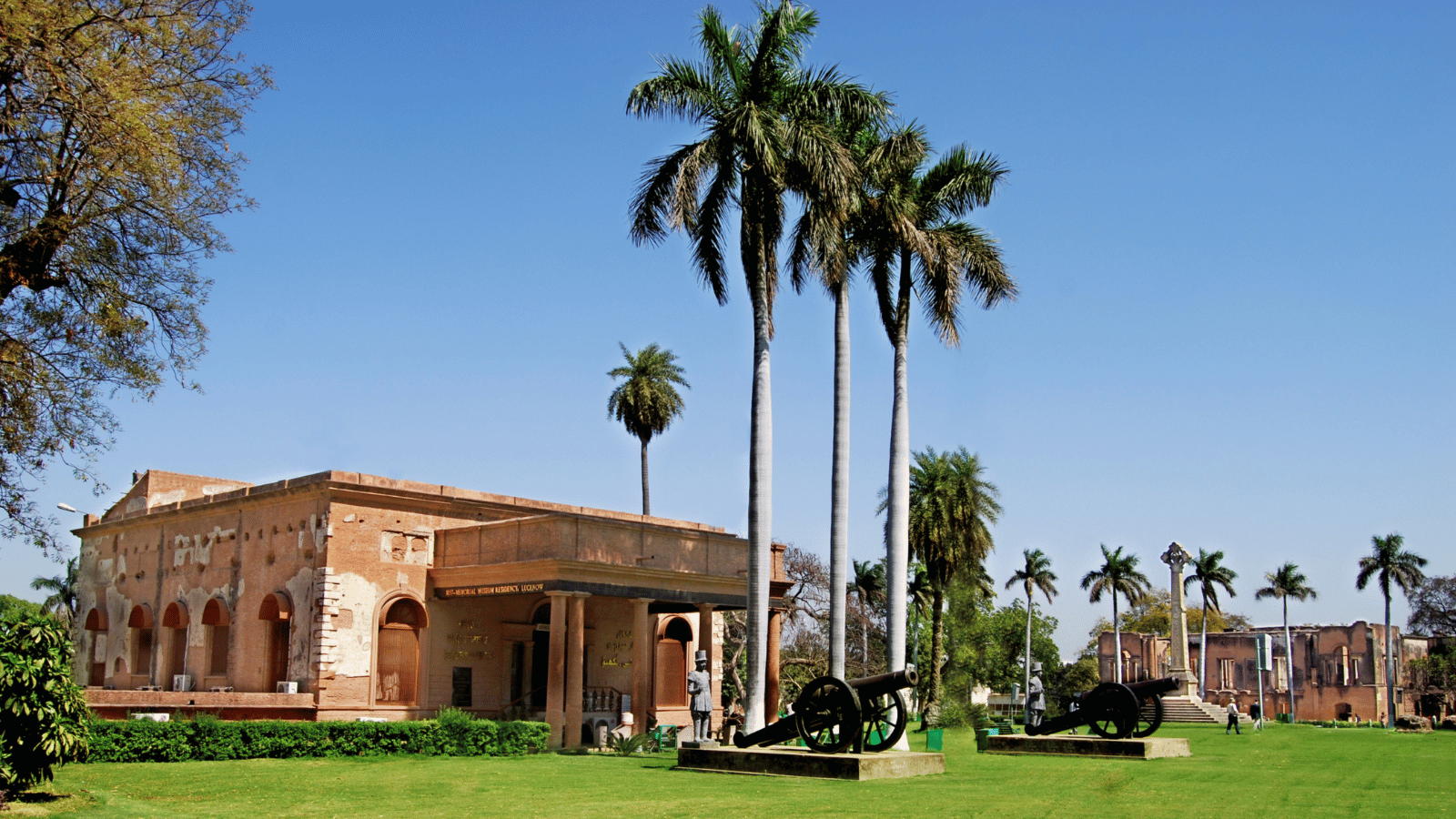
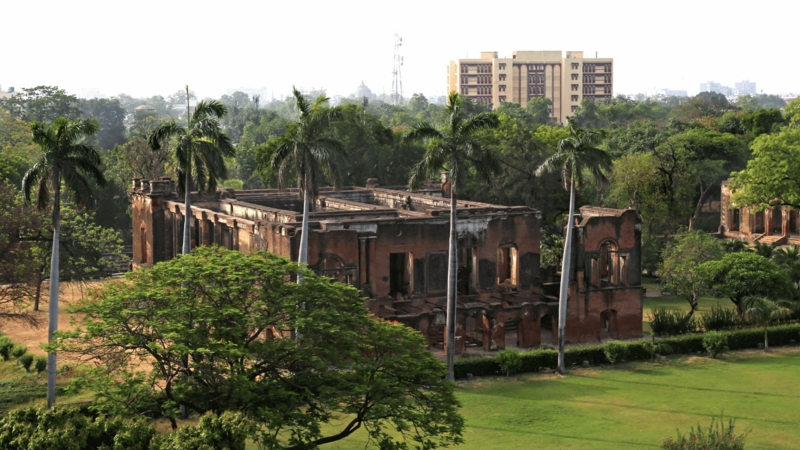
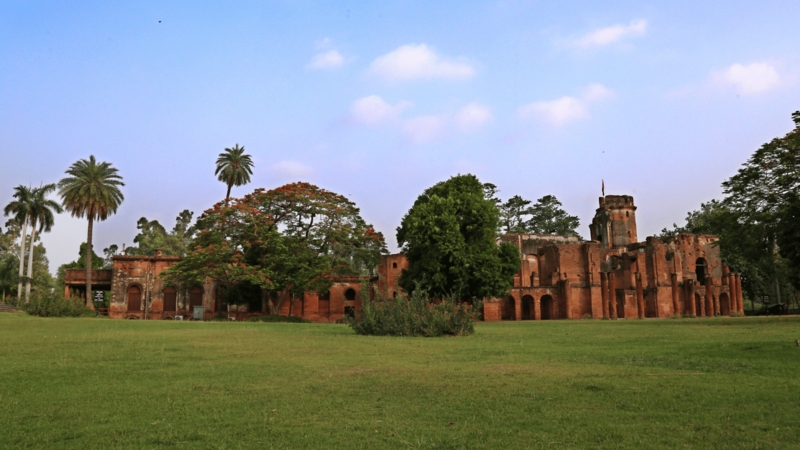
The Residency, set on the right bank of the Gomti River in central Lucknow, represents an important chapter in India’s freedom struggle. Originally the residence of the British Resident General, it now stands as a poignant ensemble of historic buildings surrounded by well kept gardens.
Historical Background
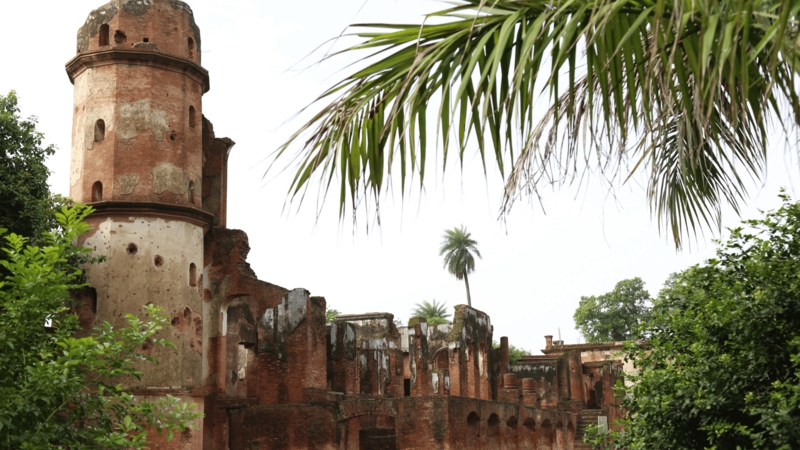
Construction began under Nawab Asaf ud Daula and was completed during the reign of Nawab Saadat Ali Khan in the early 1800s. As British control expanded, Lucknow became an administrative center, and the Residency gained political prominence. The complex is closely associated with the events of 1857, when the Siege of Lucknow caused extensive damage. Evidence of cannon fire and bullet marks remains visible on many structures, transforming the site into a memorial to the uprising.
Location and Significance
Situated in the heart of Lucknow, the Residency houses the 1857 Memorial Museum and numerous historic buildings that document episodes of conflict and governance in Awadh.
Architectural Materials and Design
The complex includes the Baillie Guard Gate, Treasury House, Begum Kothi, Banquet Hall, and Doctor Fayrer’s House, along with a mosque, Imambara, brigade mess, and several posts. Recent excavations have brought to light additional foundations and antiquities, enriching understanding of the site’s layered history.

 4.4•
4.4•
 Ticket needed for all ages
 Entry allowed for all ages
 Kid friendly
 Pets not allowed
 Free water stations
 Washrooms available
 Wheelchair accessible
 Danika Maddesiya
 Yaduveer Singh
 Ravi Lal
 Sourav
 Unknown