The Undavalli Caves represent a significant monolithic example of Indian rock-cut architecture and reflect the religious and artistic traditions that shaped the early historic landscape of the region. Their structural form and sculptural richness demonstrate the high level of craftsmanship associated with early Deccan architectural activity. The site remains an important cultural landmark that continues to draw visitors interested in early architectural innovation and sacred art.
Historical Background
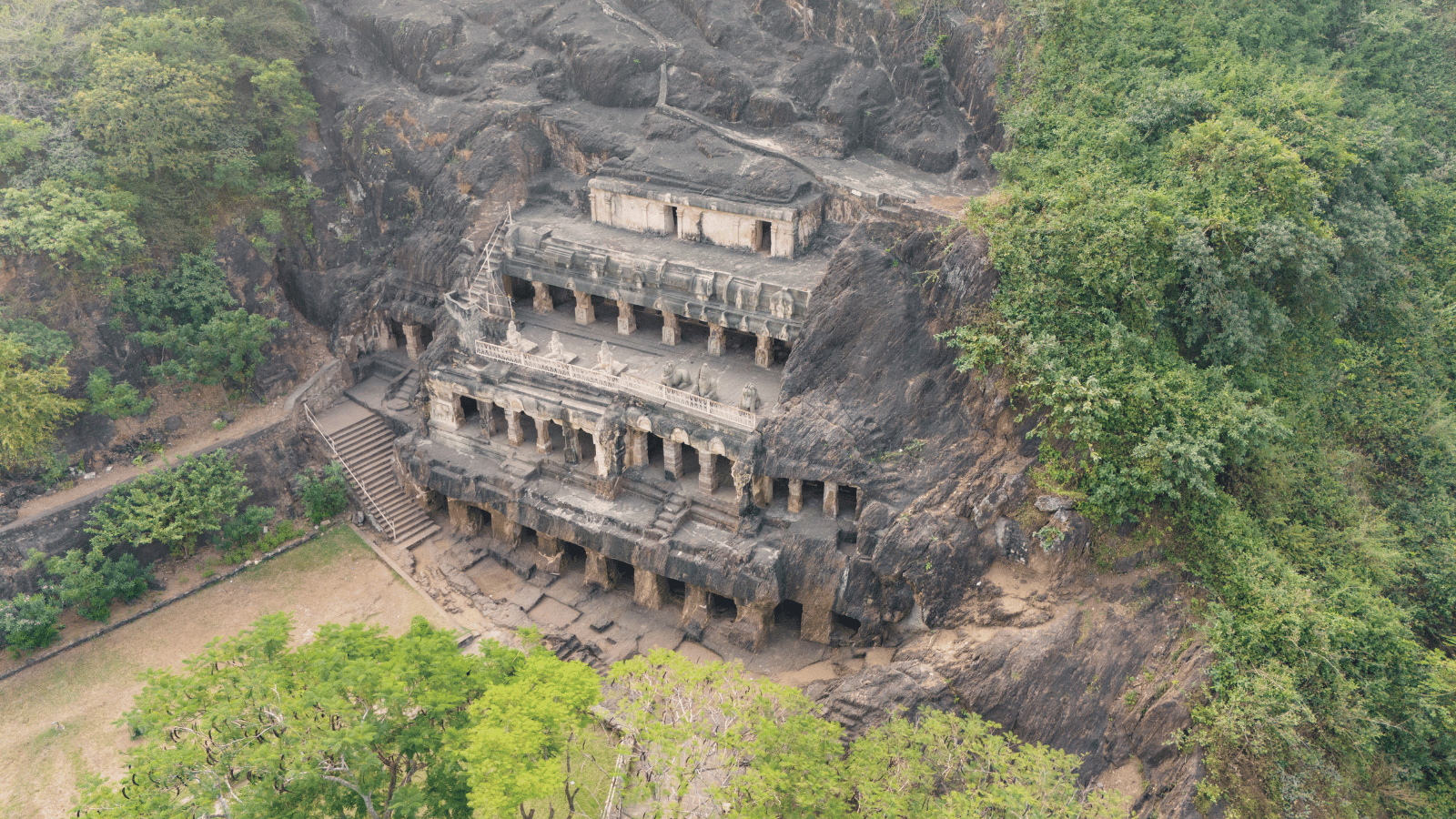
The caves are datable to the sixth to seventh century C.E. and are believed to have been constructed under the patronage of the Vishnukundi rulers, who governed the area during this period. Their multi-storeyed design reveals the interaction of Hindu, Buddhist, and Jaina traditions, illustrating the religious fluidity that characterized early medieval Andhra. The most prominent cave contains four levels and houses a large monolithic image of Vishnu in the Anantasayana posture, carved from a single block of granite. Numerous subsidiary sculptures and decorative elements further emphasize the sacred and artistic significance of the complex.
Location and Significance
Situated in the Guntur district near Vijayawada in Andhra Pradesh, the caves overlook the Krishna River from the slopes of Undavalli Hill. This location provides expansive views of the surrounding landscape while underscoring the site’s historical role within the region’s sacred geography and settlement network.
Architectural Materials and Design
The caves are carved primarily out of sandstone and feature a tiered arrangement of halls, pillars, and sculptural niches. Their design integrates diverse architectural motifs, while the massive image of Anantasayana Vishnu remains the central artistic highlight. The site is accessible through major transport routes, including local and private buses and the nearby railway station at Vijayawada, approximately five kilometres away.

 4.7•
4.7•
 Ticket needed for all ages
 Entry allowed for all ages
 Kid friendly
 Pets not allowed
 Free water stations
 Washrooms available
 Free parking
 Mallika Jamy
 Baddela Jayakumar
 Rajesh S
 Krishna Praveen
 Sai Anusha