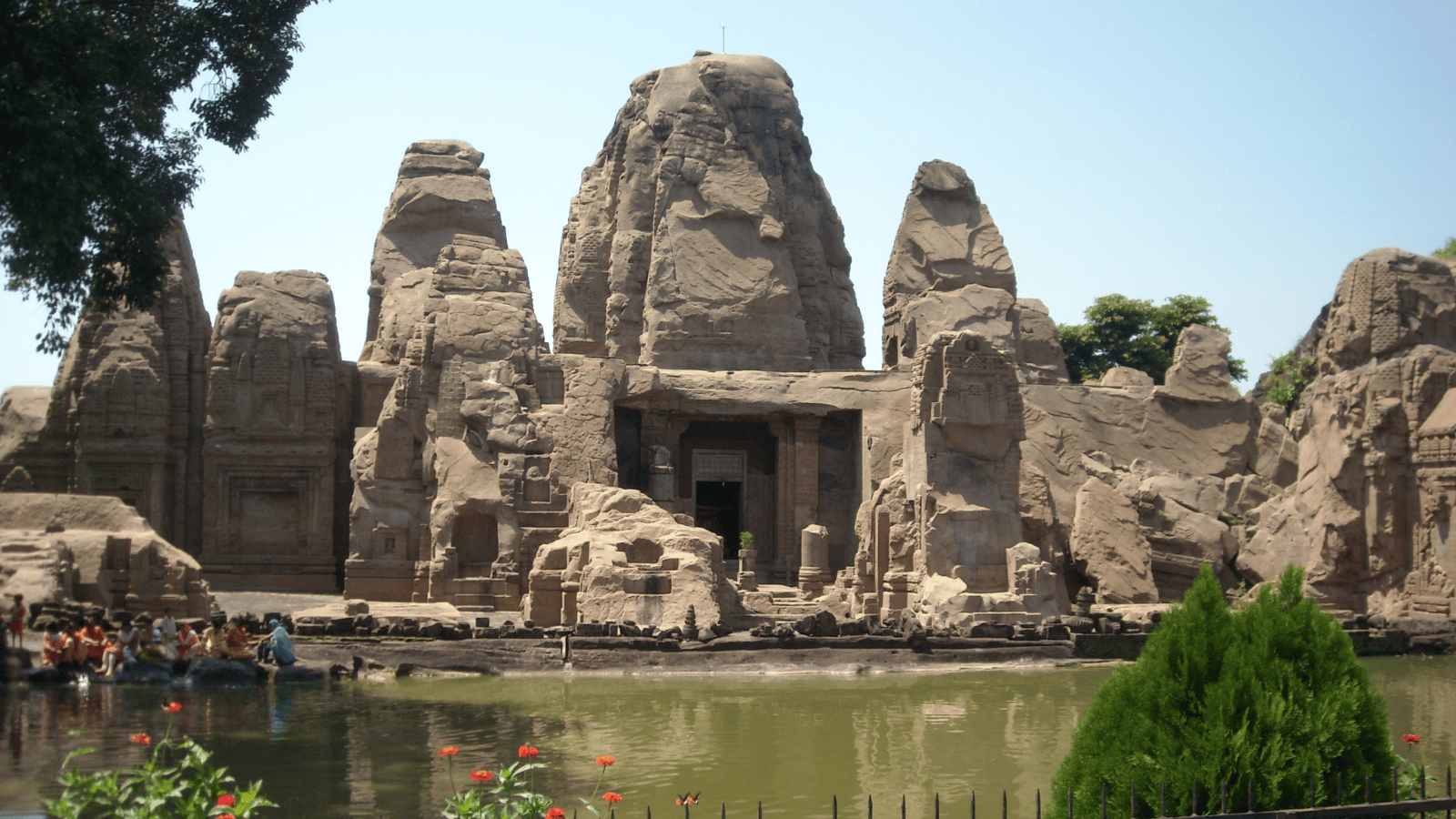
The Masroor Temple, situated in Kangra district of Himachal Pradesh, is a remarkable example of ancient Indian rock-cut architecture. Dating to the 8th century C.E., the temple complex is celebrated for its monolithic structures and intricate carvings depicting scenes from Hindu mythology. It is often compared to the UNESCO World Heritage Site of Angkor Wat in Cambodia and the Ellora Caves in Maharashtra.
Historical Background
The temple is believed to have been commissioned by the rulers of the Jalandhar dynasty of Punjab, who governed the Kangra region. Originally, the complex comprised nineteen free-standing temples, of which only a few remain following the devastating earthquake of 1905. Seventeen temples were carved from single rocks, while two stand independently on either side of the main complex.
Location and Significance
Located in the Kangra hills, the temple serves as both a cultural and religious landmark. The central shrine, known as Thakurdwara, enshrines Lord Rama with Sita and Lakshmana. Pilgrims regularly visit to offer prayers and seek blessings, making it a significant spiritual destination in Himachal Pradesh.
Architectural Materials and Design
Built in the Nagara (North Indian) style, the temple includes a sanctum sanctorum, vestibule, assembly hall, and entrance porch. The intricate carvings, grand scale, and monolithic construction showcase the exceptional skill of its artisans and the architectural ingenuity of the period.

 4.6•
4.6•
 Ticket needed for all ages
 Entry allowed for all ages
 Kid friendly
 Pets not allowed
 Free water stations
 Washrooms available
 Kanika Saini
 Thomas Alvares Advocates
 mintoo mahajan
 Gaurav Sachdeva
 Jyoti Jaiswal