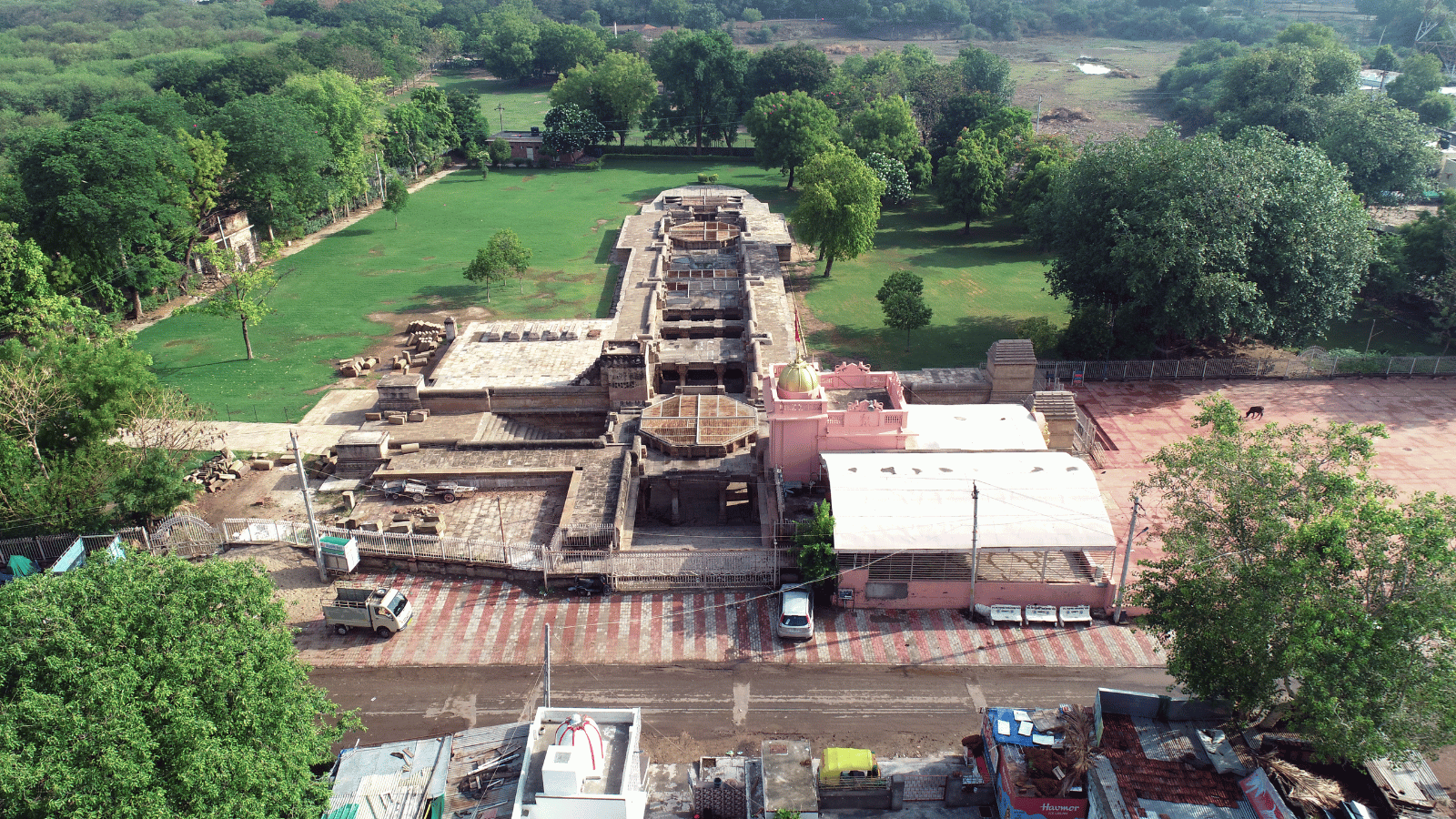
The Rudabai or Adalaj Stepwell in the village of Adalaj, Gujarat, is an outstanding example of Indo Islamic architectural synthesis. Built in the 15th century C.E., it is noted for its ornate carvings, multistoried pillars, and cool subterranean atmosphere that continues to impress visitors.
Historical Background
The Stepwell is believed to have been commissioned by Queen Rudabai in memory of her husband Rana Veer Singh of the Vaghela dynasty. Intended as a vital water source and a communal refuge from intense heat, it descends five storied levels, each enriched with sculpted motifs that reflect both religious symbolism and courtly life.
Location and Significance
Situated near Ahmedabad, the structure served its local community as a gathering place and as an emblem of patronage that illustrates the social and environmental responses of its time. Its cultural resonance endures as a testament to regional craftsmanship and shared architectural traditions.
Architectural Materials and Design
Entry is through the south, where stairways on three sides lead to an octagonal landing. From here, a corridor of gently descending steps connects five pillared pavilions. The Stepwell is adorned with shafts, pilasters, lintels, and panels depicting the Navagrahas, royal figures, deities such as Bhairava, Hanuman, Ganesh, and Kirtimukha, along with dancers, musicians, animals, and birds rendered in intricate stonework.

 4.5•
4.5•
 Ticket needed for all ages
 Entry allowed for all ages
 Kid friendly
 Pets not allowed
 Free water stations
 Washrooms available
 Free parking
 Amit Kumthekar
 Kunal Singh
 Pranav Bodani
 kaustubh k
 Yuvanesh B