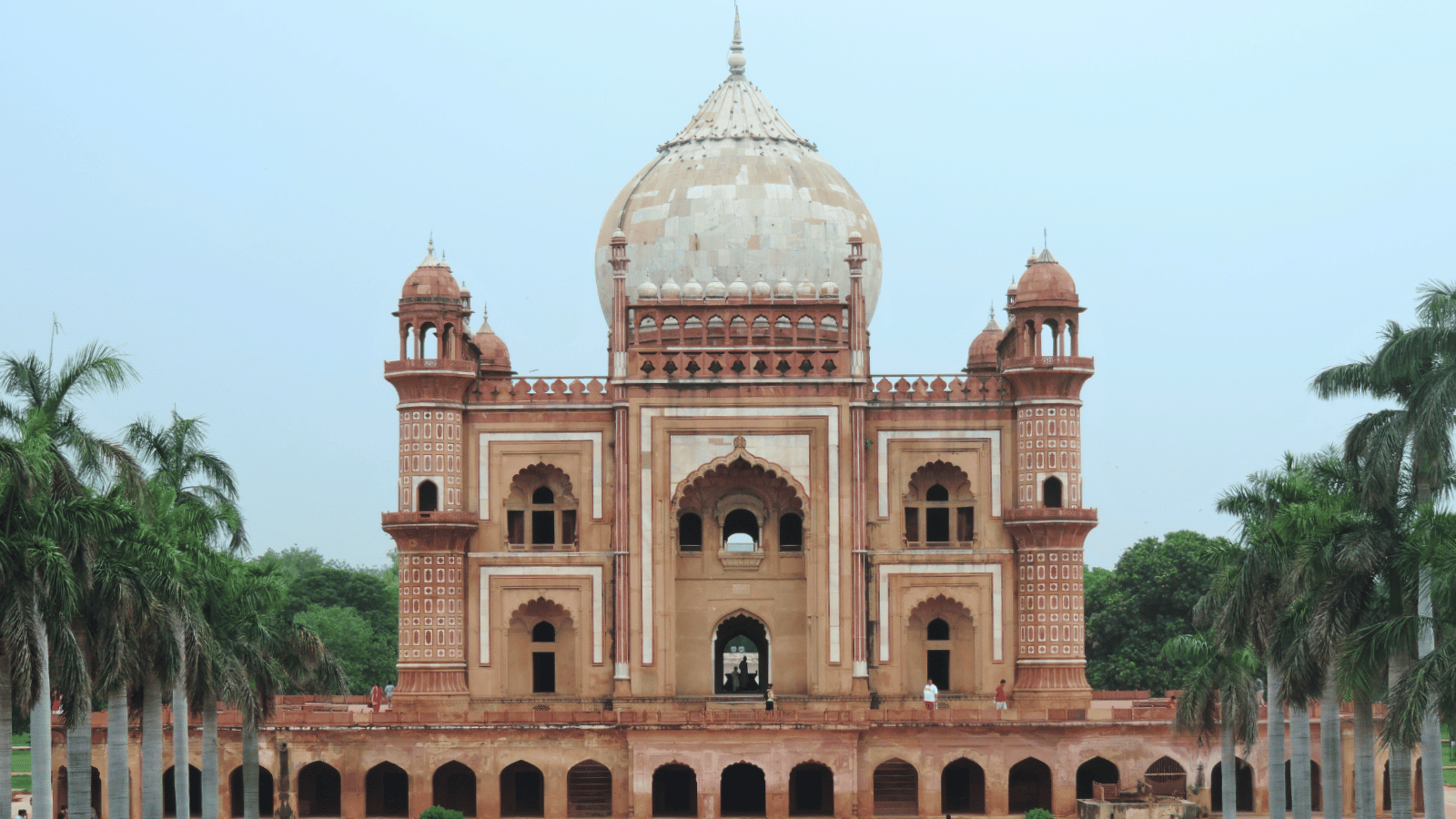
Safdarjung’s Tomb in Delhi contains the remains of Mirza Muqim Abul Mansur Ali Khan, entitled Safdarjung, who served as viceroy of Awadh and later as Prime Minister under Muhammad Shah. It is regarded as the final significant expression of Mughal architectural tradition in the city.
Historical Background
Constructed between 1708 and 1754 C.E., the monument reflects declining but still refined Mughal patronage. It preserves the charbagh garden layout that had defined imperial mausoleums since the 16th century and stands as a late continuation of forms shaped by earlier dynasties.
Location and Significance
Set at the center of an enclosed walled garden, the tomb forms part of Delhi’s historic landscape. Its plan and ornamentation display the transition of Mughal architecture into its final phase, making it an important reference for understanding the artistic and political milieu of eighteenth century north India.
Architectural Materials and Design
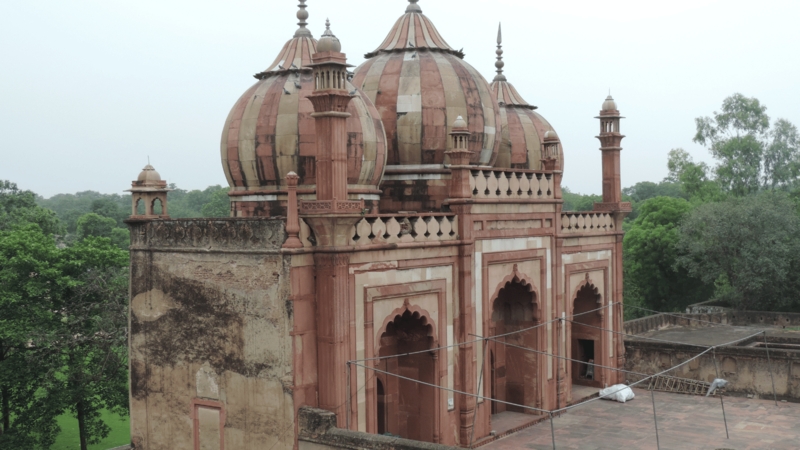
The mausoleum rises above a single storied colonnaded base with arch shaped openings and is built in red and buff sandstone accented with marble. A large bulbous dome crowns the structure, with polygonal chhatris positioned at the corners on tall towers. The interior contains a central cenotaph with two additional graves in the crypt. The monumental gateway and carefully proportioned garden surroundings enhance the solemnity of the site.

 4.4•
4.4•
 Ticket needed for all ages
 Entry allowed for all ages
 Kid friendly
 Pets not allowed
 Free water stations
 Washrooms available
 SHAHBAZ KHAN
 Sizzler god
 aadarsh patidar
 UNNIMAYA CHELOD
 Nandan Kumar