
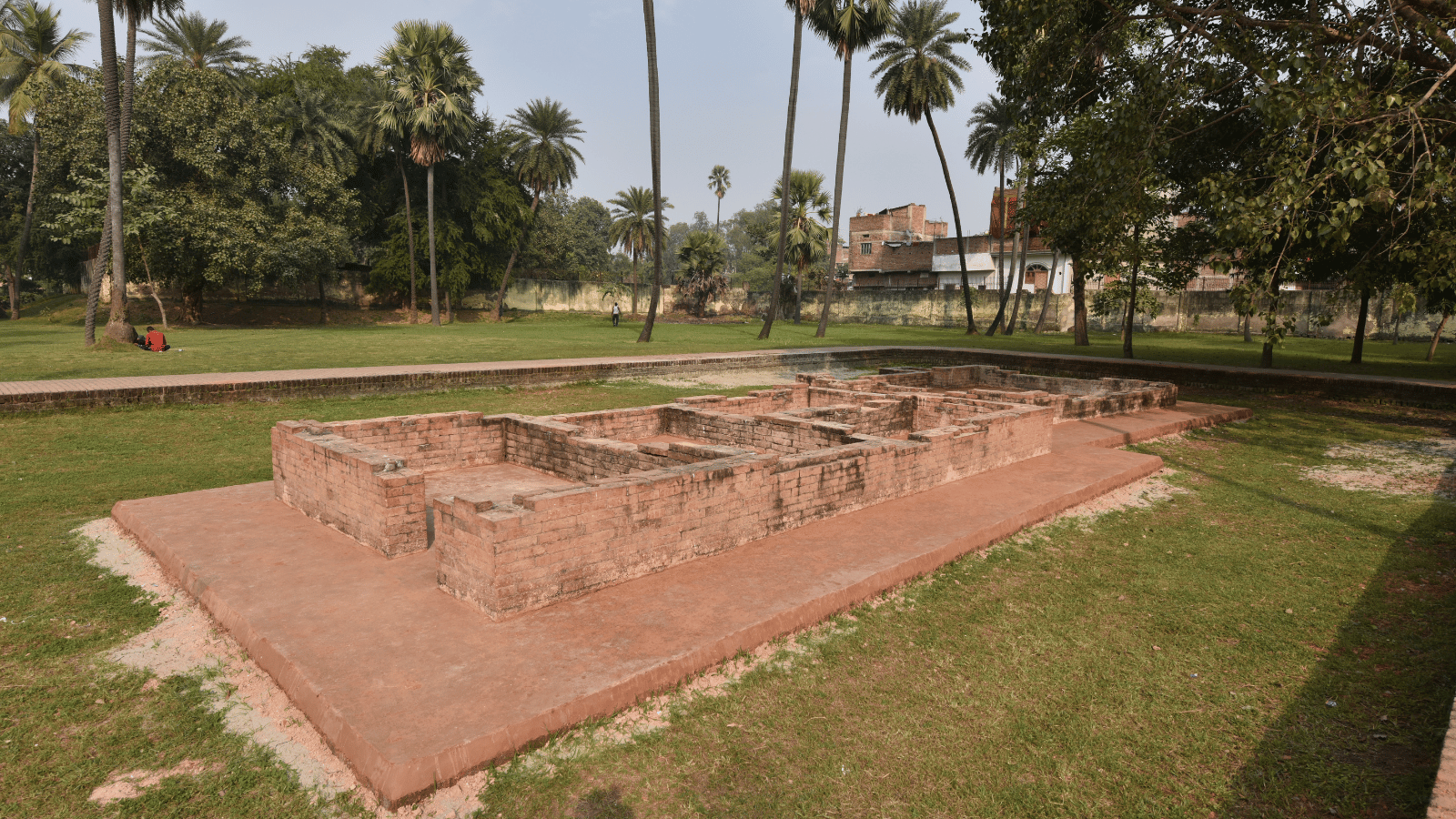
Site Of Mauryan Palace
 4•
4•
About the venue
Pataliputra, located beside present-day Patna, emerged as one of the most influential urban centres of ancient India. Built at the confluence of the Son and the Ganges, the city became a hallmark of political authority, architectural ambition and administrative innovation. Its evolution showcases the gradual transformation of early urban culture across successive dynasties.
Historical Background
The city served as the capital of the Shishunaga, Nanda, Maurya, Sunga and Gupta powers and rose to exceptional prominence during the Mauryan empire when it ranked among the largest cities in the world. The site preserves traces of habitation beginning in the 3rd century B.C.E. and continuing into the medieval period. It hosted the Third Buddhist Council under the reign of Emperor Ashoka, affirming its intellectual and monastic significance. Excavations have revealed an eighty-pillared Mauryan hall constructed with timber flooring and timber ceilings, along with evidence of Arogya Vihar, a hospital-cum-monastery that reflects the organised civic planning of the period.
Location and Significance
Situated in modern Patna, Bihar, Pataliputra holds exceptional historical value as a centre of imperial governance and Buddhist scholarship. The discoveries at the site have encouraged historians to associate it with the palace complex of Ashoka, deepening academic engagement with its remains.
Architectural Materials and Design
The excavated structures highlight refined Mauryan engineering, including polished pillars, timber architectural elements and planned monastic facilities. These features demonstrate the sophisticated material culture that shaped one of the most enduring capitals of ancient India.


What visitors say
4| tu lu
tu lu Hemant Rajak
 ABHAY MEHTA
 yuvraj krishna
 Manish Kumar