Built in 1773 C.E., the Tomb of Lal Khan stands as a significant heritage monument that reflects the refinement of late Mughal architectural traditions. Set within a serene landscape, the structure offers visitors a respite from the surrounding urban activity while preserving its historical dignity.
Historical Background
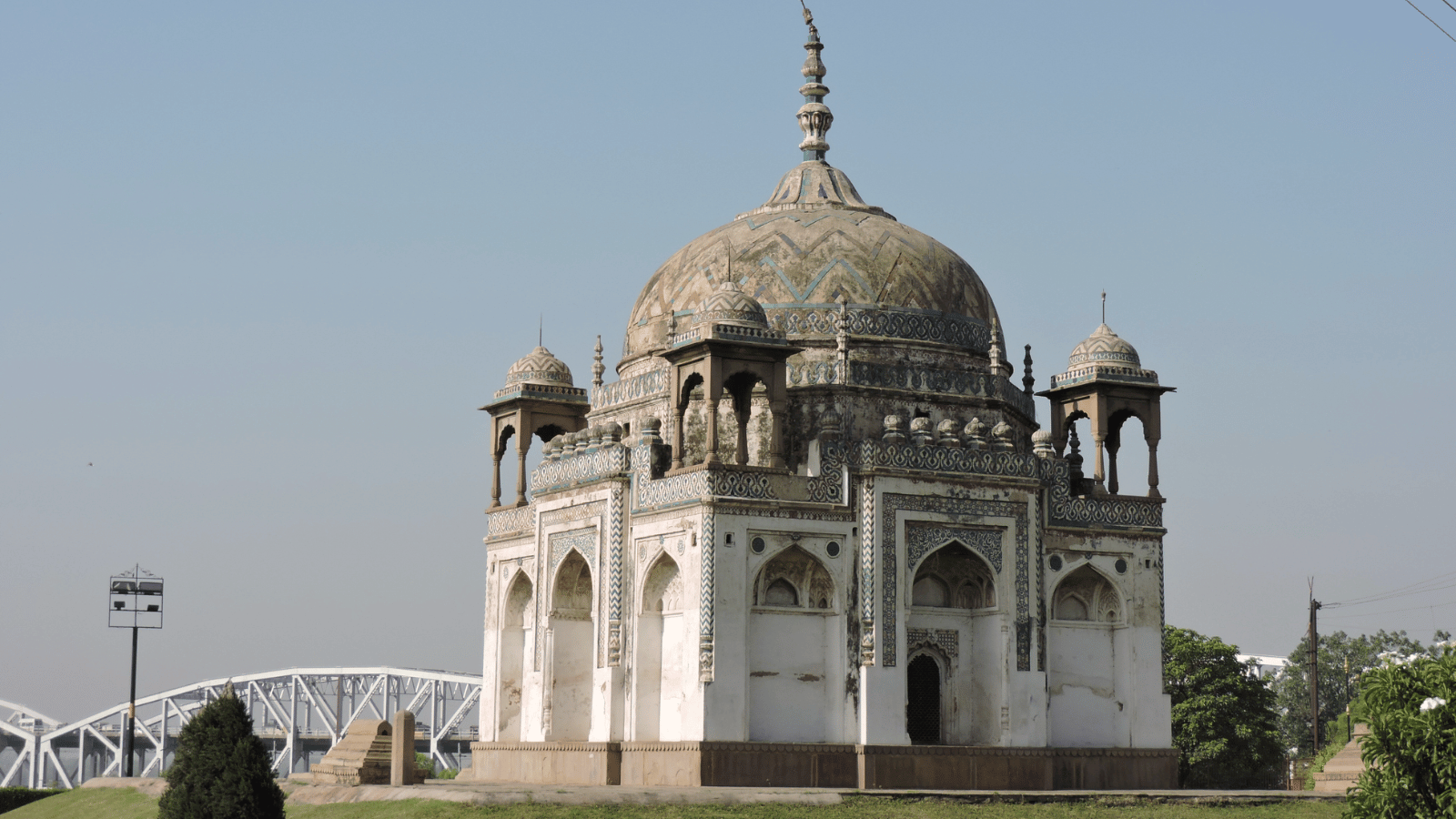
The tomb was designated as a centrally protected monument in 1912 C.E., ensuring the conservation of its architectural character. Its decorative program, particularly the coloured tile work on the main dome and the symmetrical placement of canopies, demonstrates a continuation of ornamental practices associated with Mughal funerary design.
Location and Significance
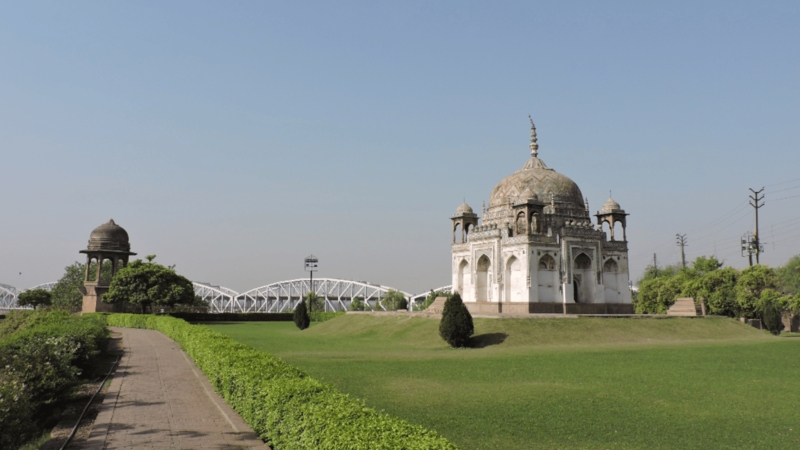
Situated near the Malviya Bridge on the rear side of Khirkiya Ghat within the old Raj Ghat Fort in Varanasi, India, the monument occupies the centre of a rectangular garden. The quiet lawns and overall sense of calm provide an important contemplative space within the busy riverfront area.
Architectural Materials and Design
The tomb stands on a high square platform and is crowned by a grand dome enriched with coloured tiles. Four smaller canopies rise at the dome’s corners, while each corner of the surrounding garden features an octagonal stone canopy. The monument remains accessible by railways, roads and boats from nearby ghats.

 Ticket needed for all ages
 Entry allowed for all ages
 Kid friendly
 Pets not allowed
 Free water stations
 Washrooms available
 Wheelchair accessible