
Vanapuri Vaathukaaran
About
About the play:
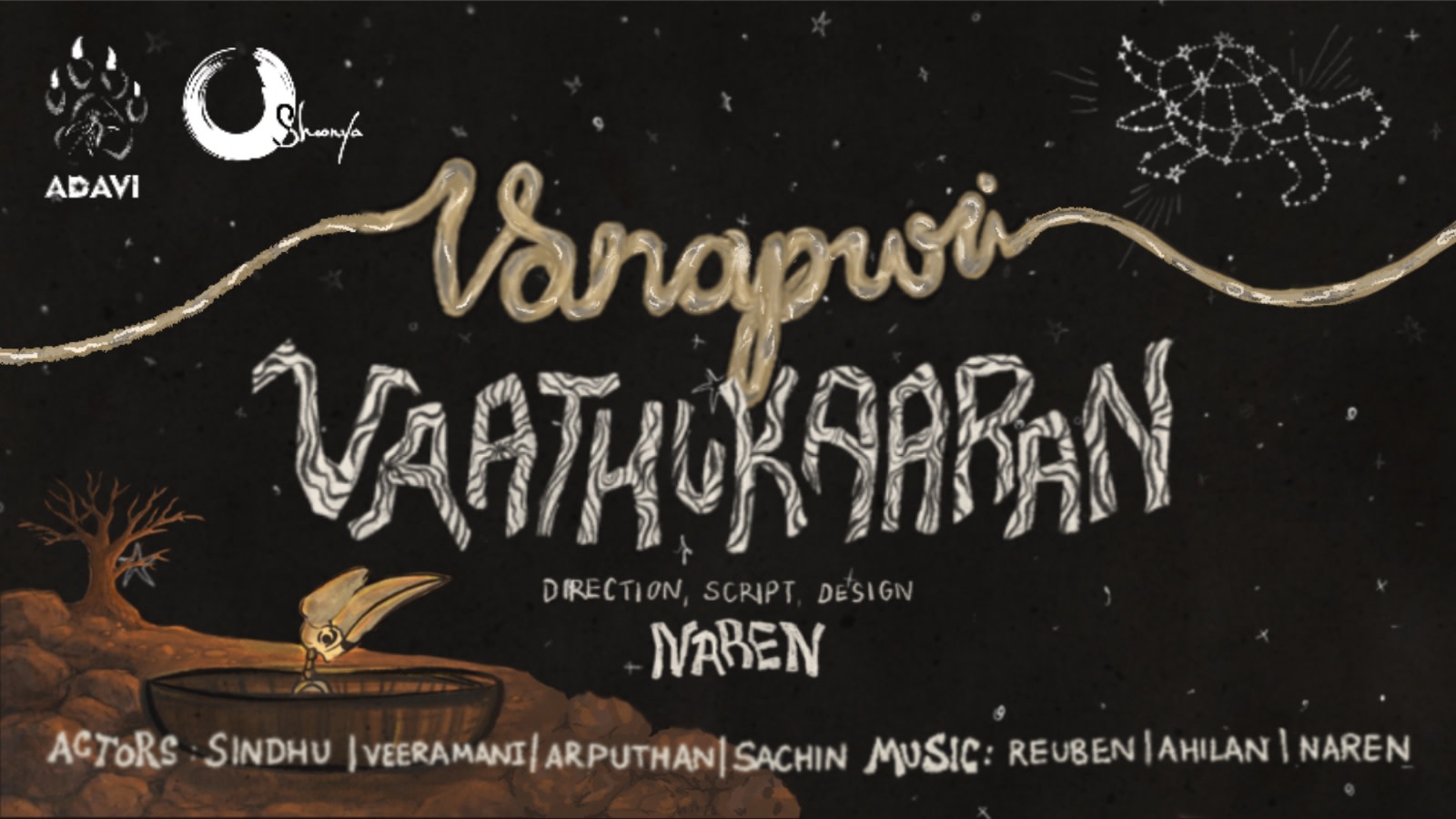
Vanapuri Vaathukaaran is a performance that unfolds in a world on the brink of its end, where a Vaathukaaran, a duck herder, also renowned as a clown, is entrusted with a final, urgent task to deliver the last letters of the world. Delivered to him by a woman, sailing in a broken coracle and carried by the Indian grey hornbill. These letters hold the voices of those long gone, lives shaped and silenced by war, migration, caste, protest, and loss. This work is also rooted in the childhood memories, migration, and dreams of its director, Naren. Gathered by clowns – figures often cast aside, these stories return to the world that once ignored them. The clowns speak of people displaced by changing lands, of labouring bodies, of erased histories, and unheard grief.
In traditional theatre over many decades, there has been an unspoken hierarchy in how characters are assigned, where roles often reflect wider social structures instead of being given freely. Characters like the king are generally played by actors from dominant castes, showing power and authority, while roles like the clown or even female characters have often been given to those from marginalized communities. This brings up an important question of who gets to represent power on stage and who is limited to comic or secondary roles. The clown, especially, has been shaped by stereotypes, shown as a caricature and seen as a less intelligent being. This play tries to counter these ideas by presenting the clown not just as comic relief, but as a thoughtful and perceptive character, breaking away from these stereotypes and creating space for more fair and meaningful representation in theatre. As Dr. B. R. Ambedkar powerfully states, “You say I have got a homeland, but still I repeat that I am without it. How can I call this land my own homeland and this religion my own wherein we are treated worse than cats and dogs, wherein we cannot get water to drink? No self respecting Untouchable worth the name will be proud of this land.”
Through this journey, the performance asks: where do our roads leads, and who do they leave behind? What is identity, and why must it be proven? Vanapuri Vaathukaaran is an invitation to listen, to remember, and to witness what has long been left unsaid.
Language: Tamil (With English Subtitles)
About the Director:
Naren is a theatre artist, director, and Parai artist based in Bengaluru. Growing up among Parai artists, he began performing across Tamil Nadu and later trained at a folk and tribal research centre in Nagercoil, studying diverse art forms.
He has worked across theatre productions as an actor and music composer, and teaches performance with a focus on social engagement. He has also worked at Srishti Manipal as an interim faculty member, developing and teaching a curriculum titled Sonic Lineage during the winter semester.
He is the founder of ADAVI Arts Collective, an anti-caste initiative that bridges traditional folk practices—centered around Parai—with contemporary artistic expression, bringing together artists to celebrate community, cultural continuity, and socially engaged performance.