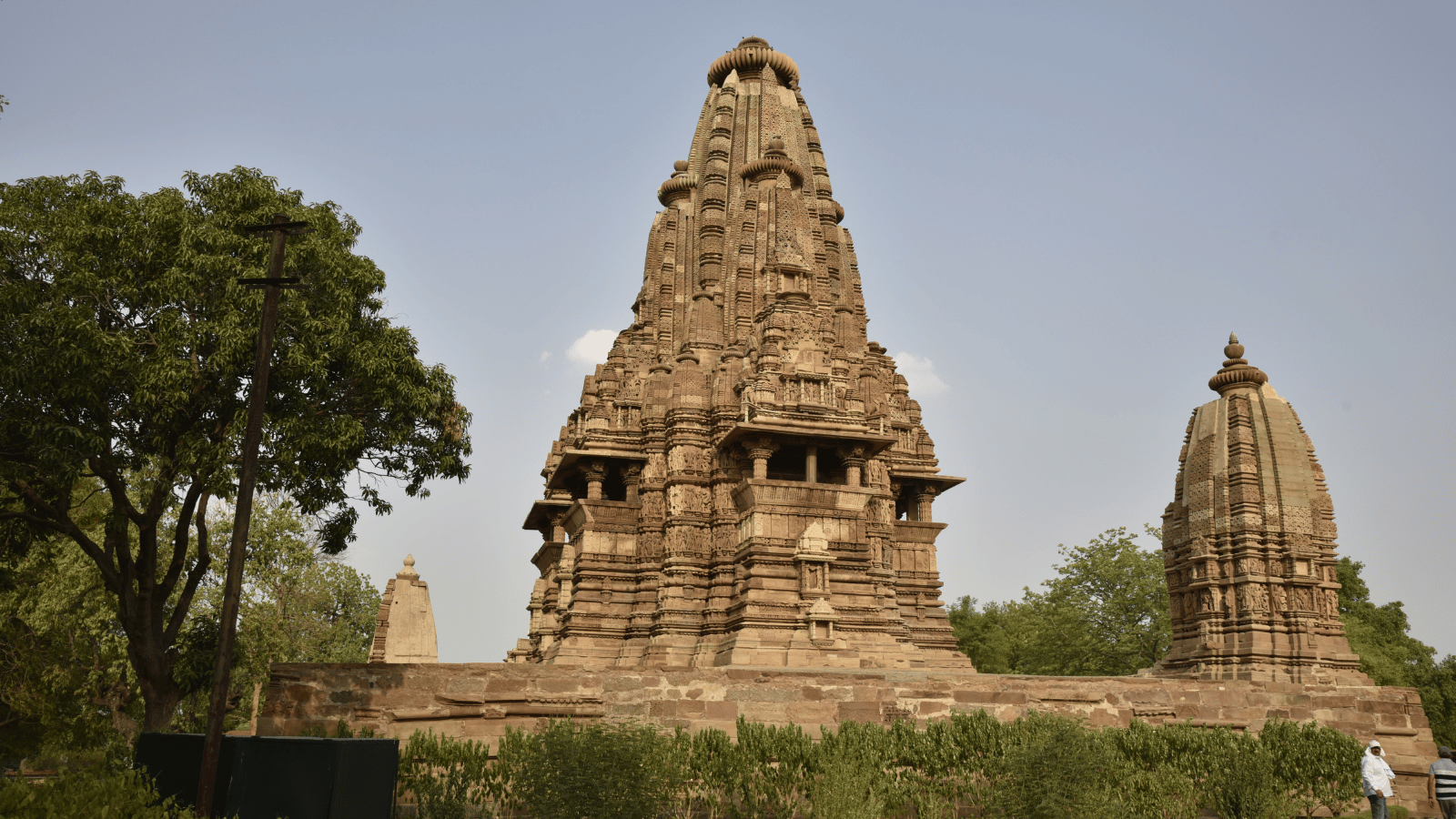
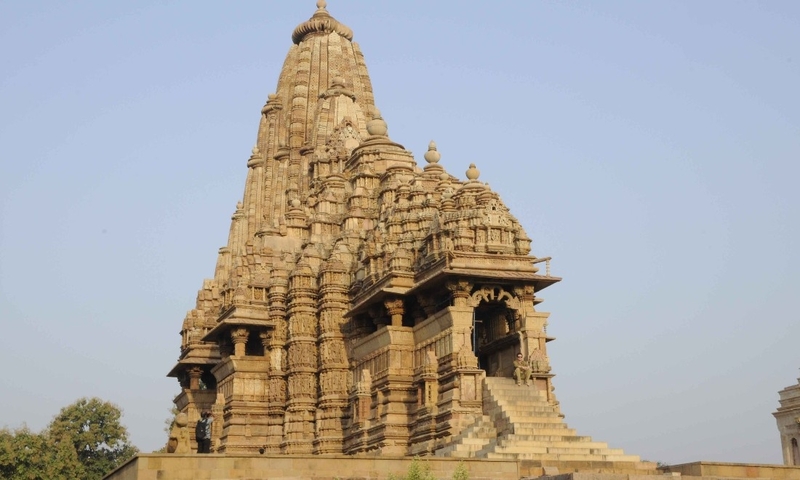
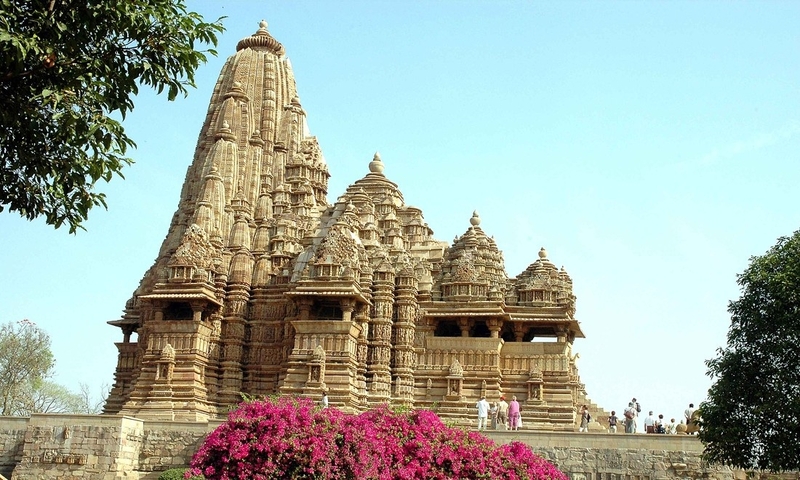
The Western Group of Temples at Khajuraho represents the height of Chandela artistic and architectural achievement. Preserved within a walled complex under the Archaeological Survey of India, this ensemble forms the most renowned part of the Khajuraho World Heritage Site. Created between the 9th and 11th centuries C.E., the temples unite religious symbolism, refined craftsmanship, and sculptural abundance, offering one of the most treasured heritage groups of India.
Historical Background
The earliest structure is the late 9th century C.E. Chausath Yogini Temple, a rare quadrangular Yogini shrine once containing 67 cells. The Lakshmana Temple, built between 930 and 950 C.E., stands as the first fully developed monument of Khajuraho and is dedicated to Vishnu in his Vaikuntha form. Other major works include the 11th century C.E. Kandariya Mahadeva Temple, the Visvanatha Temple of 999 C.E., and associated monuments such as the Nandi, Devi Jagadambi, Matangeshwar, Varaha, Parvati, and Mahadeva temples.
Location and Significance
Situated in Khajuraho, Madhya Pradesh, the Western Group expresses Shaiva, Vaishnava, and Shakta traditions supported by the Chandela rulers. Its artistry has drawn scholars, devotees, and travellers for generations.
Museum
The Archaeological Museum, located near the Western Group, safeguards over 3,000 detached sculptures and architectural remnants. It displays masterpieces such as a colossal seated Buddha and the rare four-headed Vaikuntha Vishnu. The museum’s peculiarity lies in offering an intimate, eye-level view of the intricate Chandela artistry that is often perched high on the temple facades.
Architectural Materials and Design
Built chiefly of sandstone, the temples display panchayatan plans, lofty shikharas, sculptural bands, and richly carved images of divine and celestial beings. Their ornamentation reflects both spiritual intent and aesthetic mastery.

 4.7•
4.7•
 Ticket needed for all ages
 Entry allowed for all ages
 Kid friendly
 Pets not allowed
 Free water stations
 Washrooms available
 Free parking
 rohitash singh
 Biswajit Saha
 Krishnamurthy Sridhar
 Vikram Dewan
 Purvish Parikh