
Akbar’s Tomb Sikandra
 4.4•
4.4•
About the venue
The Tomb of Akbar, located on the outskirts of the city of Agra, is one of the most distinguished Mughal funerary monuments. Planned by Emperor Akbar during his lifetime, it presents a refined architectural vision that was later completed by his successor Jahangir, who added the marble upperwork.
Historical Background
Akbar initiated the complex by completing the first storey and laying out a garden that reflected imperial ideals of order and cosmology. Jahangir continued the project after his father’s death, constructing the marble top storey and finalizing the arrangement of cloisters, arches, and decorative schemes that defined the monument’s character.
Location and Significance
Situated within a landscaped precinct, the tomb embodies Mughal dynastic prestige and commemorative intent. Its pyramidal massing, symbolic plan, and integration of garden design exemplify the evolving expression of imperial identity during the early seventeenth century.
Architectural Materials and Design
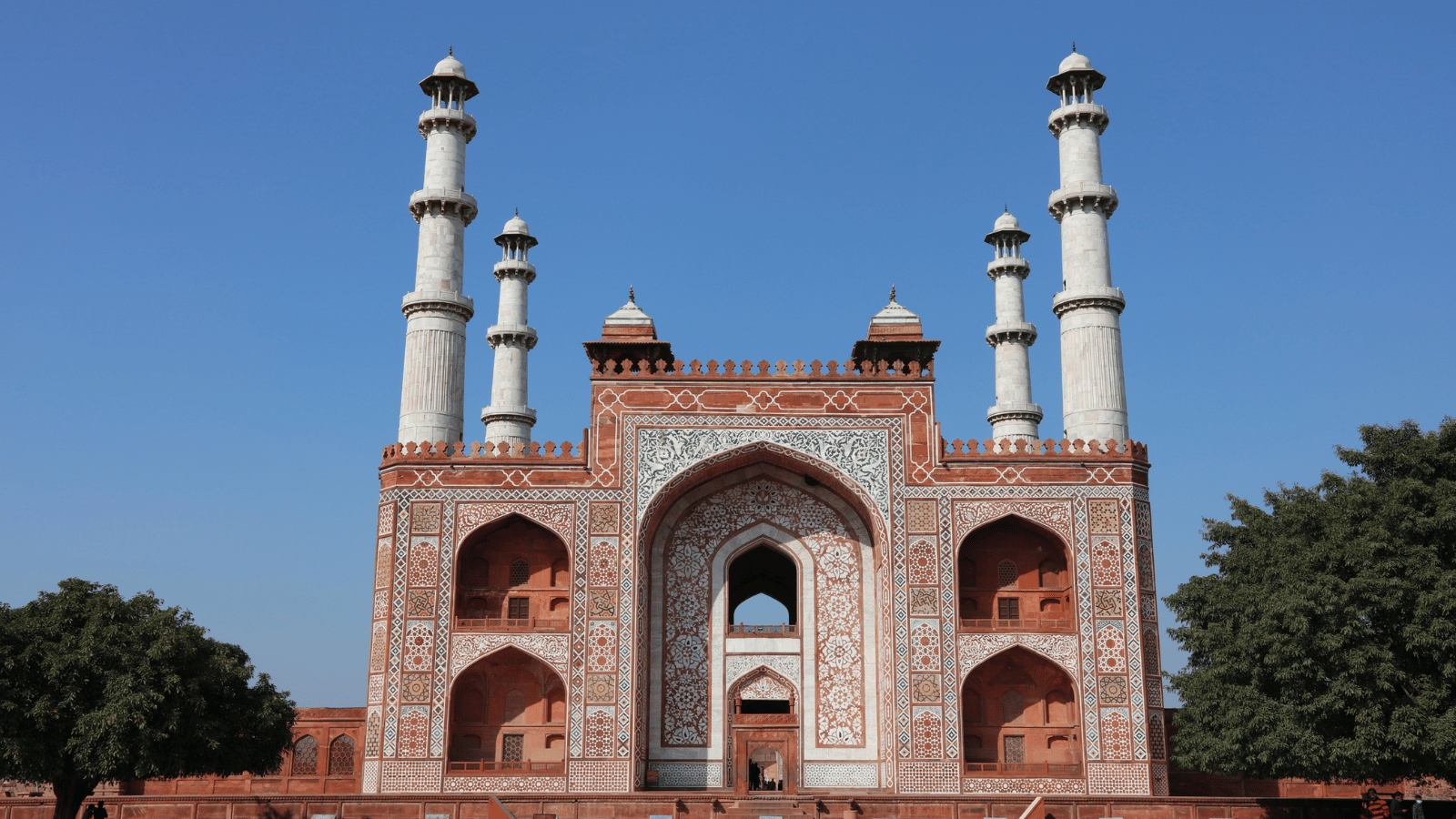
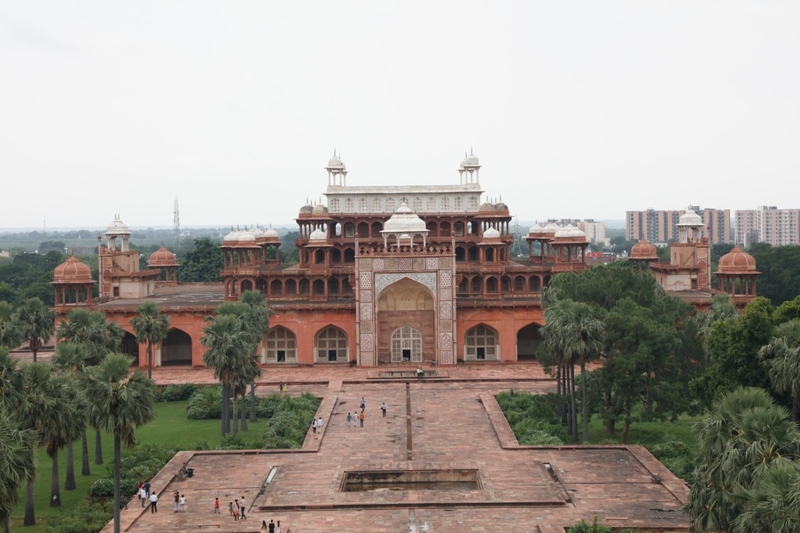
The structure rises in five storeys, with red sandstone used throughout except for the marble uppermost level. Cloisters surround the ground floor, articulated by massive arches and piers. The cenotaph below ground bears carved floral and arabesque patterns, while Quranic inscriptions frame the vestibule. Four gateways mark the cardinal axes, the southern one serving as the principal entrance, and the facades display extensive inlay and mosaic ornamentation.


What visitors say
4.4| Chandramauli Tewari
 dr ipsita pradhan
 J Moner Koner Baire Achyut.
 Abrar Rahman Khan
 Captain Zeeshan Shakil