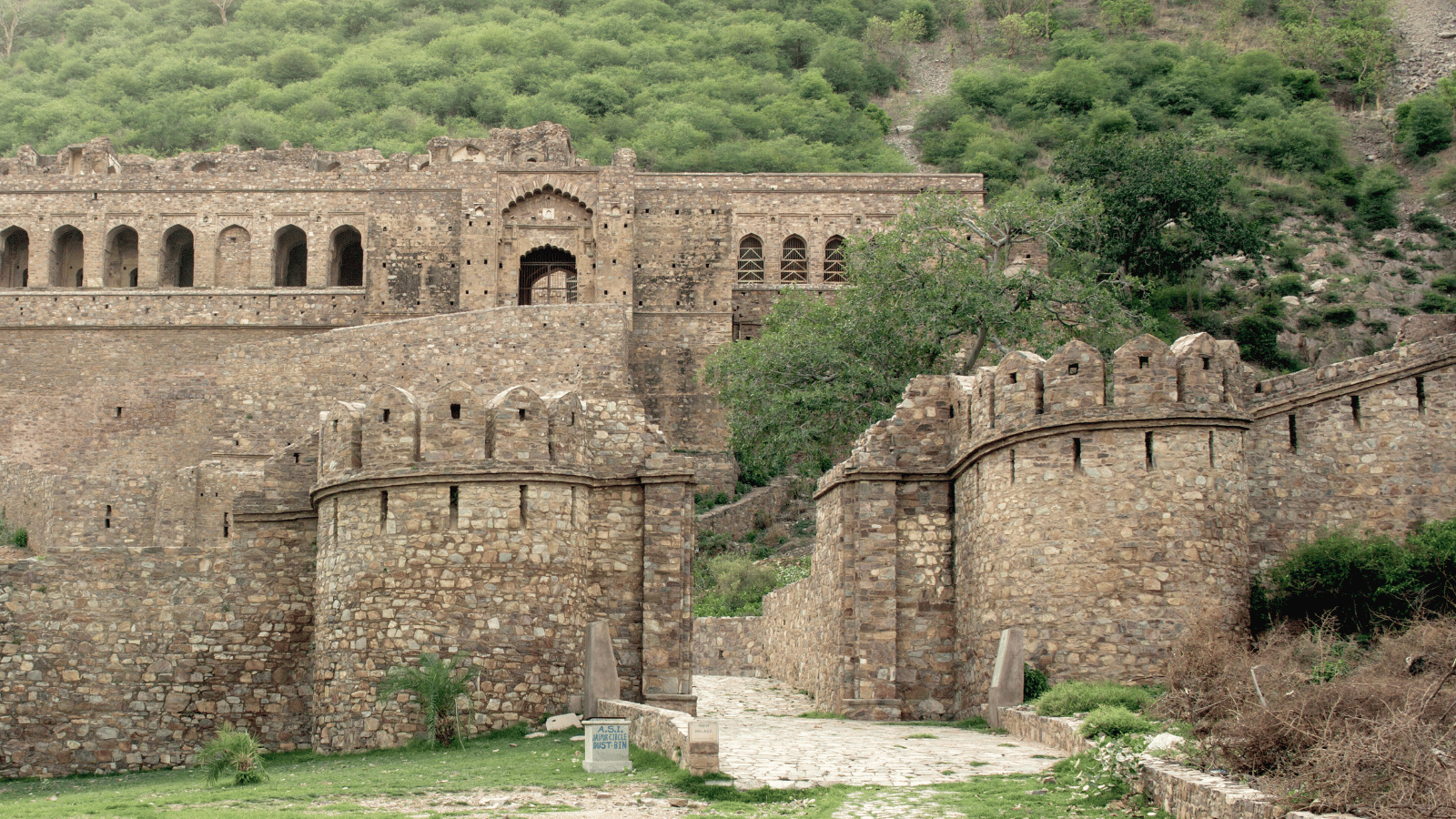
Bhangarh Fort, located in the Alwar district of Rajasthan, rises on a hilltop surrounded by forested terrain. Known for its distinctive architecture and compelling history, it remains a landmark that draws visitors from across the world.
Historical Background
Built in the 16th century C.E. by Raja Bhagwan Das of Amer, the fort reflects the craftsmanship and artistic ability of its creators. Stone walls, gateways, and sculpted surfaces illustrate the architectural vocabulary of the period. A stone inscription discovered near Som Sagar Lake, five kilometres away, records that King Madho Singh served as a diwan in the court of Emperor Akbar, connecting the site to wider political networks.
Location and Significance
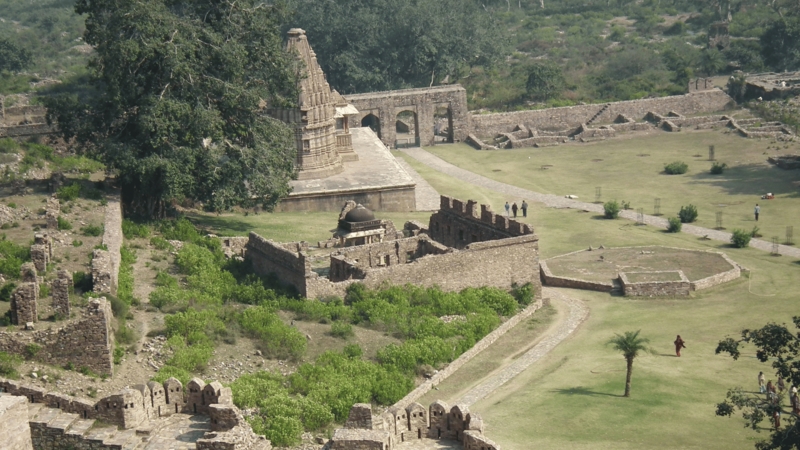
Situated in Rajasthan’s historic landscape, the fort once governed a thriving settlement. Its markets, palaces, shrines, and civic buildings demonstrate the social structure and economic life that shaped the region.
Architectural Materials and Design
The complex includes the Satamahala palace, originally seven storeys but now four, with ornate balconies, arched windows, and detailed carvings. Other components include fort walls, bazars, havelis, and a maqbara. Temples within the precinct, such as Gopinath, Someshwara, Keshava Rai, and Mangla Devi, contribute to its cultural identity. Collectively, these structures form a fortified ensemble noted for visual scale and artistic refinement.

 4.3•
4.3•
 Ticket needed for all ages
 Entry allowed for all ages
 Kid friendly
 Pets not allowed
 Free water stations
 Washrooms available
 Swarnita B
 Samir Dey.
 Vidhya
 Rahul Satija
 rajneesh gautam