The Mahakali Caves in Mumbai constitute an important repository of ancient Indian art. Their rock-cut forms, intricate carvings, and religious symbolism illuminate early cultural practices and demonstrate the diversity that shaped the region.
Historical Background
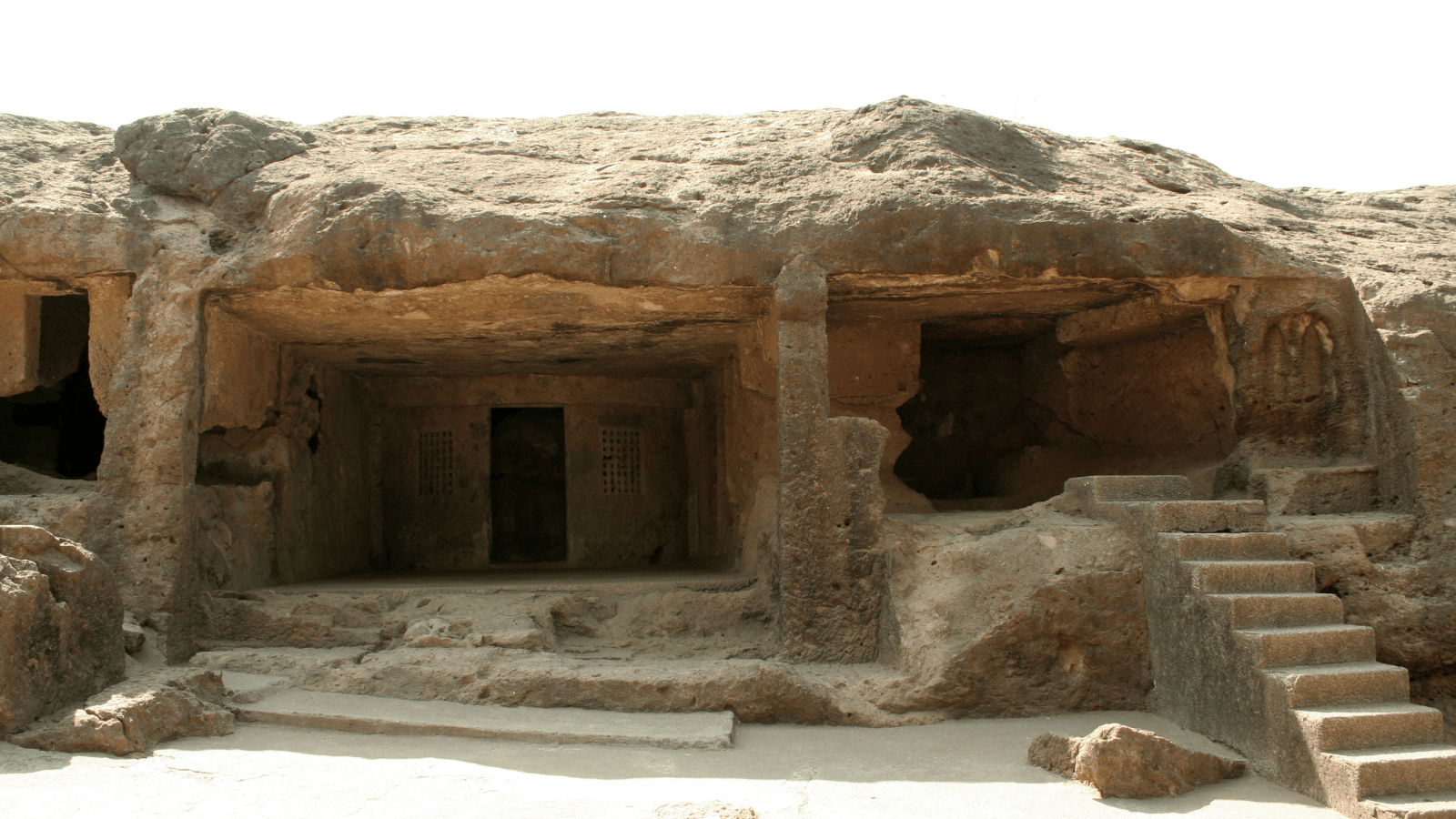
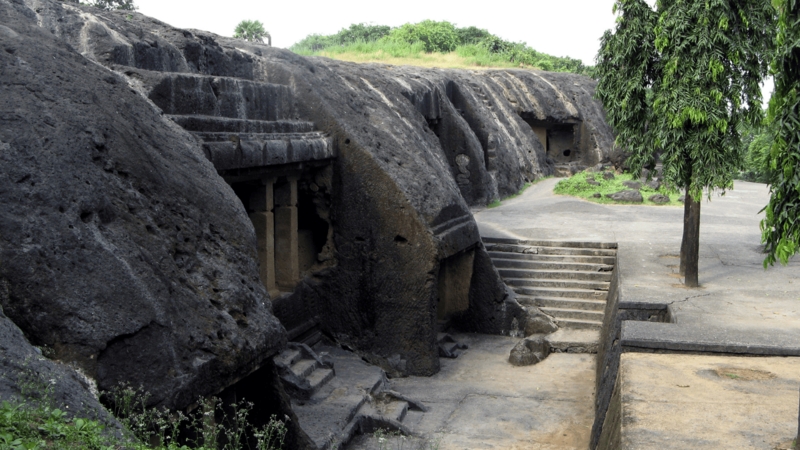
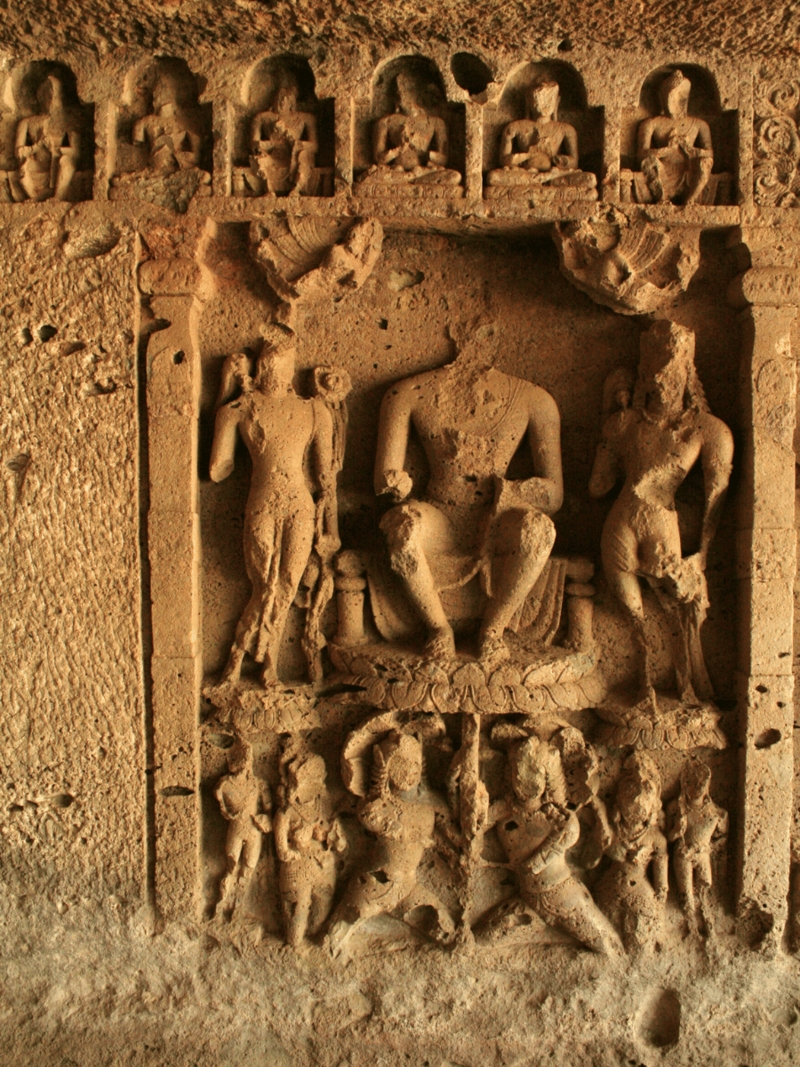
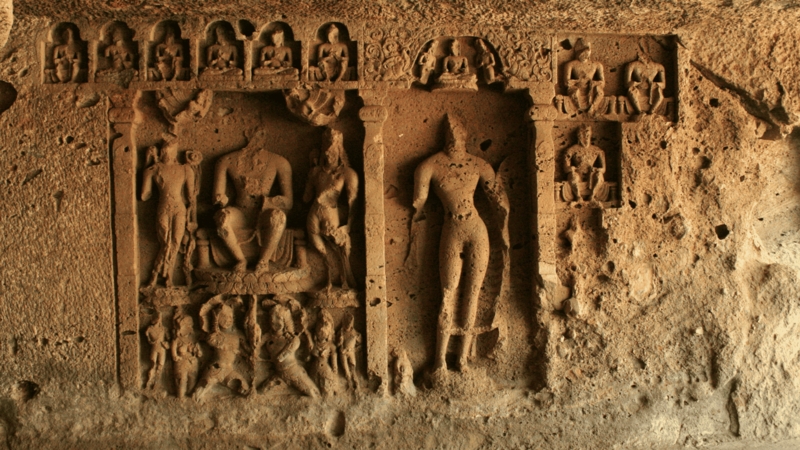
Carved between the 1st century C.E. and the 6th century C.E., the complex includes nineteen caves arranged in two groups. Cave 9 in Group I is a notable early Buddhist chaitya griha distinguished by its unusual plan. Its veranda leads to a plain stupa set within a hut-like enclosure, decorated only with a Buddhist rail pattern and dowels intended for a chattri. A panel depicting the Buddha with attendants and a two-line Pali inscription, dated to the 3rd century C.E., further enrich the site. Over time the cave acquired associations with Shiva, and the stupa has been used as a Shivalinga.
Location and Significance
Situated in Andheri’s Kondivita village in Mumbai, the caves illustrate the coexistence of diverse belief systems and the evolution of early rock-cut architecture. Group II faces the road and dates to the 4th or 5th century C.E., though its friable rock has caused significant deterioration.
Architectural Materials and Design
The caves are carved into basalt and display a restrained aesthetic. Their forms and surviving sculptures provide valuable evidence of shifting religious and artistic traditions.

 4.1•
4.1•
 Ticket needed for all ages
 Entry allowed for all ages
 Kid friendly
 Pets not allowed
 Washrooms available
 Free water stations
 Ritesh K R
 Jijo Jos
 Jashan Kheiva
 Abhijeet Thigale
 An0nym0use