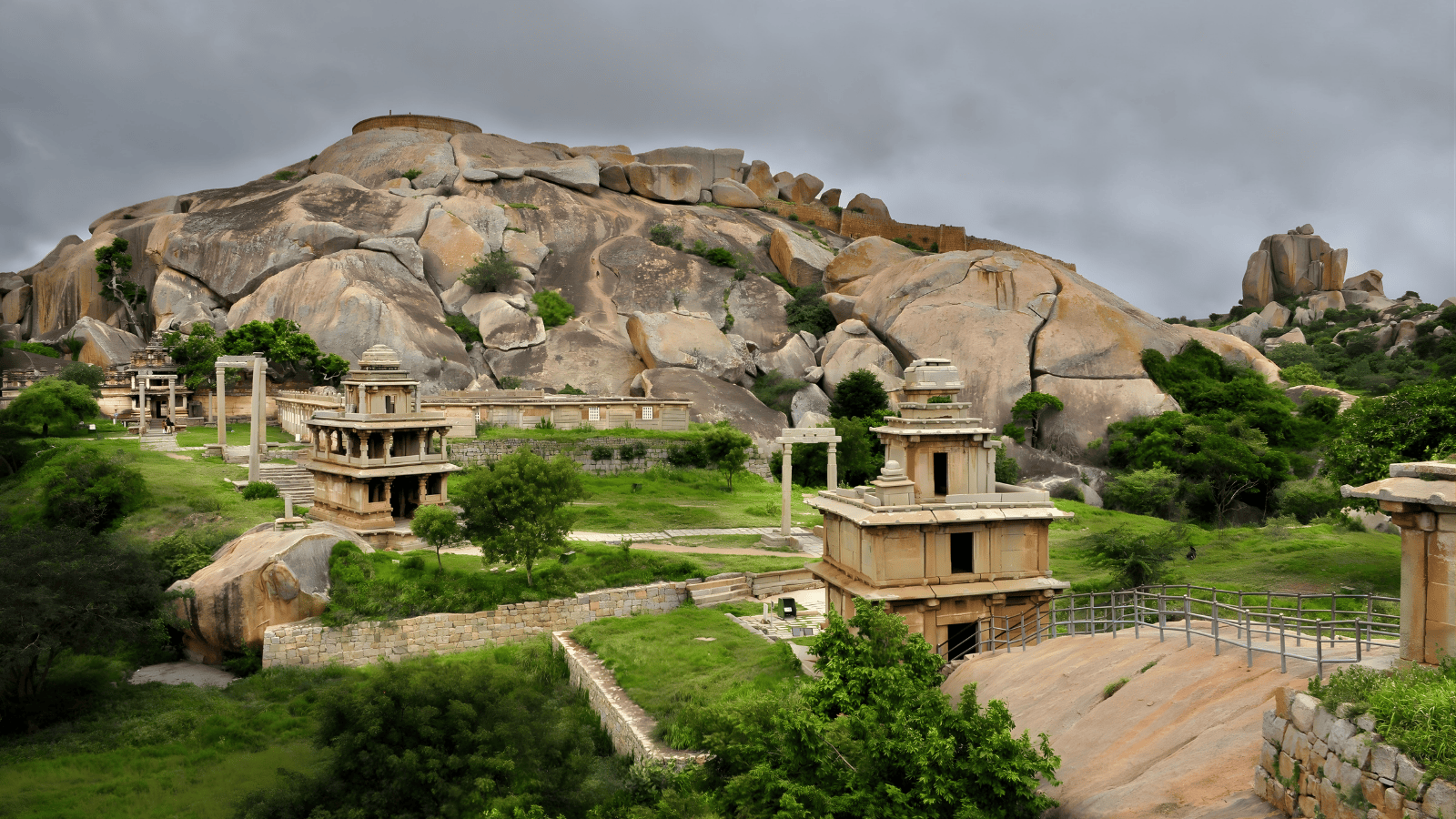
Chitradurga Fort, classified as a giridurga or hill fort, stands on a granitoid rise and exemplifies the military architecture of ancient times. Harmoniously integrated with its surrounding landscape, the fort employs natural granite boulders to create a commanding defensive profile.
Historical Background
Developed through successive phases, the fort showcases refined strategies that aimed to slow invading forces. Its seven lines of defense were engineered with bastions placed at measured intervals and with carefully designed zigzag entrances that forced attackers into controlled and vulnerable paths.
Location and Significance
Situated in Chitradurga, Karnataka, India, the fort is popularly known as Yelu Suttina Kote. It remains an emblem of regional military ingenuity and reflects traditions adapted to the rugged terrain of southern India.
Architectural Materials and Design
The outer wall incorporates four gateways oriented to the cardinal directions. Within the complex lie numerous temples, including Sampige Siddeshwara, Hidimbeswara, Phalguneshwara, Gopalakrishna, Ganesha, Anjaneya, and Ekanatheshwari. Water systems include natural springs, rainwater harvesting structures, reservoirs, and granaries. Remains of a mud built palace and large grinding stones attest to the fort’s logistical planning.

 4.6•
4.6•
 Ticket needed for all ages
 Entry allowed for all ages
 Kid friendly
 Pets not allowed
 Washrooms available
 Free water stations
 Hanumanth Kulkarni
 Shrikrishna Bhat
 Prateek Ghasghase
 Anilgowda
 Manoj
Manoj