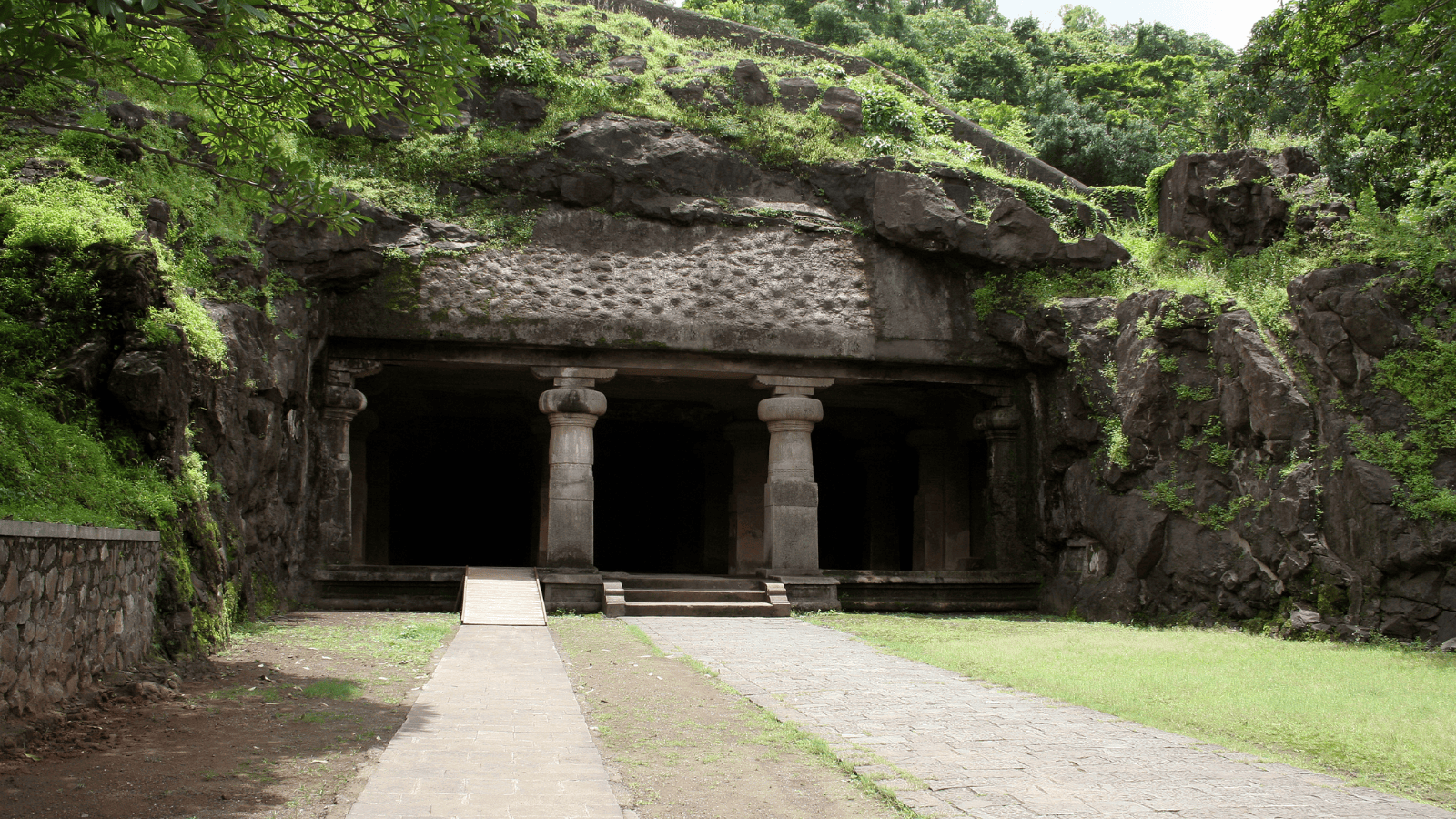
The Elephanta Caves are a group of rock cut monuments carved into an island surrounded by the sea and represent one of India’s most accomplished architectural achievements. Comprising sixteen excavations, the caves are renowned for their sculptural richness and their ability to convey complex religious themes through stone carving. The ensemble reflects the artistic excellence and technical skill of early Indian craftsmen.
Historical Background
The caves were created during the mid fifth to sixth centuries C.E. and represent an advanced phase of Brahmanical rock cut architecture. Cave 1 is the principal excavation and is dedicated to Shiva. Its plan closely resembles the Dumar Lena cave at Ellora and demonstrates an evolved architectural and sculptural tradition.
Location and Significance
The Elephanta Caves are located on an island off the coast of present day Mumbai in Maharashtra, India. The site holds exceptional cultural significance as a visual expression of Hindu theology and artistic ideals, preserving narratives associated with Shiva and reflecting enduring religious traditions.
Architectural Materials and Design
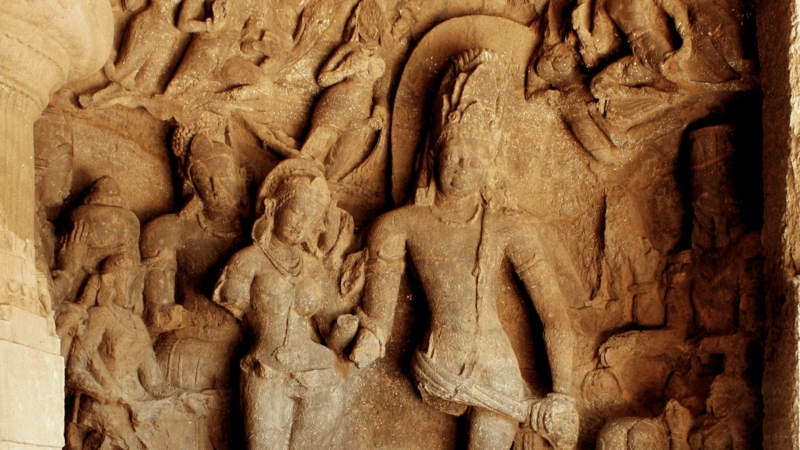
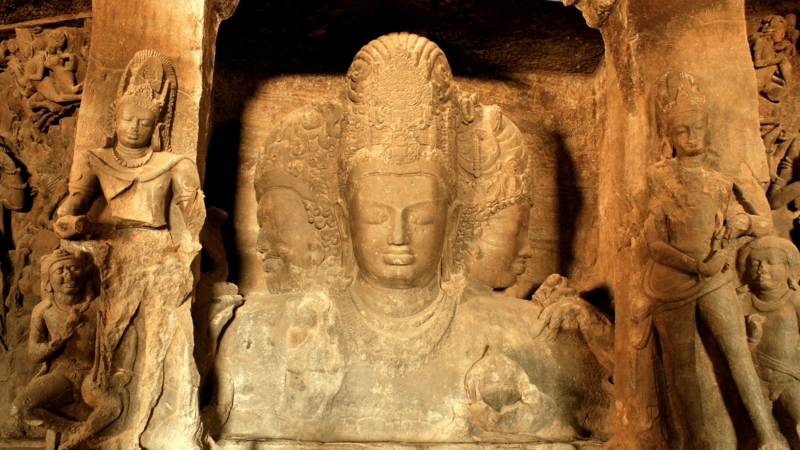
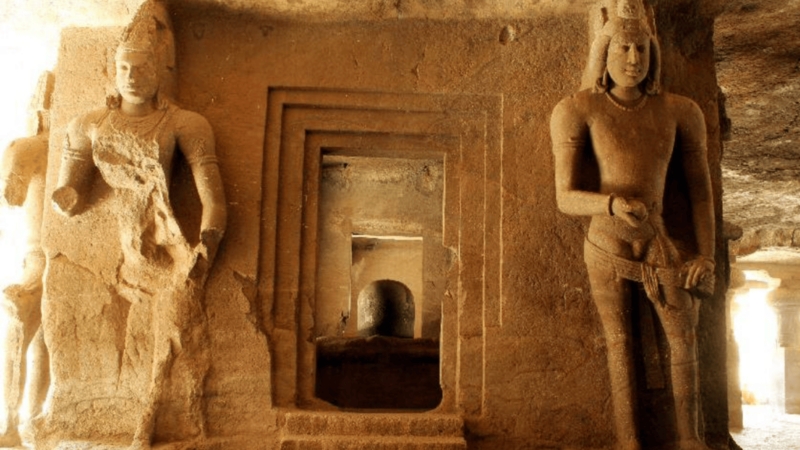
Carved from solid rock, Cave 1 features a central hall with six rows of massive pillared columns and entrances from the north, east and west. Its focal point is the seven metre high Trimurti image of Shiva, known as Maheshmurti, representing creation, preservation and destruction through Aghora or Bhairava, Taptapurusha or Mahadeva and Vamadeva or Uma. Eight sculpted panels depict aspects of Shiva, including Ardhanarishvara and scenes of Shiva and Parvati playing chausar.

 4.3•
4.3•
 Ticket needed for all ages
 Entry allowed for all ages
 Kid friendly
 Pets not allowed
 Washrooms available
 Free water stations
 Abhishek Tiwari
 ATUL Sir
 Dinesh Kumar Arumugam
 Alex Cletus
 KhusHI GV