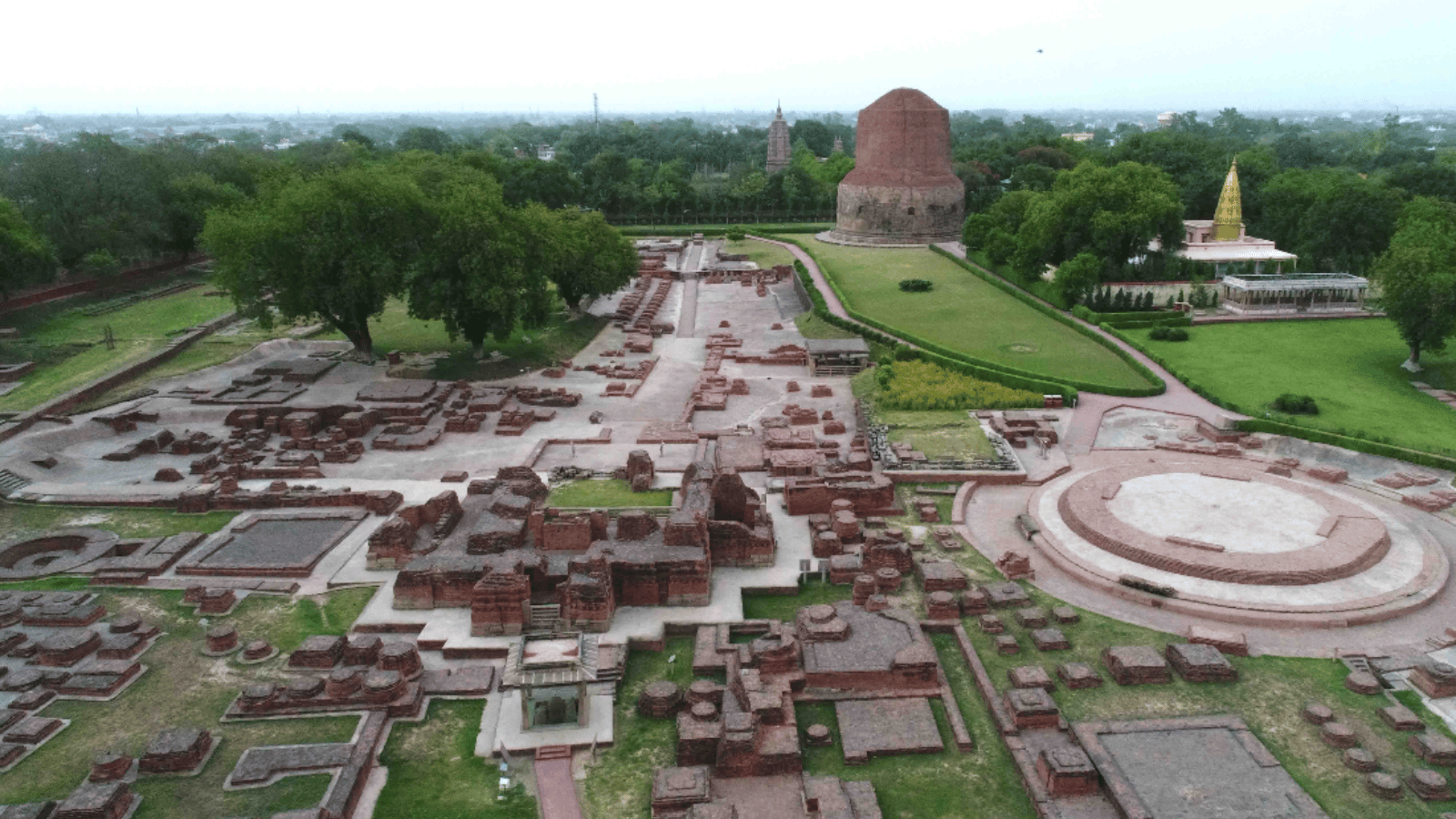
Sarnath is one of the most important Buddhist archaeological sites in India. Systematic excavations by Sir Alexander Cunningham, Markham Kittoe, C. Horne, F. O. Oertel, Sir John Marshall, H. Hargreaves and Dayaram Sahni between the nineteenth and early twentieth centuries C.E. uncovered several structures of religious and historical significance.
Historical Background
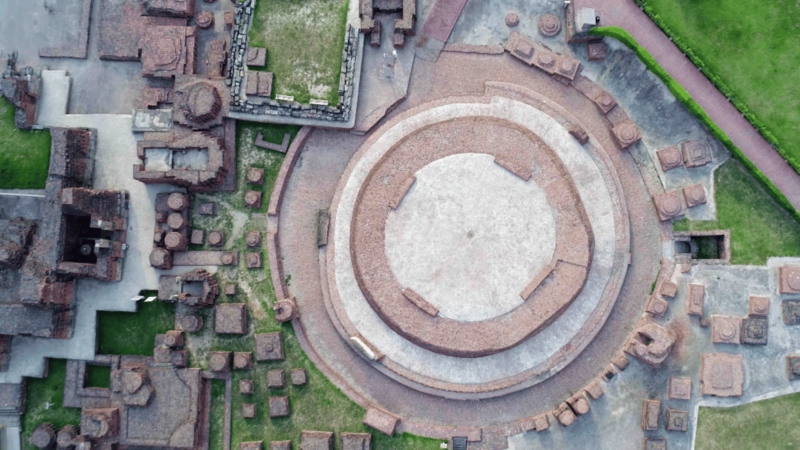
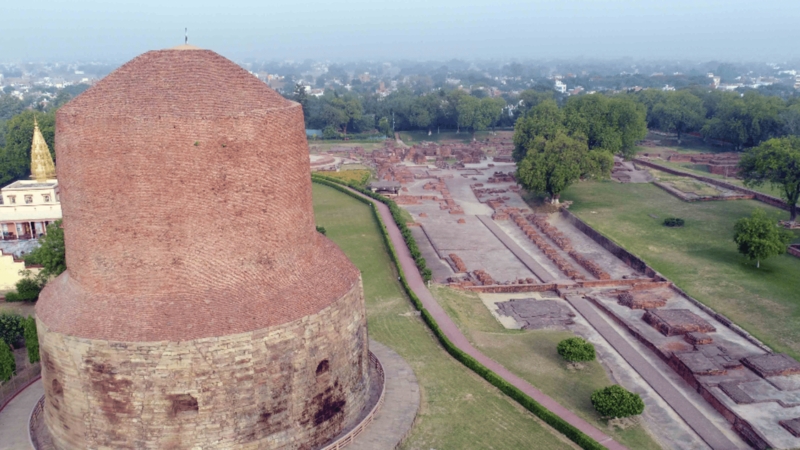
Findings at the site include the Dhamekh Stupa, the Dharmarajika Stupa, an apsidal chapel, the Ashokan pillar, a Panchayatan temple, monolithic railings, numerous votive stupas, sculptures, inscriptions and architectural fragments ranging from the 3rd century B.C.E. to the 12th century C.E. Dhamekh Stupa is especially important as it marks the place where the Buddha delivered his first discourse to his five disciples. The Dharmarajika Stupa and the Ashokan pillar were constructed under the patronage of King Asoka to disseminate Buddhist teachings.
Location and Significance
Situated near Varanasi in Uttar Pradesh, Sarnath remains a major pilgrimage centre and an essential site for understanding the development of Buddhism in India.
Architectural Materials and Design
The stupas and chapels exhibit brick and stone construction, while the Ashokan pillar exemplifies Mauryan polish and epigraphic tradition. The spread of votive stupas and sculptural remains reflects continuous monastic activity over many centuries.

 4.7•
4.7•
 Ticket needed for all ages
 Entry allowed for all ages
 Kid friendly
 Pets not allowed
 Free water stations
 Washrooms available
 biju vs
 Vivek Sinha
 DR PRASANTA KR MAHATA
 vivek kumar
 Animesh Biswas