
Fatehpur Sikri
About the venue
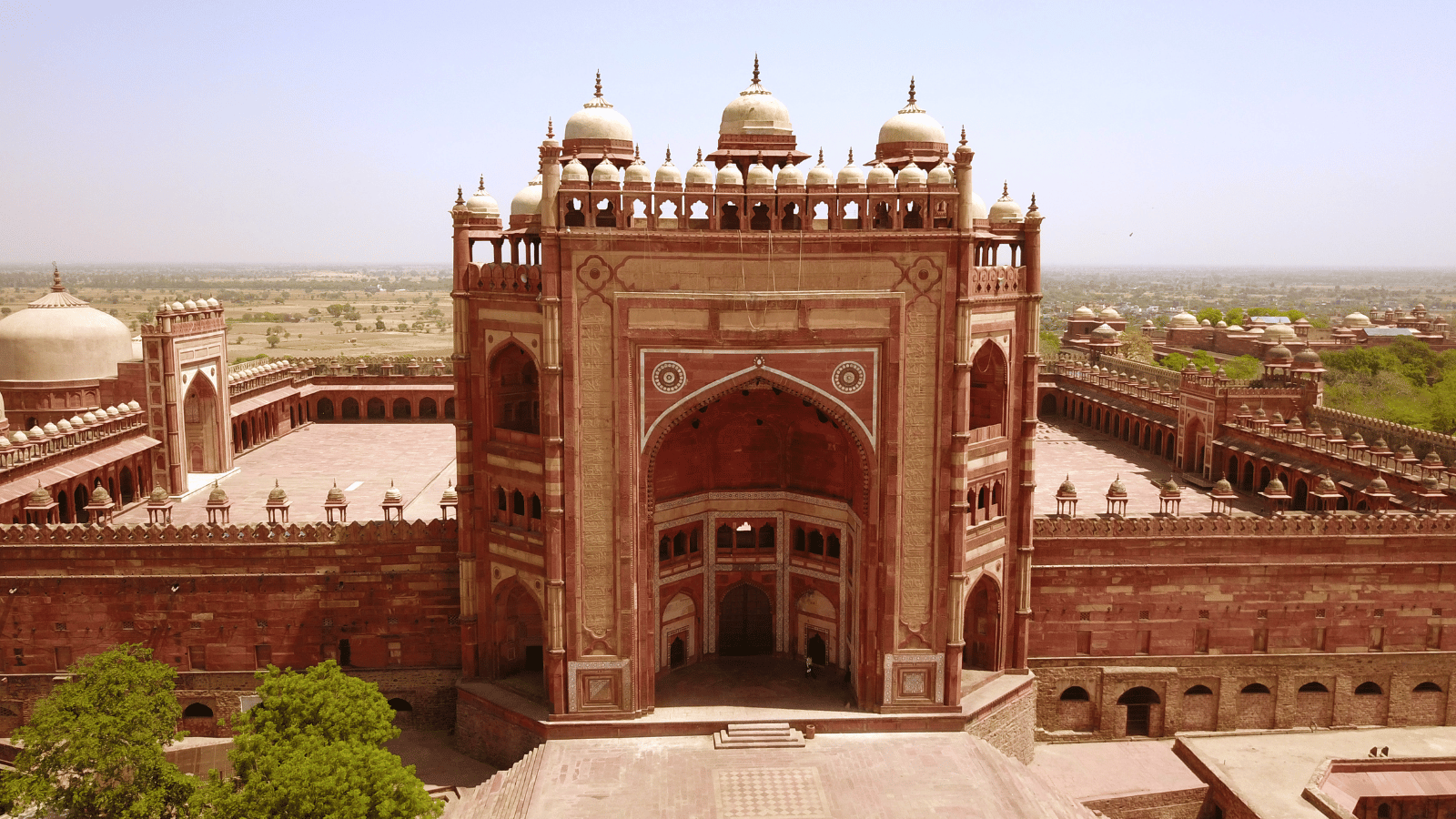
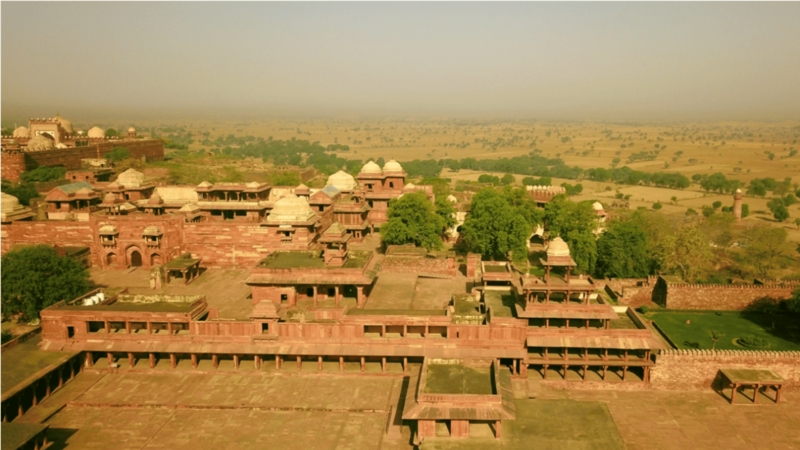
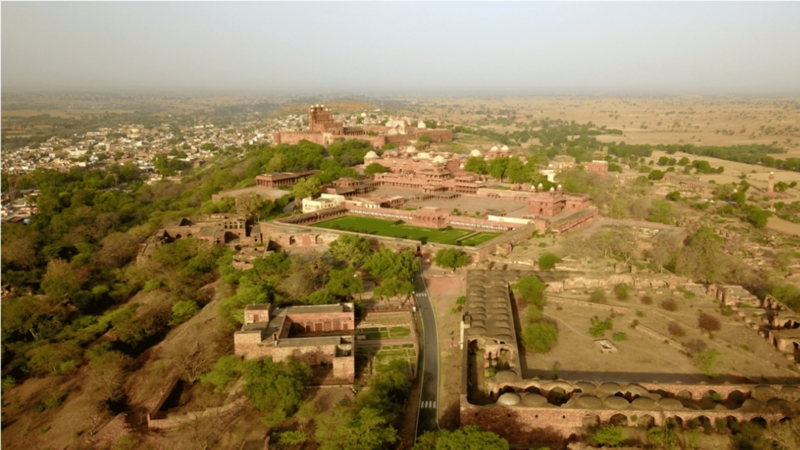
Fatehpur Sikri, a monumental Mughal city, stands on an outcrop of the upper Vindhyan ranges beside a now dried up natural lake. Although widely known as the capital founded by Akbar, the area preserves a deeper cultural past revealed through prehistoric tools and painted rock shelters.
Historical Background
Babur visited the region in 1527 C.E. and commemorated his victory at Khanwah with a garden, a water palace, and a step well. Akbar later resided here from 1572 to 1585 C.E. to honor Sheikh Salim Chishti, whose blessing granted him a son. During this period he commissioned palaces, civic buildings, and institutions, naming the city Fatehabad, which later evolved into Fatehpur Sikri.
Location and Significance
Located near Agra in Uttar Pradesh, India, the city became a centre of intellectual and artistic life. It nurtured major Mughal institutions including the Ibadat Khanah, Din-I-Ilahi, Tarikh i Ilahi, Jharokha Darshan, and the doctrine of Sulh-I-Kul, alongside thriving craft workshops.
Architectural Materials and Design
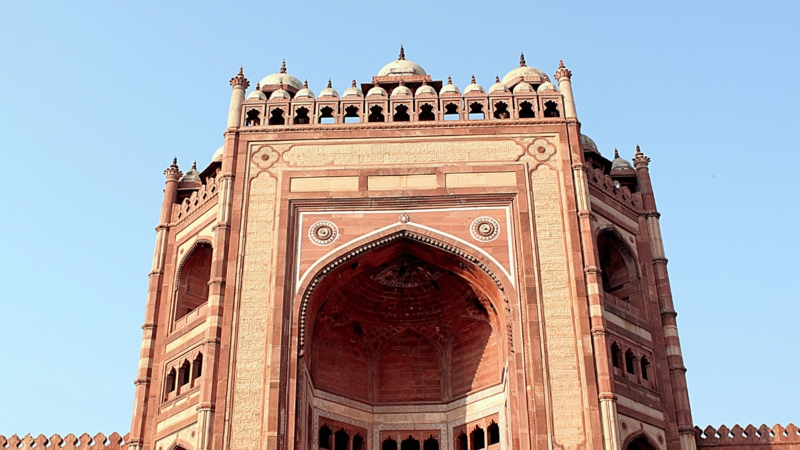
Sikri, the first planned Mughal city, uses terraced levels to organize complexes such as Jami Masjid, Buland Darwaza, the tomb of Sheikh Salim Chishti, the Panch Mahal, Khwabagh, Anup Talao, and Diwan-i-Aam. Its waterworks, drainage, and numerous protected monuments illustrate sophisticated planning recognized by UNESCO in 1986.