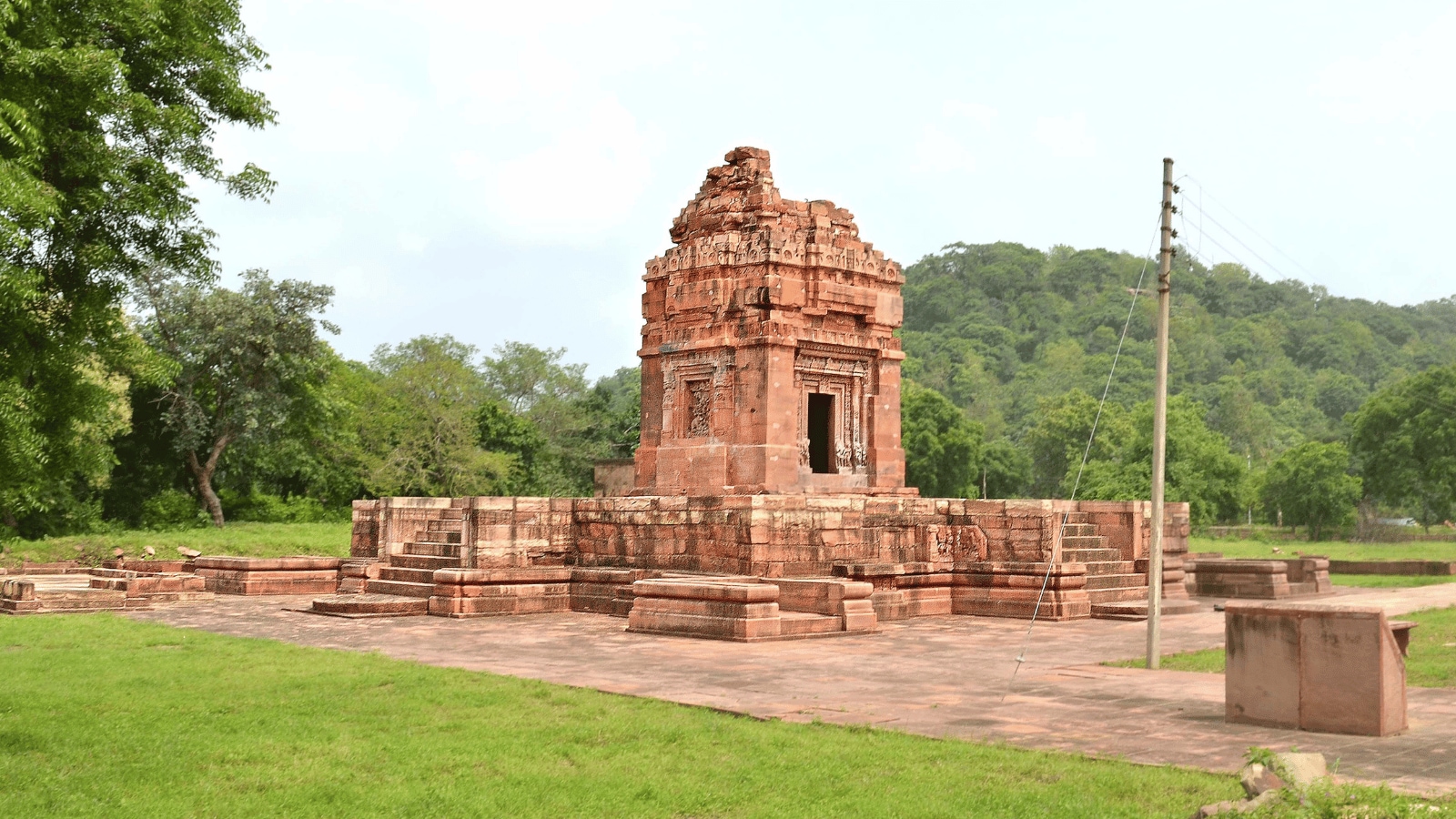
The Dashavatara Temple is a distinguished monument demonstrating the advanced Gupta temple tradition within the Panchayatana scheme. Dedicated to Lord Vishnu, it represents a refined stage of early structural temple development and preserves a dignified artistic character.
Historical Background
Excavations conducted by Shri Dayaram Sahni in 1917 to 1918 revealed the lower portions of the temple, fragments of smaller surrounding shrines and numerous sculptures. These findings, now housed in a sculpture shed on the premises, offer insight into the monument’s original shikhara, which once carried chaitya window ornamentation and an amralaka. Although only its lower section survives, the temple remains a significant example of early shikhara architecture.
Location and Significance
Situated at its historic site with an ancient water tank to the west, the monument exemplifies the artistic and religious ideals of the Gupta period. Its sculptural program, which includes episodes from the Ramayana and the Puranas, enhances its cultural importance.
Architectural Materials and Design
The west facing temple stands on a broad platform with steps on all sides and retains traces of subsidiary shrines at each corner. The richly carved entrance displays panchashakha motifs and a depiction of Seshashayi Vishnu on the lalatabimba. Niches on the remaining sides enshrine other forms of Vishnu, including Vishnu reclining on Ananta, Nar Narayana and Gajendra Moksha.

 4.4•

 Ticket needed for all ages
 Entry allowed for all ages
 Kid friendly
 Pets not allowed
 Free water stations
 Washrooms available
 Rohit kushwah
 Jay narayan Pathak
 Sunderam Saxena
 shivam tomar
 Raj Verma