Hauz Khas Complex is a historic ensemble in Southern Delhi, exemplifying the city’s Islamic architectural and cultural heritage. It served as a center of education, worship, and royal patronage, reflecting successive influences of medieval rulers on urban planning and civic infrastructure.
Historical Background
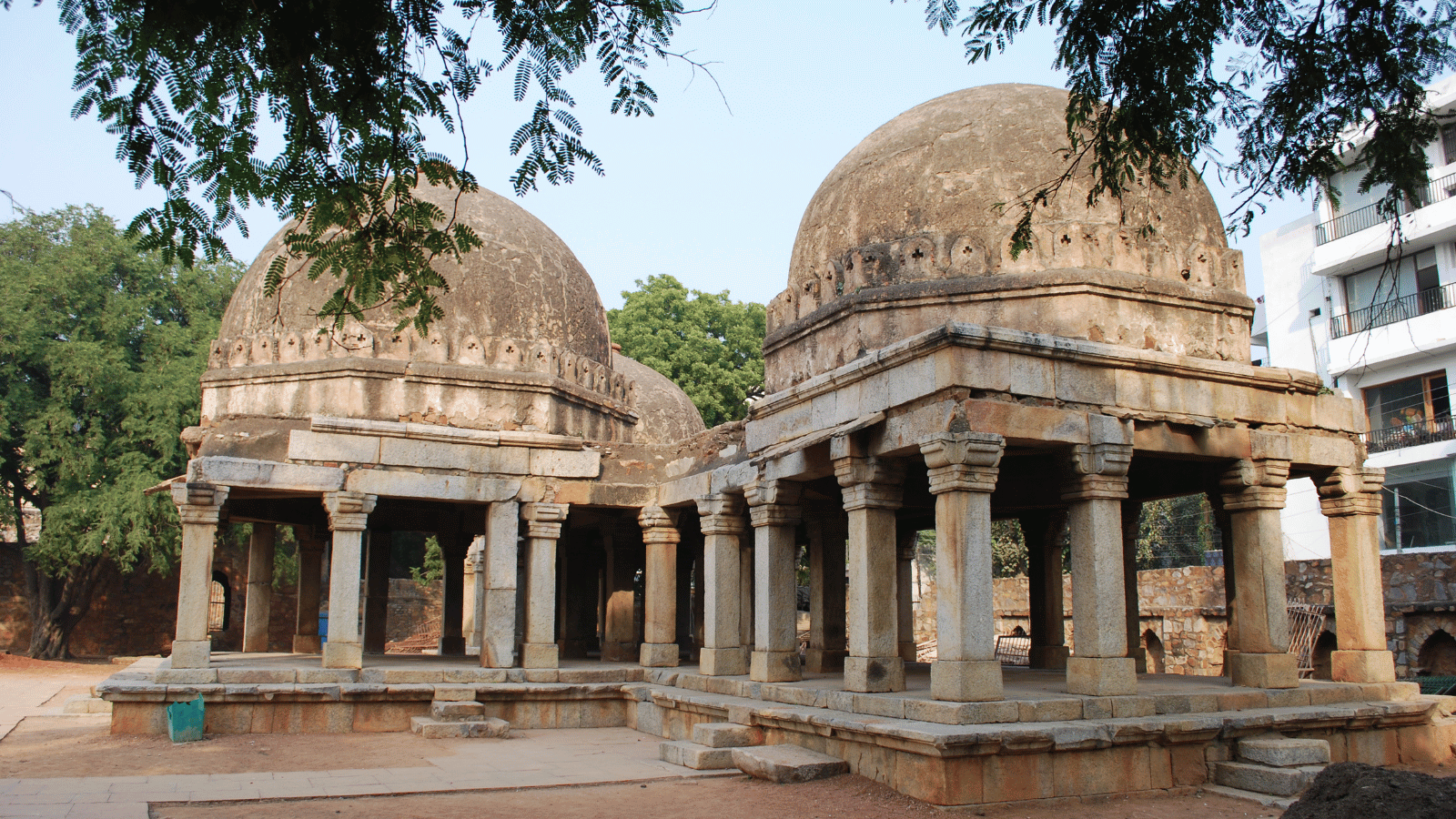
The complex originated with the construction of the Hauz-i-Alai water tank by Alauddin Khalji to supply water to the inhabitants of the area. Later, Firuz Shah Tughluq desilted the tank, repaired it, and erected numerous buildings along its southern and eastern banks. Successive rulers, including Sikandar Lodi in A.D. 1507, contributed to repairs and embellishments. The tomb of Firuz Shah exemplifies this continuity, bearing inscriptions and decorative work that mark historical interventions over centuries.
Location and Significance
Situated in Southern Delhi, the complex holds cultural, educational, and historical importance. Its monuments, including the tank, mosque, tombs, and pavilions, provide a roadmap of Delhi’s medieval rulers, showcasing the evolution of Islamic urban architecture in India.
Architectural Materials and Design
Constructed using rubble masonry and plaster, the tomb of Firuz Shah is square in plan with high, slightly battered walls and a lofty dome. The intrados, dome ceiling, and squinch-pendentives are adorned with intricate plasterwork, including incised Quranic inscriptions over the southern doorway, accompanied by decorative characters and paintings. The complex also features 13th-century pavilions, mosques, and ancillary structures, harmoniously integrating functional and aesthetic elements of medieval Islamic architecture.

 4.4•
4.4•
 Ticket needed for all ages
 Entry allowed for all ages
 Kid friendly
 Pets not allowed
 Washrooms available
 Free water stations
 Aarjav Jain
 Vijender Singh
 Kapil Kothiwal
 Satnam Singh
 Manvendra Singh