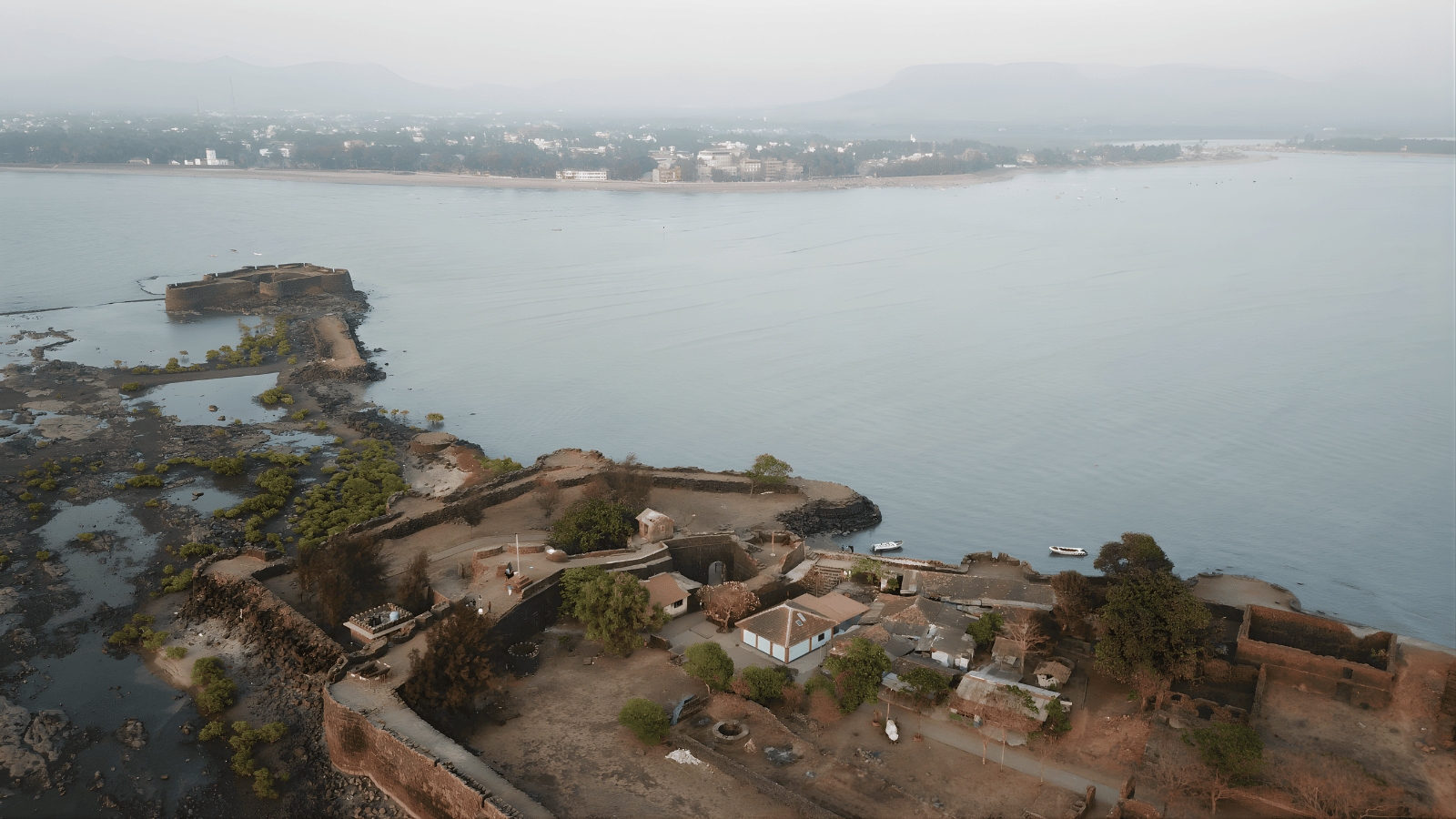
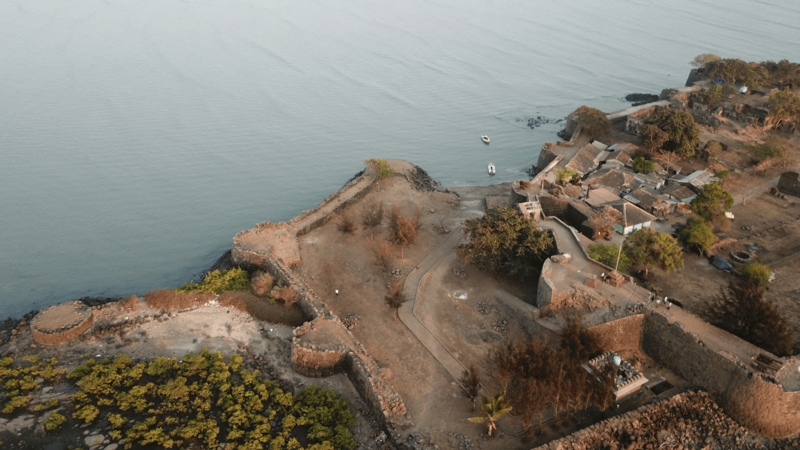
Kolaba Fort, also known as Kolaba Fort, is a historic maritime stronghold exemplifying Maratha naval power. Built on a rocky outcrop near Alibag, Maharashtra, it served as a strategic base for shipbuilding, trade, and coastal defense. The fort’s commanding position and association with Chhatrapati Shivaji Maharaj and Admiral Kanhoji Angre make it a landmark of Maratha heritage.
Historical Background
Constructed under Shivaji Maharaj to secure the Konkan coast, Kulaba Fort rose to prominence under Kanhoji Angre in the late 17th and early 18th centuries C.E. The fort was central to daring naval raids, maritime defense, and treaties with Peshwa Balaji Vishwanath, solidifying Angre’s dominance. It also housed palaces, administrative quarters, dockyards, and provisions for the Maratha navy, reflecting its operational significance. Despite fire damage and British dismantling, the fort’s historical legacy as a naval citadel endures.
Location and Significance
Situated off the Alibag coast, Maharashtra, Kolaba Fort controlled maritime routes and shipbuilding yards. Its strategic location, fortified bastions, temples, and gateways make it a key site of regional history, naval architecture, and Maratha cultural heritage.
Architectural Materials and Design
The fort rises 6–7 metres with seventeen bastions, including the northern outpost Sarjakot. The northeast Maha Darwaja features a double-arched gateway adorned with floral and animal motifs. Temples include Bhawani Temple with tiled roof, Ganapati Panchayatan Temple, and smaller shrines to Hanuman and Mahadevi. The Thorla Wada palace, docks, wells, and storehouses demonstrate functional military planning. Architectural features such as bastions, gateways, and defensive walls illustrate a blend of fortification, religious devotion, and maritime utility.

 4.3•
4.3•
 Ticket needed for all ages
 Entry allowed for all ages
 Kid friendly
 Pets not allowed
 Washrooms available
 Free water stations
 Afreen Arts
 Mukund Halde
 Amit Gurav
 Sourabh Kulkarni
 TRAVEL CLEVER