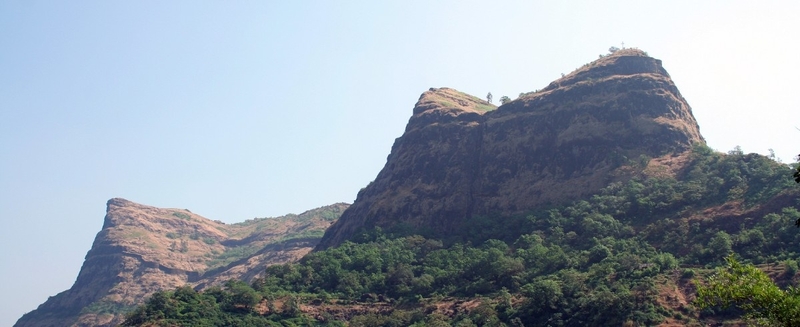
Raigad Fort, set within the Sahyadri ranges of Maharashtra, rises at an elevation of about 2700 feet and became a defining symbol of the Maratha legacy. Serving as the capital under Chhatrapati Shivaji Maharaj, it conveys the resolve, strategy, and authority that shaped the early Maratha state.
Historical Background
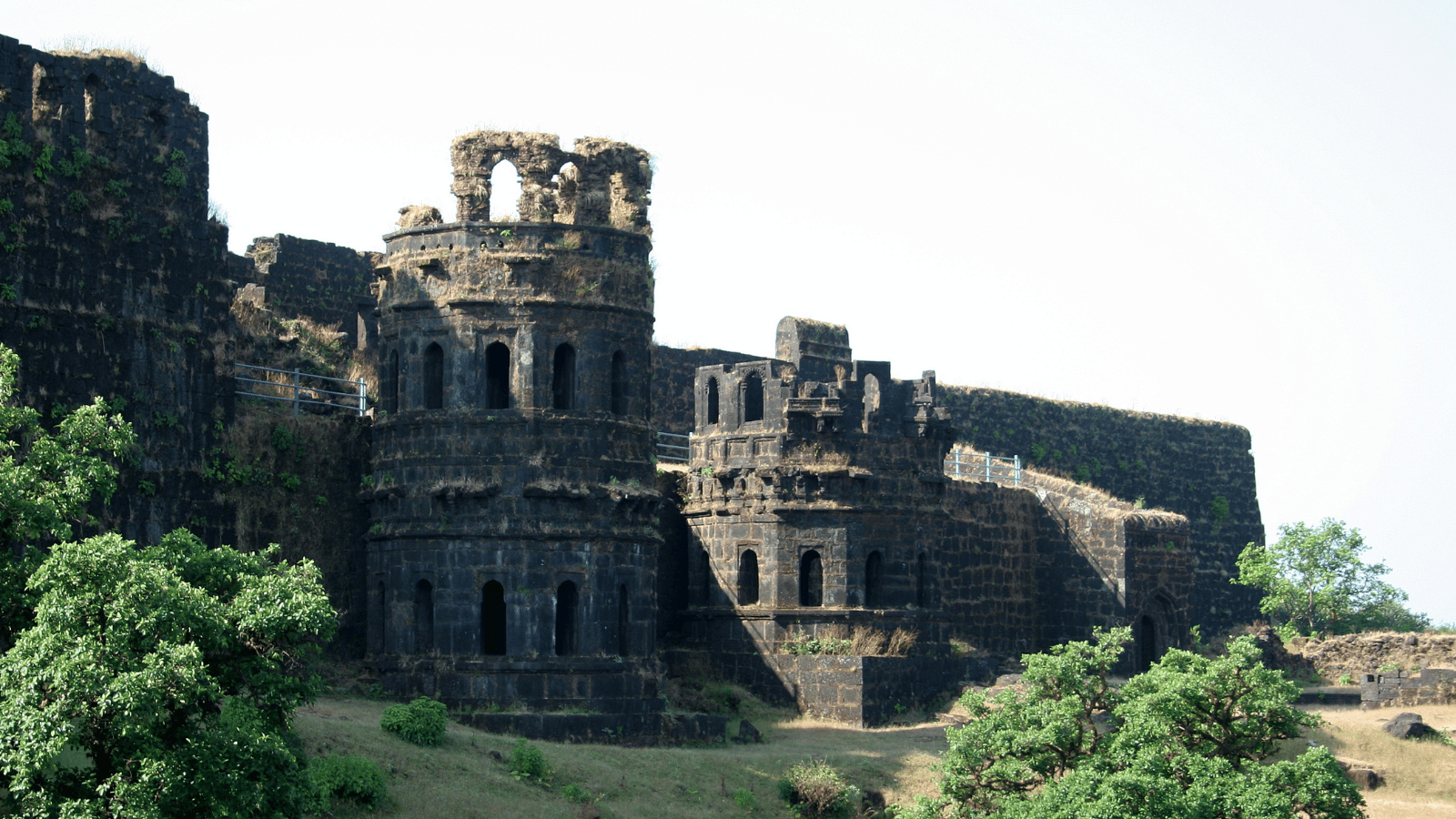
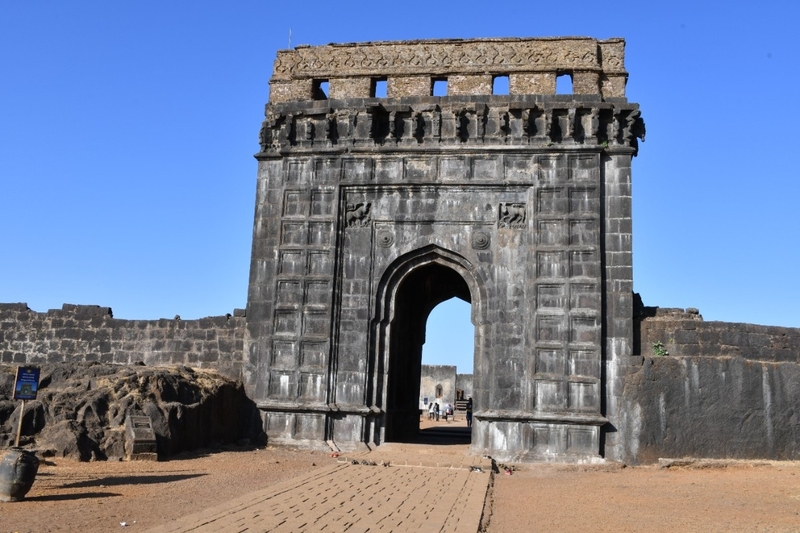
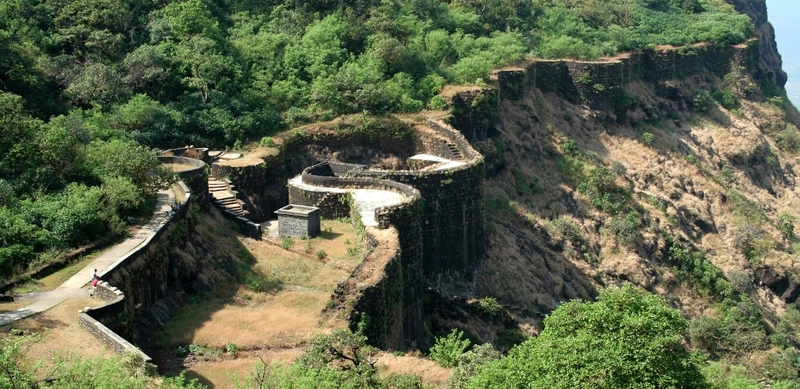
Established as a secure hilltop stronghold, the fort exemplified defenses suited to the military needs of the empire. Massive walls, gates, bastions, watchtowers, and a network of cannons protected the plateau. The primary entry, known as the Maha Darwaja, marked the ceremonial and strategic threshold into the royal precinct. Within the enclosure stood palaces, temples, an audience hall, and residences for the ruler and his household. The Hirkani Buruj, rising dramatically above a steep cliff, remains one of the most vivid architectural features.
Location and Significance
Located in Maharashtra’s rugged highlands, Raigad’s vantage commanded extensive views of surrounding valleys, making it an ideal administrative and military center. Its association with Shivaji Maharaj endows it with enduring cultural importance.
Architectural Materials and Design
Stone ramparts, elevated terraces, stepped approaches, and fortified gateways define the layout. The arrangement of civic, ceremonial, and residential spaces reflects careful planning shaped by terrain, defense, and royal protocol.

 4.8•
4.8•
 Ticket needed for all ages
 Entry allowed for all ages
 Kid friendly
 Pets not allowed
 Washrooms available
 Navigator Abhi
 Atharva Chougule
 vaibhav kalan
 Rutuja Kalambe
 Rushikesh