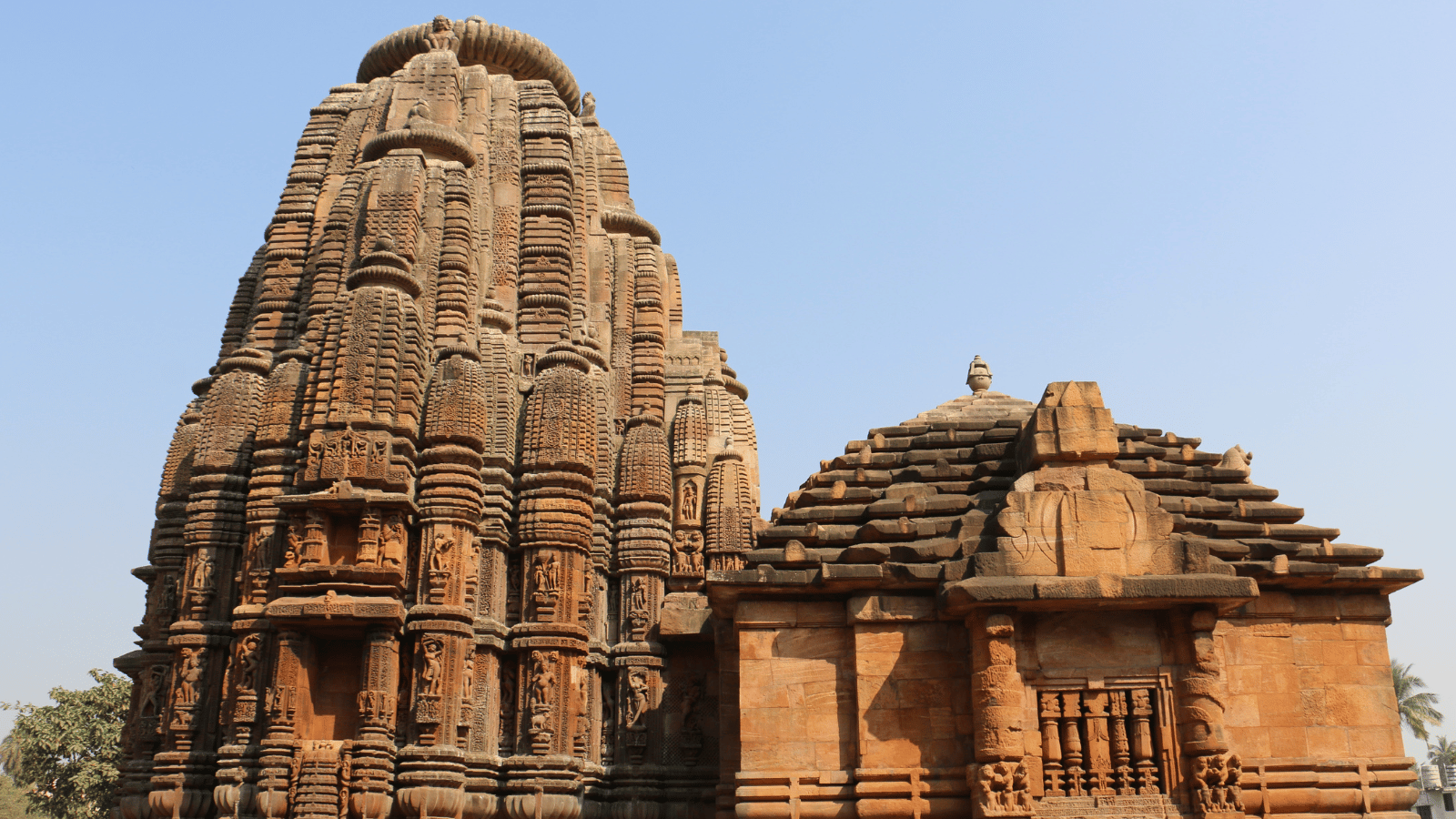
The Raja Rani Temple, also known as Indresvara, is an architectural gem dedicated to Lord Shiva. Renowned for its sculptural elegance, the temple reflects the ingenuity and artistic experimentation of Kalingan temple architecture.
Historical Background
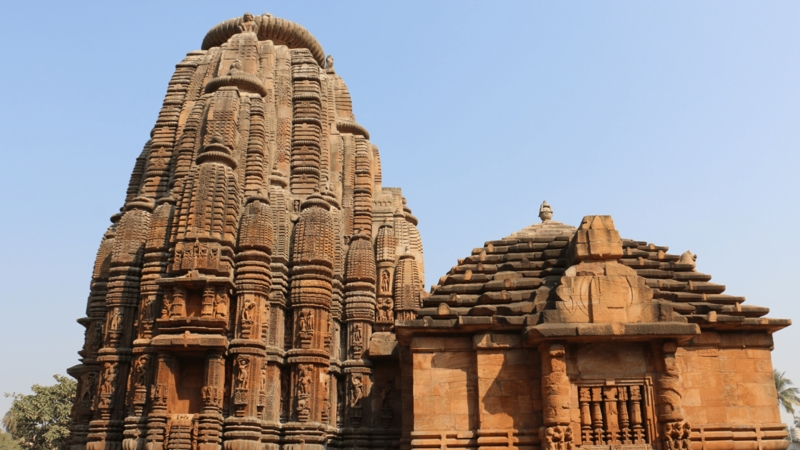
Constructed using the locally sourced Rajarania sandstone, the temple stands out for its ornamental excellence. Sculptural features include dikpalas, nayikas, and intricate scroll works. The temple is pancha-ratha in plan and features a high jagamohana of the pidha type. Its anga-sikharas cluster around the main sikhara of the deul, representing a distinctive experiment in temple design. Presently, the temple is devoid of an enshrined deity, yet it continues to draw attention for its artistic and architectural significance.
Location and Significance
Situated in Bhubaneswar, Odisha, the temple is an important heritage site within the rich corpus of Kalingan temples. Its unique structural and decorative features make it a key example of regional temple architecture.
Architectural Materials and Design
Constructed from Rajarania sandstone, the temple’s design integrates pancha-ratha plan, pidha-type jagamohana, and clustered anga-sikharas. Ornamentation includes finely carved dikpalas, nayikas, and multiple scroll motifs, highlighting the craftsmanship and innovation of its creators.

 4.4•
4.4•
 Ticket needed for all ages
 Entry allowed for all ages
 Kid friendly
 Pets not allowed
 Washrooms available
 Free water stations
 Karthik Rsn
 Kaustubh Ladda
 Kumar RM
 Mr_whose_ theboss
 Ritish Sahu