Rani ki Vav, set in the historic town of Patan on the banks of the Saraswati River, is among the finest Stepwells of India. Built in the 11th century C.E. by Queen Udayamati in memory of King Bhimdev I, it stands today as a UNESCO World Heritage Site celebrated for its sculptural richness and structural ingenuity.
Historical Background
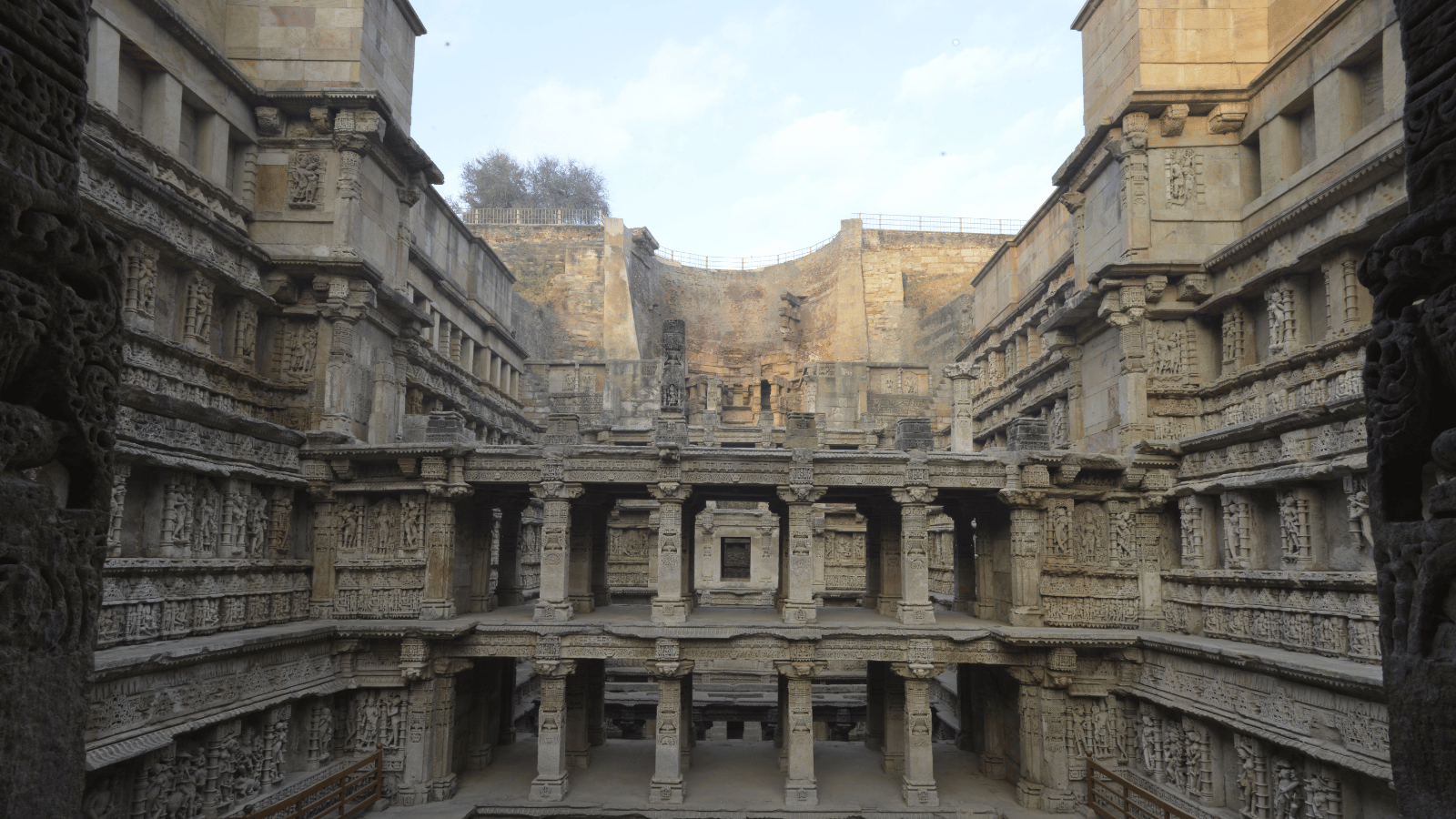
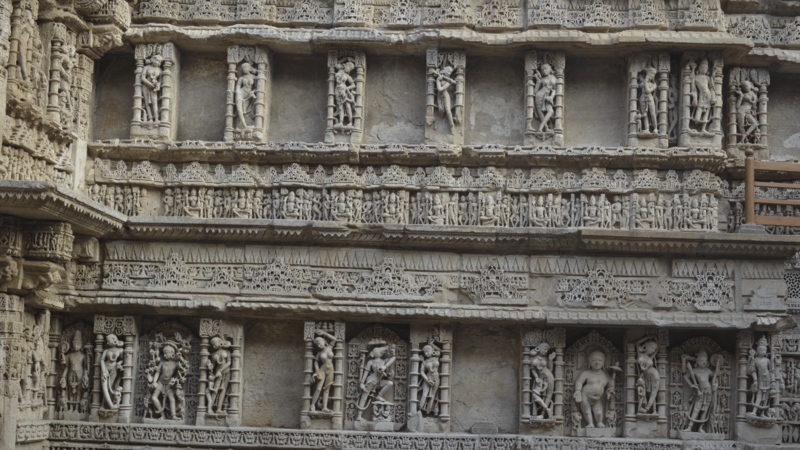
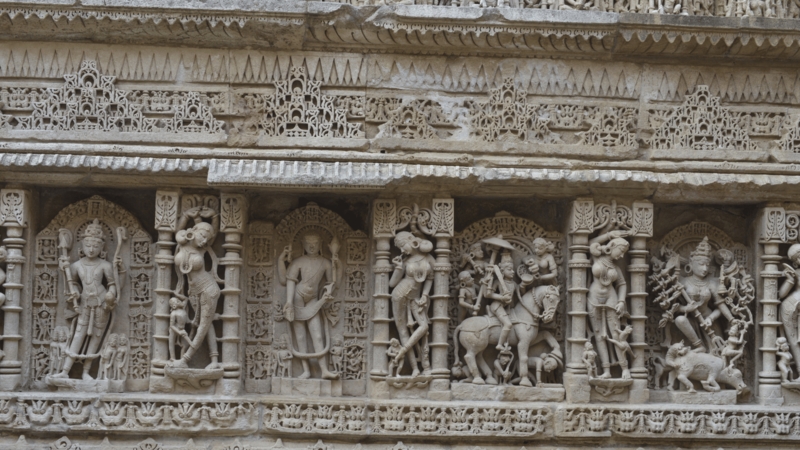
Conceived as both a memorial and a monumental water resource, the Stepwell descends through seven levels that display intricately carved imagery from Hindu mythology. Nearly four hundred sculptures remain from an estimated eight hundred, depicting deities, apsaras, narrative scenes, and select erotic themes that illustrate the artistic traditions of the period.
Location and Significance
Located in Gujarat’s Patan district, the monument reflects the city’s long association with craftsmanship and sacred architecture. Its figurative program, dominated by repeated images of Vishnu reclining on Adisesha, reinforces the site’s ritual importance and symbolic association with cosmic order.
Architectural Materials and Design
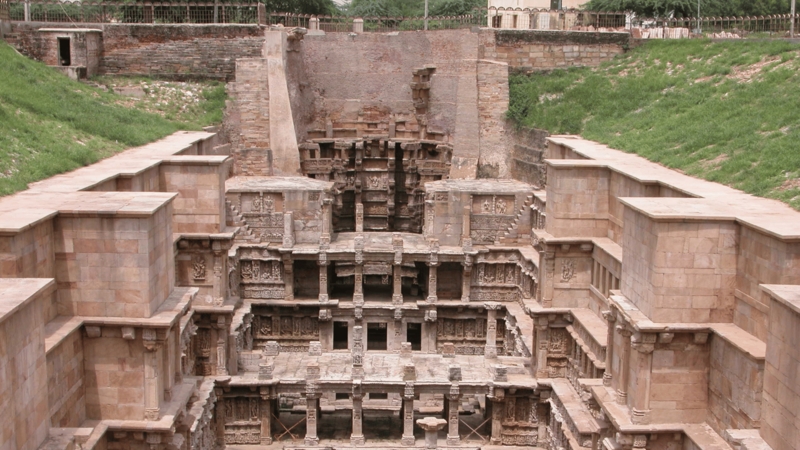
Constructed of brick faced with hewn stone, the complex comprises an entrance stairway, stepped corridors, and multi storied pillared pavilions leading to the circular draw well. Each storey rests on pillars with square bases decorated with ghata pallav motifs and topped with quadruple brackets featuring four armed Kichakas. These elements, combined with the east facing alignment, create a visually unified descent into the subterranean tank.

 4.7•
4.7•
 Ticket needed for all ages
 Entry allowed for all ages
 Kid friendly
 Pets not allowed
 Free water stations
 Washrooms available
 Jayesh Jagtap
 Mehul Vyas
 Navdeep b Luhar
 Shruti Jha
 Dhruvil Purani