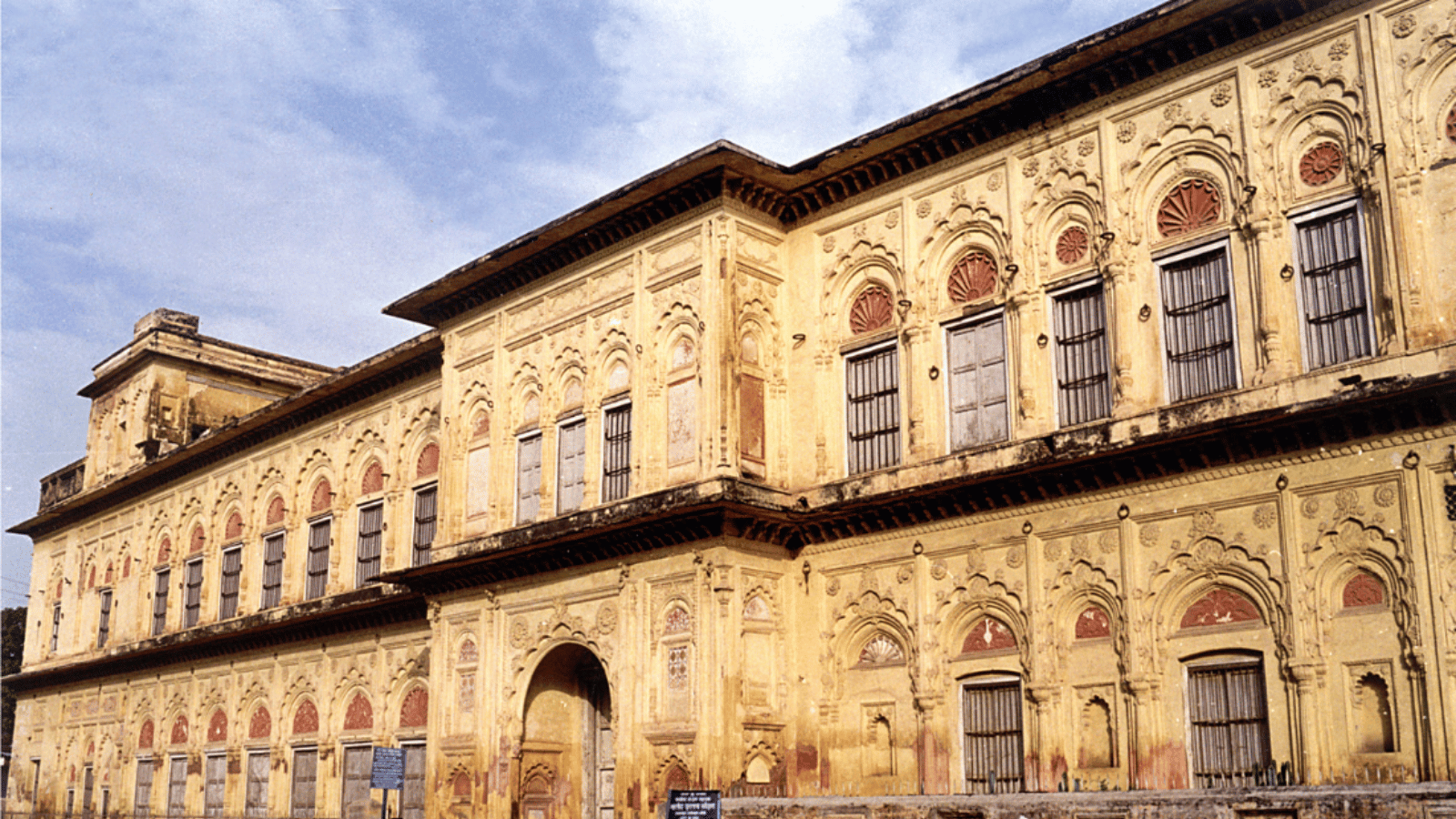
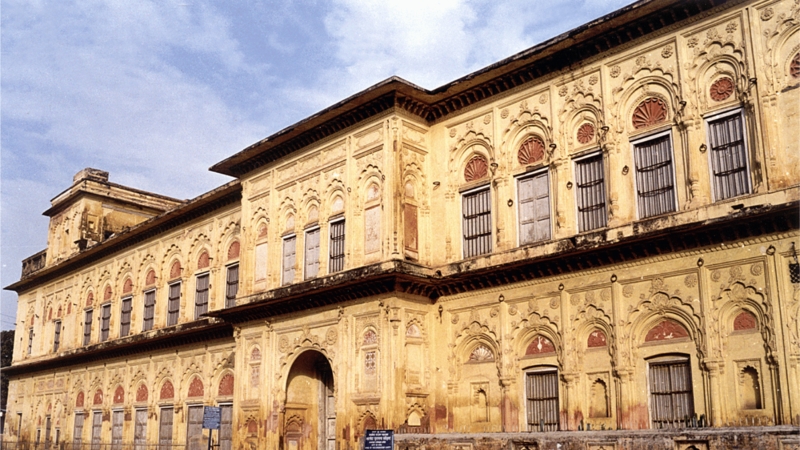
Rani Mahal stands as an important historic palace associated with Rani Lakshmi Bai, reflecting the architectural and cultural legacy of Jhansi. Built by Raghunath II in the 18th century C.E., the structure offers insight into regional royal traditions, the evolution of political authority and the ceremonial life of the period.
Historical Background
Originally constructed as a royal residence, the palace became closely linked to the life of Rani Lakshmi Bai, who used its halls for official meetings. The building suffered considerable damage during the siege of 1857, a major event within the uprising against colonial rule. Following this destruction, the palace underwent extensive renovation and was subsequently adapted for museum use. Its curated displays present the historical development of India, emphasizing rulers, traditions and significant events of the medieval period and later eras.
Location and Significance
Situated in Jhansi near the prominent Jhansi Fort in Uttar Pradesh, the palace forms part of a wider heritage landscape. Its position enhances understanding of the urban and defensive layout of the region.
Architectural Materials and Design
The double storey design includes a quadrangular courtyard surrounded by six halls, notably the Darbar Hall where the queen met visitors. The structure reflects regional building practices and ceremonial planning.

 4.2•
4.2•
 Ticket needed for all ages
 Entry allowed for all ages
 Kid friendly
 Pets not allowed
 Free water stations
 Washrooms available
 Neeta Sandhu
 Mukesh Sawarkar.
 Prabjeet Singh
 Ankur Saraf
 Sachin Tyagi