Chand Baori, located in the village of Abhaneri near Jaipur in Rajasthan, is an ancient stepwell admired for its engineering skill and distinctive form. Constructed more than a thousand years ago, it remains one of the most remarkable monuments of early water architecture in India.
Historical Background
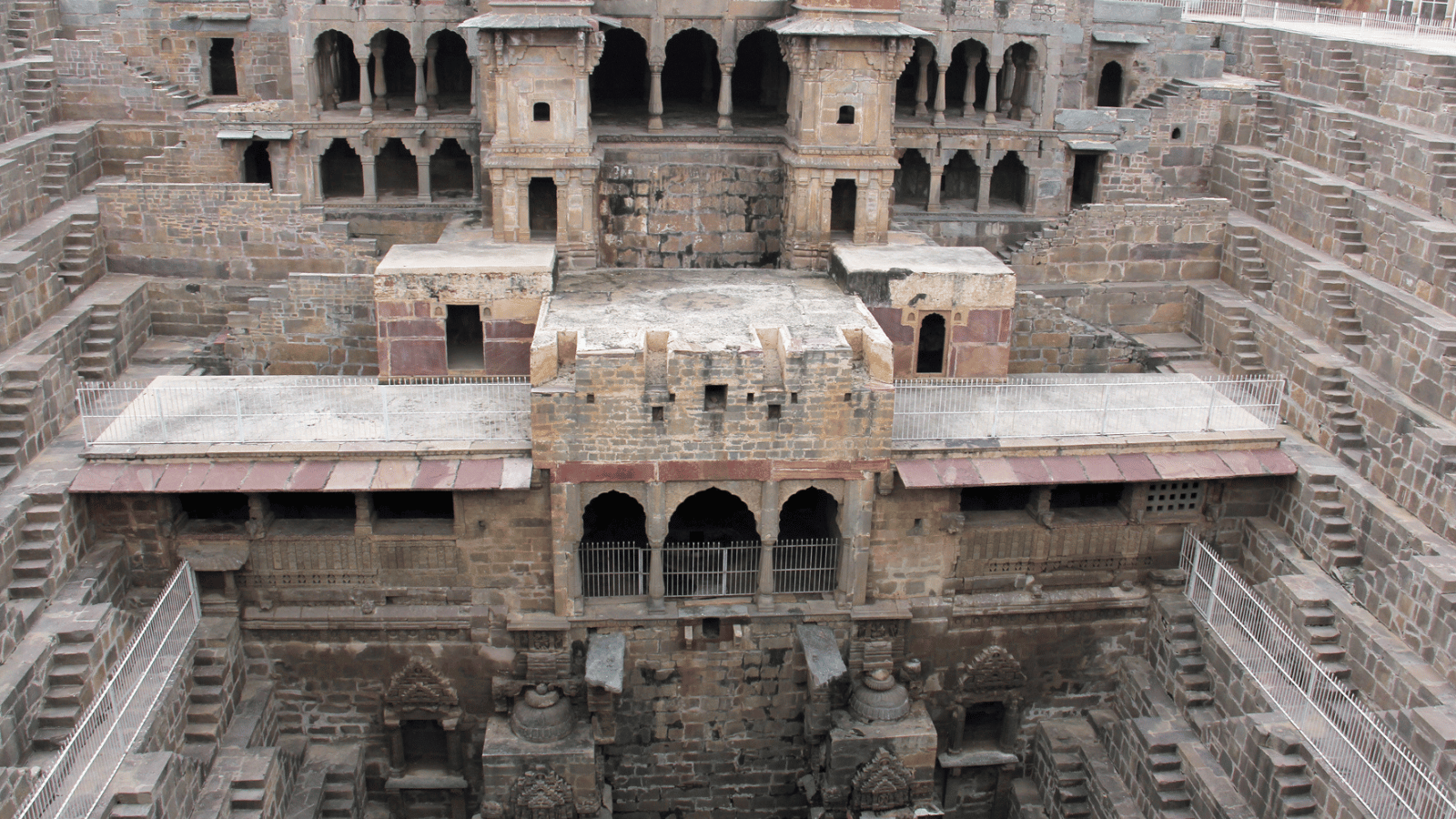
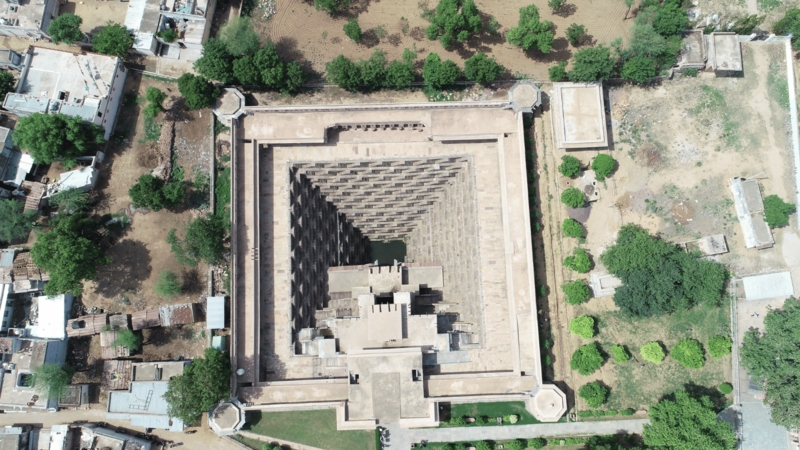
Believed to have been built in the 8th century C.E. by the Rajput ruler Raja Chanda, the stepwell was designed to secure access to cool and clean water in an arid region. Its square plan encloses nearly three thousand five hundred narrow steps arranged in precise symmetry on three sides, creating a visual effect heightened by shifting light and shadow.
Location and Significance
Standing within the historic landscape of Rajasthan, the structure reflects the ingenuity of local builders who adapted architectural design to climatic needs. It offers insight into the region’s water management systems and the cultural practices associated with stepwells.
Architectural Materials and Design
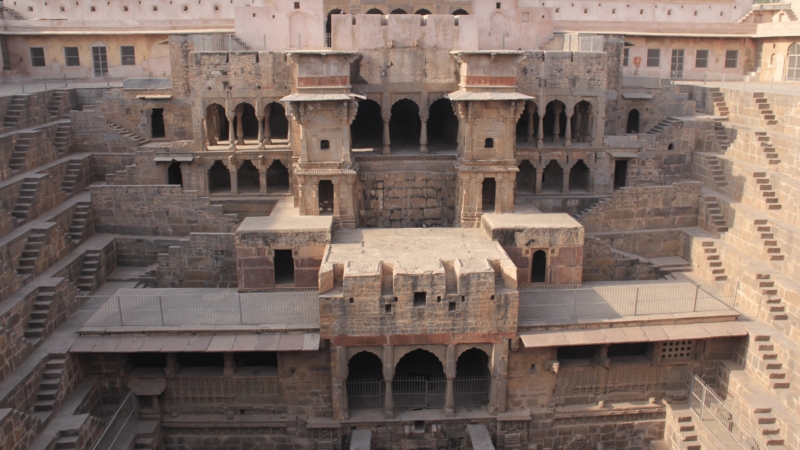
The fourth side contains a multi storied pillared corridor with niche shrines displaying sculpted images of Goddess Mahishamardini and Lord Ganesha. The geometric progression of steps, the depth of the well, and the integration of shrines reveal the technical expertise and artistic refinement that shaped this enduring monument.

 4.6•
4.6•
 Ticket needed for all ages
 Entry allowed for all ages
 Kid friendly
 Pets not allowed
 Free water stations
 Washrooms available
 Manoj Kumar Bairwa
 sadegh
 Padmaja Mehta
 Rohit Sharma
 AJ
AJ