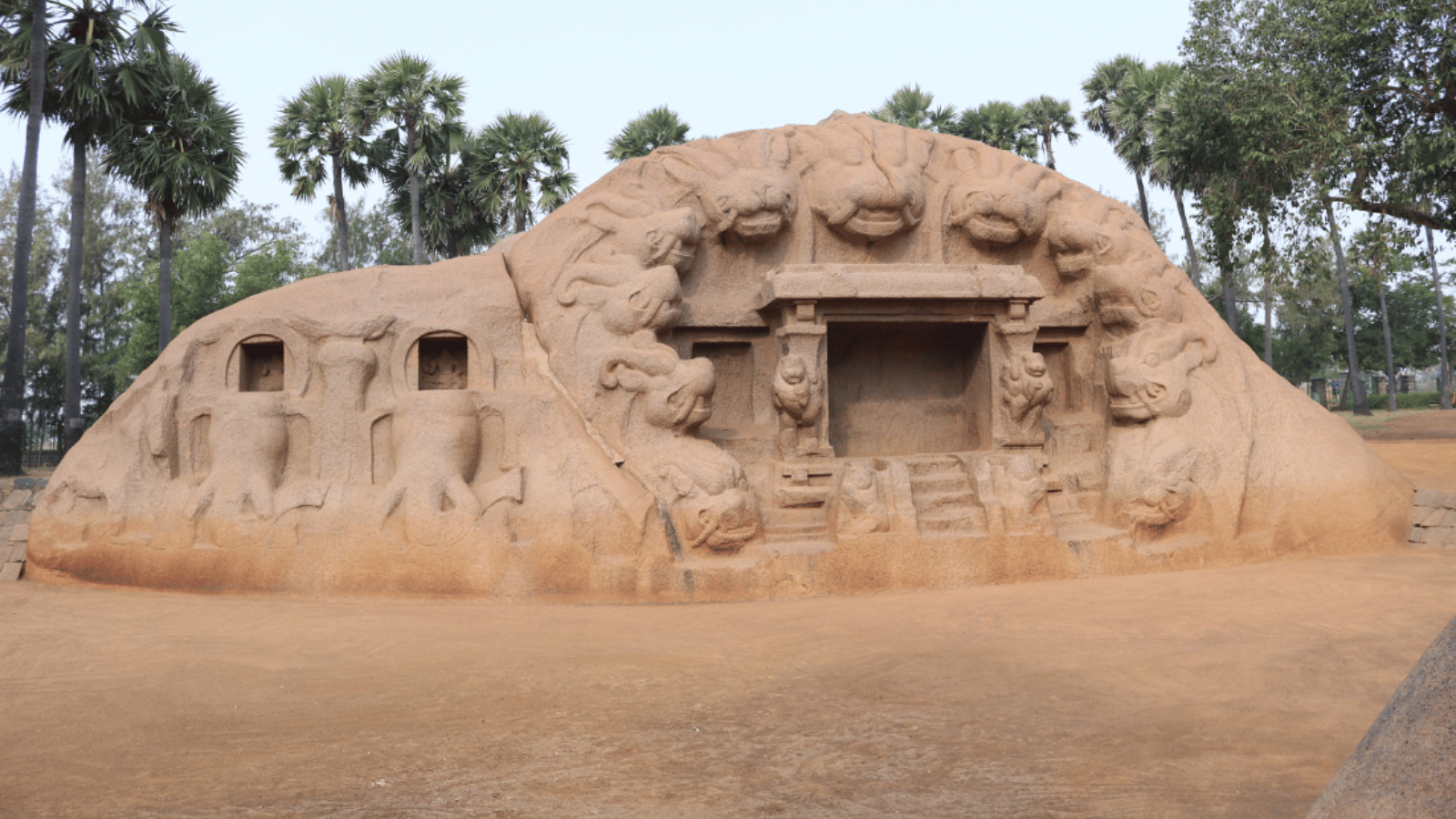
The Tiger Cave is an 8th-century rock-cut shrine that exemplifies the architectural and artistic mastery of the Pallava dynasty. Renowned for its intricate carvings and sculptures, the temple features representations of tigers, elephants, and other mythological figures, reflecting the symbolic and religious traditions of the period.
Historical Background
Constructed under the patronage of Narasimhavarman II Rajasimha (700-728 CE), the cave, locally known as Yalimandapam, was an important Pallava-era site for worship and meditation. The semi-circular mandapa contains tiger heads carved around the entrance, and two subsidiary cells display elephant heads beneath their openings. The nearby Atiranchanda rock-cut cave and a post-tsunami excavated temple dedicated to Subramanya further indicate the region’s continued religious significance.
Location and Significance
The Tiger Cave is located in Saluvankuppam, Tamil Nadu, India. It attracts history enthusiasts, devotees, and tourists alike, offering a serene environment for reflection and insight into Pallava art and architecture.
Architectural Materials and Design
The shrine is carved directly from granite rock, featuring a semi-circular mandapa with intricately sculpted tiger and elephant motifs. The Pallava artisans demonstrated mastery in rock-cut techniques, blending structural function with elaborate symbolic ornamentation, making it both a religious and artistic landmark.

 4.3•
4.3•
 Ticket needed for all ages
 Entry allowed for all ages
 Kid friendly
 Pets not allowed
 Free water stations
 Washrooms available
 Richa Chauhan
 TravellerG
 Sundeep Gursahani
 Vinay Jayaram
 Rayala. Bala Krishna.