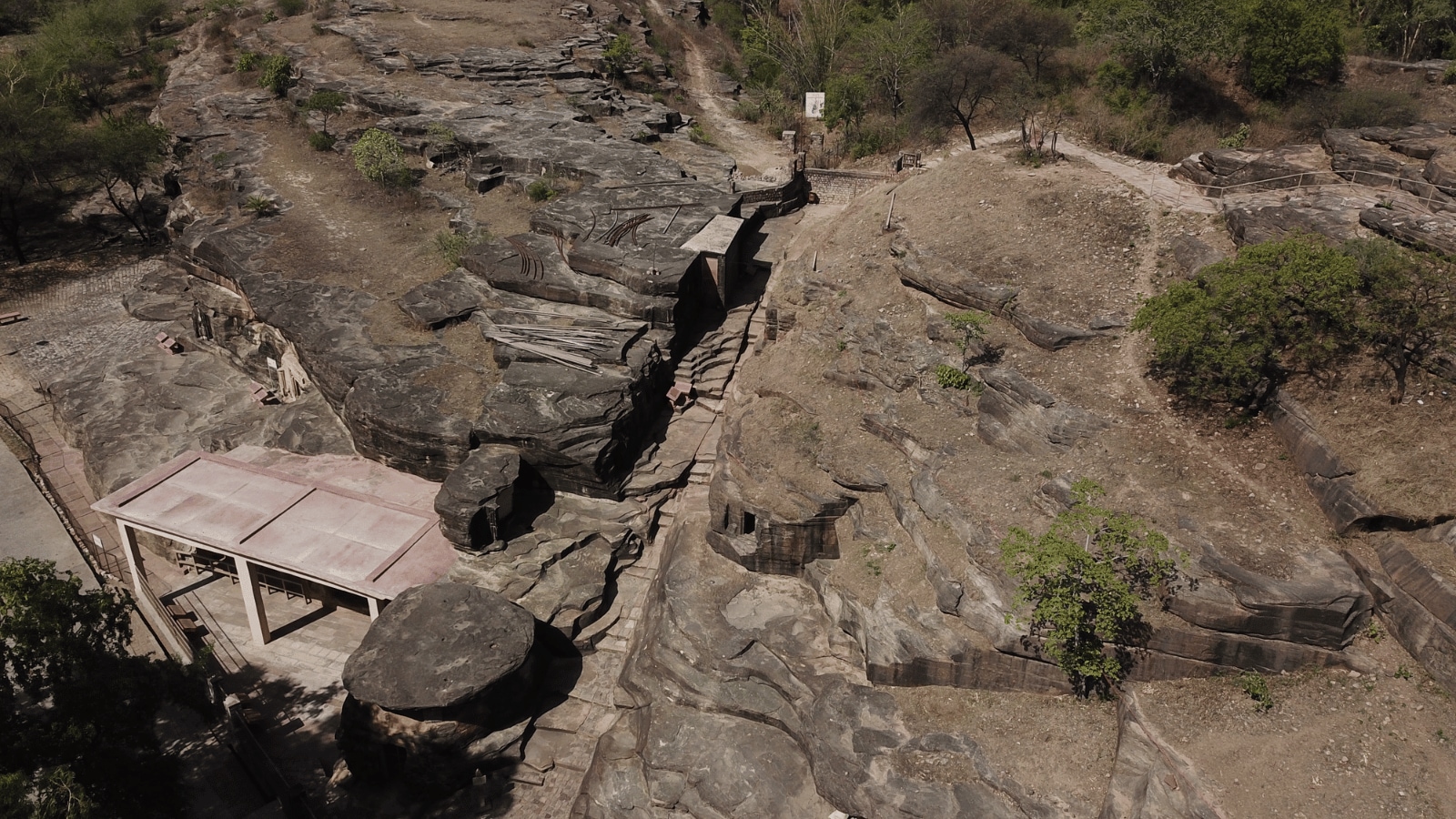
The Udaygiri Caves, located in Vidisha district of Madhya Pradesh, are a remarkable example of India’s ancient rock-cut architecture and cultural heritage. These twenty caves, dating from the 4th to 5th century C.E., embody the artistic, religious, and architectural sophistication of the Gupta period, offering insight into early Hindu and Jain temple design.
Historical Background
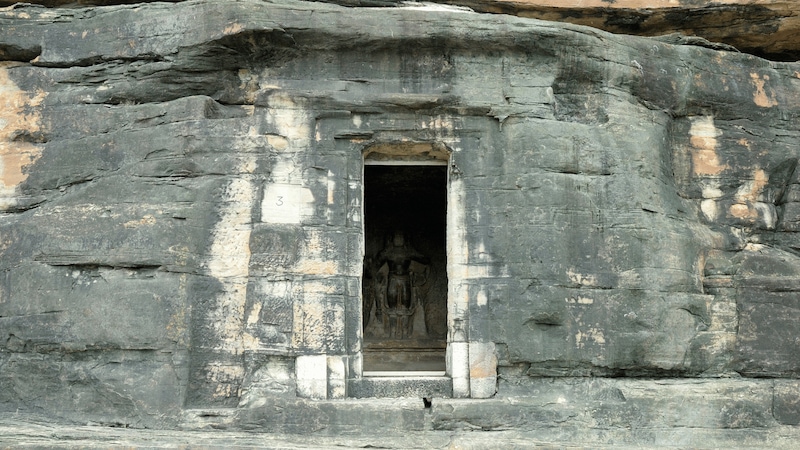
Situated on a major trade route of the early historical period, the caves were consecrated during the Gupta dynasty. Inscriptions of Chandragupta II and Kumaragupta provide historical evidence of their significance. Caves 1 and 20 are dedicated to Jainism, while the remaining caves reflect Vaishnava and Shaiva traditions. Cave 5 depicts Lord Vishnu in his Varaha avatar, rescuing the goddess Earth (Bhudevi or Prithivi) from the cosmic ocean, illustrating the integration of myth, art, and devotion.
Location and Significance
Udaygiri is located in Vidisha district, Madhya Pradesh, and served as a prominent religious and cultural hub along ancient trade routes. The caves continue to attract scholars, devotees, and tourists, providing a window into Gupta-era religious practices and artistic achievements.
Architectural Materials and Design
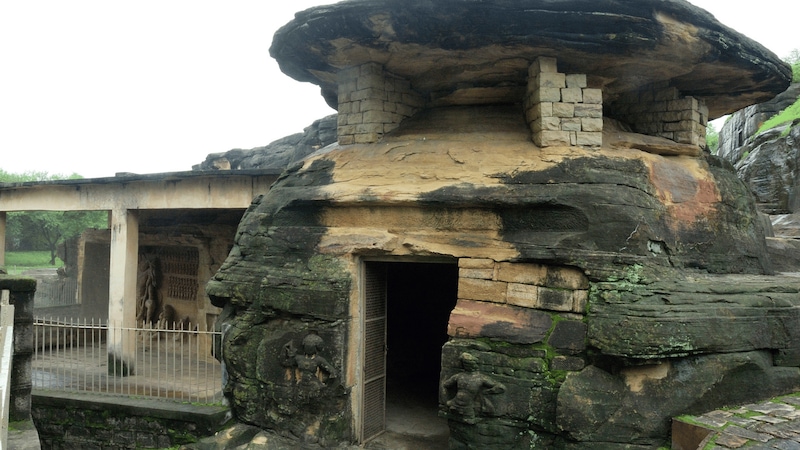
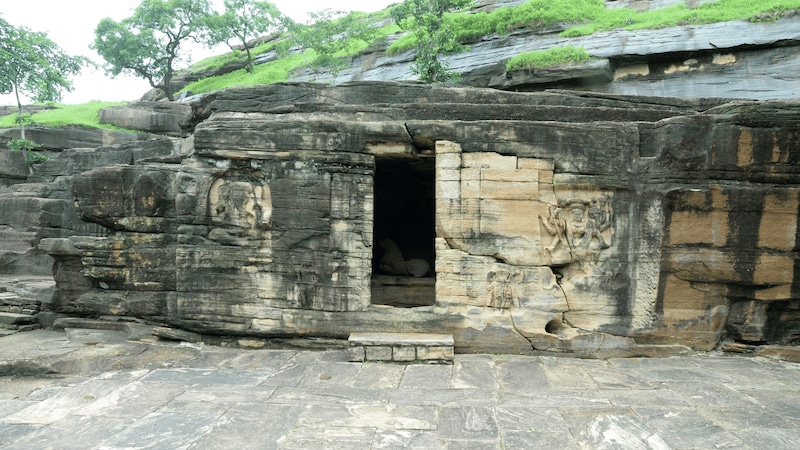
Carved from solid rock, the caves showcase early temple architectural elements. Cave 1 features a small shrine with a simple porch, representing the initial phase of temple design in India. Intricate carvings and sculptures adorn the caves, including depictions of deities, mythological scenes, and ornamental motifs. The design highlights skillful rock-cut engineering, terracing, and spatial planning characteristic of Gupta-period craftsmanship.

 4.3•

 Ticket needed for all ages
 Entry allowed for all ages
 Kid friendly
 Pets not allowed
 Free water stations
 Washrooms available
 Riecha Sambhari
 Mukul Banerjee
 Sanket Gupta
 Rajashree Mukherjee
 Deepansh